Rivers and Tides Andy Goldsworthy: Working with Time

Goldsworthy 01The violent colors of autumn leaves, an iron-rich rock that turns water blood red, blackened stalks, great slabs of ice, thorns, chipped rocks: these are the materials that Andy Goldsworthy uses to create his ephemeral art.

One of the most creative artists in the world, Goldsworthy purposely creates beauty from nature that nature herself will destroy sooner or later and mostly sooner.  He is also a photographer, which is essential to document the works of art that sometimes last only moments and sometimes years before they are gone.  Working from his home base in Penpont, Scotland, he travels the world interacting with water, stone, and growth to form both small and massive creations that inspire and delight.

Goldsworthy 02This beautiful documentation of his work was lovingly created by German writer, director, and cinematographer Thomas Riedelsheimer for Mediopolis and Fernsehproduktion Gmbh with incredible music by Fred Frith.

Beginning on the isolated shores of Nova Scotia, Goldsworthy acclimatizes himself by building a twisting line from icicles, bending and shaping them into what appears to be the lazy oxbow of a river, gleaming white in the sun as it slips into and out of a rock on the shoreline, waiting only for the sun to melt it.  Riedelsheimer’s camera lingers on the swirls as a river rushes into the sea and the tide moves in to smother it.  On another day, Goldsworthy builds a gigantic pine cone from rocks along the shore, but the balance is so delicate that it keeps falling apart and he must start over again.  The tide is out, but it will come back in by 3:00 PM so he must work fast to get it finished.  There is not enough time, so he must give up.  He explains that as he works with the rocks, he gets to know them, to understand how they fit together.  On the third day, his giant pine cone stands on the shore and he watches as the tide comes in, completely covering it with sea water, but when the tide goes back out, it is revealed again, still standing.  Gathering driftwood, he creates a hemisphere of sticks on the rocks, building and coming together with a perfectly round hole in the top.  A man wanders by and the two of the watch as the tide rises, swirling the wood back out into the sea that threw it up on the shore in the first place.

Goldsworthy 03At home, in Penpont, he works on a hillside, among the long-haired oxen, pulling reeds from the ground and arranging them on the hill with brilliant bronze points flowing away from a jet black circle in the center.  Using thorns, he tacks sticks to the branch of a tree, intersecting them until they form a perfect center in the middle.  He wraps leaves tightly around themselves to create a gigantic snail.

Working on a commission at Storm King Arts Center in Mountainville, N.Y., Goldsworthy directs workers in the creation of a wall that snakes like a river through the trees, disappearing down into a pond and re-emerging on the other side to continue on.  Splashing through a stream, he finds red rocks with a high iron content and breaks them down into dust.  He either mixes the dust with water that pools in holes in rocks, creating a blood red circle, or he tosses a ball of the dust into the river, making large, bright red splotches in the stream.  Using thorns, he connects a train of leaves that unwinds in the river like a large, green snake.

Standfoto RIVERS AND TIDESRiedelsheimer’s camera follows him as he makes a huge volume of art, most of it destined for immediate destruction by the world from which it is created.  Along the way, Goldsworthy talks about the philosophy of his art and the nature of time and existence.  Creation and destruction are obviously at the heart of his work, but the two acts work within a given time.  For example, creating his gigantic cone of rocks on the beach before the tide comes in to cover it or listening to the wind as he works on his tree sculpture, knowing that in the space of minute the delicate structure can fall.  Nature itself is in a constant rhythm of creation and destruction.  Goldsworthy looks at the example of his iron rock, how it solidified over the eons, how it even now contains the water that runs through everything and how, once pulverized, he can return it to the river as dust, knowing that it will again coalesce in the riverbed.

Time is like the images of the river that are a recurring motif in Goldsworthy’s work.  It swirls around us constantly from moment to moment, pulling in something here, discarding something there.  Existence, like Goldsworthy’s creations, is ephemeral.

Goldsworthy 05We are like the river that passes through it.

I admit that documentaries have never been my favorite form of film, but recently, due to the influence of my friend, Harlan Heald, I have begun to watch more and more of them, especially films about artists–and this is one of the best, because it is not just about art, but it exists as a work of art in itself.  It is a film that I can watch over and over and every time it makes me feel more a part of the natural universe I inhabit.  It is a creation of great beauty.

The DVD contains two disks.  Disk 1 contains the film, plus a number of short films about some of the individual projects, as well as information about Goldsworthy, Riedelsheimer, and the production company.  Disk 2 contains a very interesting film about a project where Goldsworthy created 13 gigantic snowballs, each containing a different texture (one contained pine cones and another contained cow hair) that were deposited on various streets throughout London at mid-summer, to melt during the longest day of the year.  Riedelsheimer followed the process as well as filming the reaction of a great many Londoners to finding this monstrosities on their streets.  It also contains an in-depth interview with Riedelsheimer.

Goldsworthy 06This is a DVD that could easily be a part of anyone’s collection as it can be viewed over and over again with enjoyment.  The colors a beautiful, the cinematography is wonderful, and the philosophy is very enlightening.

I highly recommend Rivers and Tides: Andy Goldsworthy (Working with Time).
The Spectacular Now

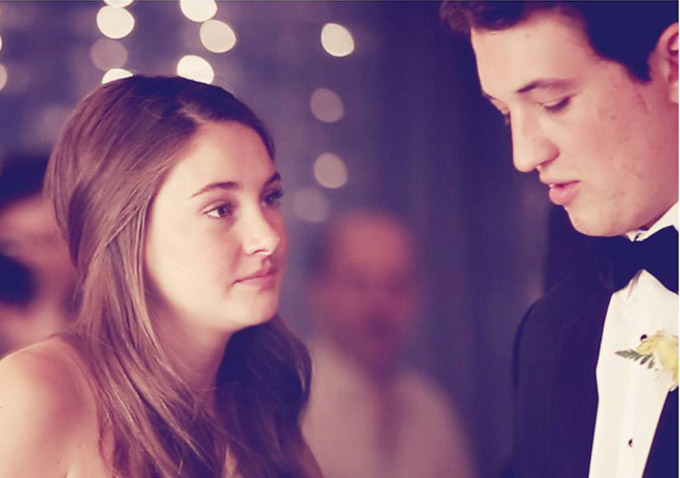
Shailine Woodley int The Spectacular NowThe Spectacular Now aims much higher than any run-of-the-mill teen romance and its success in achieving a film that goes beyond the limits of genre is to be highly commended, yet there are problems in the movie and it would make the film an excellent study for any film theory class.  Because this is a special film in many ways, this review contains spoilers, so beware if you haven’t seen the movie.

Sutter Keely (Miles Teller) is a high school senior who is the life of the party.  His girlfriend, Cassidy (Brie Larson), just happens to be the coolest girl in school.  He sits down at his computer to answer an essay question for a college entrance exam.  What was your greatest challenge and how did you face it?

His answer centers around how Cassidy has just dumped him.  Always helpful, he had been trying to set up a friend with a girl, but she happened to come with another girl and he just happened to be sitting with her in his car at lakeside drinking when Cassidy discovered them.  He’s almost always drinking, but he doesn’t see that as a problem and he figures that he’ll get Cassidy back pretty quickly, but she has already hooked up with the star athlete, Marcus (Dayo Okeniyi) and has left Sutter in her dust.

He goes out to party and ends up enormously drunk.  The next morning, he is awakened by a girl who finds him laying in someone’s yard passed out.  The girl, Aimee Finecky (Shailene Woodley) is also a senior at his school, although he doesn’t remember her name.  A semi-geeky girl who likes science fiction and graphic novels, Aimee is way too normal for Sutter, but he can’t find his car so he helps her do her mother’s paper route and ends up having a lot of fun.  He asks her out to lunch, then to a party.  He still isn’t over Cassidy, but she can no longer deal with his lack of ambition and drinking.  Aimee, who has never had a boyfriend, is just happy that he likes her.  He might be a good student, but he just doesn’t care.  There is a certain ennui about him, even though he puts up a good front.  Part of his problem is that his mother, Sara (Jennifer Jason Leigh) is a single parent and she keeps him apart from his father.  Sutter remembers playing baseball with his dad and completely blames his mother for “kicking him out of the house.”  His sister, Holly (Mary Elizabeth Winstead), who is married to a lawyer, doesn’t really care about their father.

Aimee falls in love with Sutter, but he continues to drift, fantasizing about getting back together with Cassidy.  He gradually comes to love Aimee as well, but he does not think he is good enough for her.  The sad thing is that he’s right.  Sutter doesn’t know what to do with himself.  He’s drifting through high school, he doesn’t want next year to happen, and he doesn’t want to make any plans.  In a scene with Cassidy, she begs him to think about the future, but he tells her that all that matters is the “now,” enjoying each moment as it happens.

Accepted into a college in Philadelphia, Aimee tells him that she can’t go because her mother won’t let her so they make a pact: if Aimee will stand up to her mother about going to college, then Sutter will confront his own mother about seeing his dad.  He asks her to the prom and gets her to start drinking alcohol, giving her a personalized flask when he picks her up.  Later, she tells him that she has decided to go to Philadelphia and tells him he should go there with her, that they could get a place together and get jobs while she goes to school.  He doesn’t commit himself to it, but he also doesn’t tell her “no.”  Marcus confronts Sutter about Cassidy, but Sutter tells him that there’s nothing between them.  When Marcus wishes he could make her laugh like Sutter does, Sutter advises him that all he needs to do is relax, to live in the “now.”

When Aimee badgers him into investigating his father, Holly finally gives him the phone number.  Sutter calls his dad (Kyle Chandler) and arranges a meeting, bringing Aimee with him when he goes to visit, but when he discovers that his father is an alcoholic skirt chaser, he sees his own future.  Depressed, he drinks heavily as he drives them back home.  Aimee tries to comfort him, telling him that she loves him, but he belligerently tells her to get out of the car.  When she does, she gets hit by another car.

Although she’s not seriously injured, Sutter’s depression reaches a whole new level.  They graduate, but he feels no joy in it.  She waits at the bus station for him to join her, but he drives by and lets her go off on her own.  Drunk again, he plows down the mailbox in front of his house and gets into a violent argument with his mother.  When he screams at her that she doesn’t love him, she comforts him and tells him that he is a gentle and giving man.  Sutter breaks down and sobs in her arms.

Confronting the computer screen and the question of what his greatest challenge is and how he overcame it, he types in a confession that he is his own greatest problem and that it is a problem he must solve every day going forward, finally recognizing that the “now” will come again tomorrow.  In the final scene, he joins Aimee in Philadelphia.

Even though this film is riddled with problems, there are also many things to like about it.  There is a simplicity in the script by Scott Neustadter and Michael H. Weber (adapted from the novel of the same name by Tim Tharp) that is quite engaging and the realistic approach of director James Ponsoldt keeps the viewer constantly involved in the story.  Sutter is a complex person and I have to give high marks to the creative team for making such a deeply layered character and wonderfully consistent throughout the entire film.  Surely, the temptation to make the film a pure romance must have been quite strong, but the movie works hard to keep Sutter real and to deal realistically with his problem, which is immense for a boy of his age.

It is dramatic, it contains a theme that is built and explored in a way that many other films should aspire to, it is very carefully written and well-thought out.

In addition, there are a couple of excellent performances in the movie by Jennifer Jason Leigh (I didn’t even recognize her) as Sutter’s mother and Kyle Chandler as his father.  Each of these actors brings a depth and a reality to their roles that goes even beyond the well-crafted script.  All of the other supporting actors do a good job as well.

The problems are mostly in the production, but one problem in the writing really holds the movie back.  There is nothing likable about Sutter.  As I watched the movie, it was easy to identify him as the protagonist and to feel a certain amount of angst for him, but the writers did nothing to help me like him or really care about him.  My first instinct was to blame the performance of Miles Teller, but I realized at some point that the story should have shown something else to make me care about what happened to him.  That was missing.

Shailene Woodley gives a fine performance as Aimee, but I believe she may have been miscast.  Given the beauty of the actress and Aimee’s terrific personality, I found it simply impossible to believe that she never had a boyfriend or that she was a wall flower.  Girls that special rise to the top because those around them inevitably recognize what’s great about them and give them a special position in the social order.  In fact, Aimee is so special that it is really difficult to believe that in her isolation she could love someone like Sutter.

In his desire to make the movie realistic, I believe that Ponsoldt must have encouraged Teller and Woodley to improvise much of their dialogue because it seems so genuine, however, the constant use of “awesome” and “amazing” and “cool” becomes almost funny at some points.  Sure, it’s probably realistic.  One can imagine real teens talking this way, but it sure makes them seem a lot less intelligent.  There should be an argument on this point because the question of realistic dialogue comes up over and over again.  My own personal opinion is that the clever screenwriter will use just enough teen clichés to make the dialogue believable, but back off before it becomes a running gag.  I think what happened in this movie was improvisation on the actor’s parts.  I don’t know that for a fact, but it feels that way.  Good and bad.

The ending probably should have been retooled as well.

Although the scene of Sutter writing his new answer is effective, I never had the feel of a real denouement, a crystal moment of realization in which Sutter knows how he needs to change his life and dedicates himself to doing so.  Maybe it is more realistic that he has a hint of what he needs to do and points himself in the right direction, but in the interval between breaking down with his mother and writing his new answer, I would have liked to see something that really gave him a positive direction.

Even given all of these problems, I still recommend this film, not only to film students, but to people who want to see a teen romance that has some backbone to it, a film that challenges itself to do better and makes a very positive footprint in the right direction.

The good outweighs the bad.

The Renegades of Pern by Anne McCaffrey

Renegades of PernThe Renegades of Pern does not neatly fit into the pattern of all of the other books covering the 9th Pass of the Red Star.  It is splintered into lots of little stories and covers the time period just before the beginning of the main Dragonriders of Pern Trilogy, running all the way up to the very beginning of All the Weyrs of Pern.  It contains both vital information regarding the main story line and vast amounts of story that just don’t really matter at all.  It is fragmented.  Telling several semi-coherent stories all at once, it covers a vast amount of time and makes for difficult reading.  It is based around some of the characters from the short story, “The Girl Who Heard Dragons,” contained in the story collection of the same name, most notably the girl Aramina and K’van.

The Prologue jumps around, compressing a full eleven years before the 9th Pass begins.  It sets of the idea of holdless men and women, from Fax’s taking of various holds, driving smaller holder into homelessness, to Toric storming out of his native sea hold to make a fresh start, to the artist Perschar’s travels, all the way up to Fax’s death before the real story begins in Chapter One.  The Prologue also introduces a female villain, the older half-sister of Lord Larad of Telgar Hold.  Lady Thella, a headstrong young woman, was betrothed to a lesser holder by her dying father, but she will have no part of it.  When Larad confines her, she escapes, stealing maps, horses, and supplies.

The Lilcamp trading train is surprised by the first fall of Thread as the 9th Pass begins, suffering many casualties. Kimmage Hold agrees to put them up, but only if they work and tithe. Jayge, son of the head trader, accepts the constriction, but his favorite Uncle Readis leaves them and joins Thella’s band of thieves and murderers.  Twelve Turns pass and Thella develops her gang into a cunning and tough, holdless bunch, fugitives sought by both holders and dragonriders.  Masterharper Robinton, at this point, has recruited the artist Perschar to infiltrate the group and draw portraits of the outlaws.  Thella hears about Aramina, a girl in living in the Igen caverns, who can hear dragons.  She plans to capture Aramina and use her to spy on the weyrs, but Aramina’s family leaves before Thella can pull it off.  Her band then attacks the Lilcamp train and a number of people are killed before Jayge can ride for help.  In the aftermath, he finds a roll of portraits drawn by Perschar, but he removes Readis’ picture before turning them in.  Jayge joins Lord Asgenar’s army in Lemos in hopes of exacting his revenge on Thella.  They discover a deeply covered cave system in Telgar and, with the aid of dragonriders, stage a morning attack, but Thella and several of her leaders escape.  Searching for Thella in the Igen caverns, Jayge meets Aramina and falls in love with her, but she is taken to Benden Weyr where Weyrwoman Lessa intends to match her up with a dragon hatchling.  While waiting, she is housed at Benden Hold where Thella finally manages to capture her and whisk her away.  Jayge finds Readis and the two rescue Aramina, but Readis is killed during their escape.  Jayge then gets them an assignment to transport runner beasts to the Southern Continent.  Lost in a storm, the boat sinks and Jayge and Aramina are carried ashore by shipfish (dolphins) to the Paradise River Hold, where they settle down to raise a family.  Their first son is named Readis.

I’ve read this book a number of times and I am now at the point where I completely disregard the entire “renegade” portion of the book and instead concentrate only on the advancement of the main story line, which I think must include Jayge and Aramina’s Paradise River Hold, but does not include Thella or any of the hundred odd pages dedicated to her story.  If you are reading the book for the first, I’d suggest that it be read, but thereafter, it may be skipped with no loss of story at all.

Although many scenes of that story line take place in the Northern Continent, it is Southern that is the main focus, particularly the story of Toric becoming Lord Holder, Piemer meeting and falling in love with Jancis, and further discoveries at Landing, including the Catherine Caves and, most importantly, AIVAS, the artificial intelligence voice address system that will dominate the next book in the series, All the Weyrs of Pern.  Piemer, during his many travels in the south, meets Jayge and Aramina when he stumbles upon Paradise River.  He is fascinated by the many ancient articles the couple have found and use, most of it plastic.  Afterward, Jayge and Aramina become recurring characters.

Many of the events throughout The Dragonriders of Pern Trilogy and The Harper Hall Trilogy are included in The Renegades of Pern, but shown from other characters’ perspectives.  For instance, when Mardra finds the empty sack that Piemer has escaped from, the entire scene is shown from Toric’s point of view as he puts up with the Weyrwoman berating him in front of his holders and craftsmen.  That alone–showing familiar events from different points of view–makes this book worth reading.  If you are a fan of the entire saga of the 9th Pass and can’t get enough of the story, here is a retelling of familiar events from a different perspective!

Those who have already read All the Weyrs of Pern may have been a bit surprised by the sudden intimacy of Piemer and Mastersmith Jancis (granddaughter of Mastersmith Fandarel), but she plays a significant role in The Renegades of Pern.   Piemer meets her after the discovery of the Catherine Caves and she is only a Journeywoman at that point.  In fact, McCaffrey seems to have deliberately created an error in Jancis’ rank.  The end of The Renegades of Pern seamlessly dovetails into the beginning of All the Weyrs of Pern with no time at all allowed for her to suddenly attain her mastery.  Be that as it may, she is a terrific character and a perfect tonic for Piemur’s acidic character.

The Renegades portion of the book comes a conclusion when Thella puts together one final band of thugs and sails south to find Aramina and try to kill her, blaming her for all that has gone wrong in her life.  Piemer, Jancis, Jayge, and Aramina fight the band and win.  Jayge gets the pleasure of killing Thella and exacting his revenge at last.  During this trip, Jancis discovers a map at Paradise River, detailing the plan for Landing.  She is intrigued by two sites that haven’t yet been uncovered: Amin Annex and AIVAS.

With Piemur’s help, she begins to unearth them, coming to the solar panels that allow AIVAS to power up.  Jaxom and Ruth join them, then the others and at the end of the book, they find a way in and discover the long abandoned computer that drives the story forward into All the Weyrs of Pern.

In this sense, it is a vital connecting book in the main story line.  The central flaw in the book is the character of Thella.

In my opinion, Anne McCaffrey, for all the wonderful characters and situations that she has created in this saga, has one fatal flaw and that is her villains.  They all come across as one-dimensional characters.  You can see it in Avril Bitra in Dragonsdawn, Fax in Dragonflight, Meron and Kylara in Dragonquest, and fatally in Thella in The Renegades of Pern.  To be effective, readers must understand the central driving force that makes villains perform their evil acts.  If there is not sufficient believable motivation, the character is flat and unbelievable.  I have this problem with all of the above-referenced characters and that is the main flaw in The Renegades of Pern and it is why I always skip over Thella’s scenes when I re-read the book.

Nevertheless, this book is a key connecting the end of The White Dragon with the latter two books in the series and it contains many wonderful scenes and the development of Piemer and the introduction of Jancis.

That part of the novel is wonderful and can be joyfully read and re-read many times.

Grace, Tamar and Laszlo the Beautiful by Deborah Kay Davies

Grace Tamar and LaszloGrace, Tamar and Laszlo the Beautiful, the 2009 Wales Book of the Year, is officially listed as a book of short stories by the acclaimed Welsh author Deborah Kay Davies, but it is much, much more than that.  In fact, I struggle to use the term “book of short stories” because the connection of the stories featuring the sisters Grace and Tamar is so tight and integrated that I am inclined to call it a novel.  This is a mature and powerful work of art intended for adult readers.

The first story, “Stirrups,” actually begins with their mother on the event of Tamar’s birth, showing how the woman’s fragile mind tries to deal with the baby girl who is Grace’s younger sister by two years.  She struggles to give her love to more than one person at a time, missing Grace and wondering if she can ever relate to this new child.  The next story, “Point,” finds Grace at the age of six already somewhat ethereal and hating her four year old sister, Tamar, for being so feral.  It is a relationship newly formed, but one that will be a part of their lives until they are adults.

From one story to the next, told in chronological order, the relationship between the two sisters dominates the book as the point of view weaves back and forth.  As a child, Tamar spends most of her time alone, creating strange games for herself, becoming fascinated with the weird neighbors, pushing her sister Grace to exasperation.  Grace lives in a world where she was the only child.  She can barely stand Tamar, yet there is a bond between them that is extremely tight.  Grace pushes Tamar from a tree, Tamar beats on Grace, they push each other back and forth and stand united in only two things: first, their amusement that their mother seems to be going insane (“Radio Baby” is a powerful reminder that their mother’s hold on reality is tenuous at best) and second, the great common dream that they share of being together as adults with their own baby.

As they grow up, Tamar’s perversity is intensified by an incident with a brutal pedophile in “Whinberries” that turns out much different than one would expect in the follow-up story “Stones.”  That perversity comes back out in her childish sexual display to her bedridden grandfather in “Fun and Games.”  Grace’s reaction is to pull back away, growing more and more distant.  In her adolescence, she seems to have difficulty understanding the banal, meaningless action of the boys around her, especially so in “Laszlo the Beautiful,” a story about her first crush.  Tamar also has difficulty relating to boys, but she is far more open sexually.  Grace acts out her sexuality in “Kissing Nina,” “Thong,” “Negligee,” and “Grace and the Basset Hound” while maintaining a strange distance from it.  She becomes engaged, gets married and divorced and seems untouched by the whole cycle.  Tamar reaches out for life in “Thong,” “Whatever,” and “Wood.” 

There is a stark parallel to Grace’s retreat from the world and Tamar’s reach to embrace it.  The importance of Tamar’s dream of the baby comes full circle in the final story, “Cords,” a taut, emotional reach between the two adult sister.

The writing throughout is beautiful, a real pleasure to read.  Lean and well-constructed, the stories are each absolutely compelling portraits of two sisters adrift in the world.  The sentences are spare, concerned only with what is most important.  Sometimes they drift, like the sisters, but they drift with a singular intensity that always reaches back to the heart of the book.

And that’s really what makes me think of this is a novel.

In a novel, one looks to see a compelling story arc, from one place to another from the beginning to the end, with an integrated theme throughout the book.  Even though Grace, Tamar and Laszlo the Beautiful jerks from one story to another, I see a very powerful, overarching story arc that binds the stories together into one, long cohesive tale that stands up to the highest scrutiny.

The jacket contains the following epithet:  “moving, hilarious and terrifying.”  I found the book to be less hilarious and more moving, but, yes, at times it is also terrifying.  I found it to be one of the more emotionally disturbing and satisfying books that I’ve read over the last twenty years.  The combination of such beautiful, powerful writing with such original, distinctive characters is quite unusual.  In fact, after I finished reading the book, I found myself drawn back to one story or another just to lose myself in the prose.  I haven’t had that feeling since I first read Salman Rushdie.

This is a great book that I highly recommend to all adult readers.

Jane Eyre 1997

Samantha Morton2_Jane EyreThis film adaptation of the classic novel Jane Eyre by Charlotte Bronte was originally aired on Great Britain’s ITV in March of 1997 runs approximately one hour and 45 minutes.  Obviously, a great deal had to be cut from the story in order to fit it into that kind of time parameter, but Kay Mellor’s script concentrates rightly on the romance between Jane Eyre and Edward Rochester and the Gothic suspense of Thornfield.

This review contains plot spoilers.

Orphaned ten year old Jane Eyre (Laura Harling), horribly mistreated by her father’s family, is bundled off to the Lowood Institution, a terrible school for orphan girls, ran by the evil Reverend Brocklehurst (Michael Denigris).  She makes one close friend who dies of typhus, but grows up to become a teacher.  The adult Jane Eyre (Samantha Morton), looking to see more of the world, takes a position as governess at Thornfield Manor.  The housekeeper, Mrs. Fairfax (Gemma Jones) treats her kindly and she takes charge of a little French girl, Adele (Timia Berthome).  The master of the manor, Mr. Edward Rochester (Ciarán Hinds) is a rough man who has been greatly disappointed in life.  He takes an interest in Jane and they become friends, gradually falling in love.

But Thornfield holds a great secret, which Jane gradually becomes aware of: a seemingly crazy servant, Grace Poole, wanders the house at night, giggling insanely.  Mrs. Fairfax informs Jane that Ms. Poole is kept on due to her long service to the family.  Mr. Rochester brings some of the local gentry to visit him, including a beautiful young woman, Blanche Ingram (Abigail Cruttenden) who is determine to marry Rochester.  Jane is nearly at her wits end when she receives word that her aunt is dying and has requested her presence.  While Jane is gone, Rochester misses her terribly and when she returns he proposes to her.  They have some happiness before the wedding, which is interrupted by a Mr. Mason stating that they cannot be married because Mr. Rochester already has a wife.  Rochester drags them all back to Thornfield to reveal his insane wife that he married in Jamaica, through the deception of her family.  The marriage called off, Jane runs away and is discovered unconscious in a field by a young, handsome minister, St. John (Rupert Penry-Jones) who begs her to marry him and follow him to India as a missionary.  Jane, still obsessed with Rochester, goes back to find Thornfield burned to the ground, Rochester’s wife dead, and him a blind man wallowing in his own misery.  She surprises him, they marry and have two children.

Obviously, to anyone familiar with the novel, the film leaves out a great deal of the story.  It rushes through Jane’s childhood, skips through the Lowood years, eliminates the Reeds as viable characters, leaves out her inheritance and shoots through her association with St. John, all to serve the purpose of the romance, which is quite successful.  In this adaptation, it is not a deep story, but it is skillfully told.  The direction by Robert Young is deft, using creative camera angles, deep colors, and excellent editing.

Samantha Morton really carries the move from beginning to end.  Beautiful, passionately attached to her character, she wraps the movie around her and makes everything work.  Ciarán Hinds is a fine actor, but gets carried away sometimes with his passion.  The other supporting actors, including the wonderful Gemma Jones, all add to the strong ensemble.

In this version, we may miss major parts of the story, but the arc has been honed into something that somehow works altogether.  It’s sad that a knowledge of the full work by Brontë might hinder enjoyment of this movie, but that simply can’t be avoided in any adaptation of a major novel.  The one thing we call all be thankful for is that the preachiness of the book is cut along with everything else.

I think this movie should be seen, if for no other reason than the excellent performance by Samantha Morton!


Jane EyreRead my review of the novel Jane Eyre by Charlotte Bronte!

This 1847 classic novel both delights and confounds a modern reader.

Told mostly in first person past (with brief lapses into first person present) by the heroine, Jane Eyre, the book was originally subtitled An Autobiography.  It begins with Jane as a young girl of ten years as an orphan living with her Aunt Reed at Gateshead Hall.


Jane Eyre 1996Read my review of the 1996 movie Jane Eyre by Franco Zeffirelli!

Adapting a classic novel to the big screen is always a dicey proposition.  The screen writer and director have a limited amount of time, yet there is so much in a classic novel that readers depend on for a satisfying experience.


Jane Eyre 2011Read my review of the 1997 Cary Fukunaga movie of Jane Eyre.

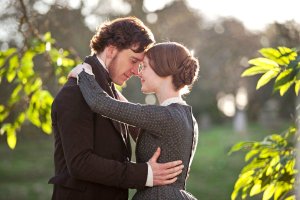
This adaptation of Charlotte Brontë’s classic novel Jane Eyre was produced in 2011.  Directed by Cary Fukunaga from a script by Moira Buffini, this is clearly the best of the recent movie versions of the novel.  Ms. Buffini’s script is faithful to the novel, yet innovative in the way it tells the story, bringing a passion lacking in the other attempts.

This Gentle Land Will Own Me

Prairie-Canada

*

I was born on this prairie that I call home

The last of my line, bound to be alone

Lost in this world, I just had to roam

And try to find a peace to call my own

*

Tomorrow, this gentle land will own me

My spirit flowing through this haze of beauty

And I will find my peace in your loving memory

And the grasses waving in the prairie breeze

*

I was lost in the memory of days gone by

Riding in the sun, riding to the sky

You came upon me, a glimmer in your eye

And promised to stay until I died

*

Tomorrow, this gentle land will own me

My spirit flowing through this haze of beauty

And I will find my peace in your loving memory

And the grasses waving in the prairie breeze

There are things between us I need to say

Before tomorrow makes another day

You gotta keep giving when I go away

And don’t blame the prairie where I lay

*

Tomorrow, this gentle land will own me

My spirit flowing through this haze of beauty

And I will find my peace in your loving memory

And the grasses waving in the prairie breeze

Music and Lyrics by Paul Wake Baker © 2014

Baby Is As Baby Does

Baby in Baby Is As Baby DoesI’m sipping a zombie martini at the marina in Huntington Beach, waiting for Daddy. He’s bringing a cashier’s check for $40,000 as a down payment on my new condo, but, as usual, he’s late. I’ve been watching the yachts coming in for the last hour, but there’s no sign of Daddy. I’m about ready to order a Cobb salad when, in the category of Things That Do Not Belong Here, a nasal voice interrupts the pleasant babble of the idle rich. It comes from the bar.

“Yes, sir,” it bleats. “A hundred grand! I shit you not! And there’s Charlie Sheen glarin’ at me across the poker table–you know he’s got those beady little eyes–and I’m thinkin’ he’s gonna whip out a pistol or somethin’, but he just grins at me and says, ‘Tripper, my boy, let’s go to Cabo.’ Next thing I know, we’s buddied up with El Patron…” He lowers his voice so only people inside the city limits will hear him. “…smokin’ the biggest goddam doobie I ever set my eyes on.”

I can tell he’s completely full of it. It isn’t just that he won a hundred grand in a poker game or went to Cabo–it’s that he hooked up with Charlie Sheen. Usually a bullshit artist does okay until they introduce the first celebrity into their story, then everything goes south. In this case, literally.

I have to look.

Oops. Eye contact. It’s a mistake I seem to make over and over. He’s confident, I’ll give him that. He comes right over to the table like he owns the place. Damn eye contact. It gets me every time.

“Hey, there, little girl,” he beams. “You’re lookin’ mighty lonely.” He pulls up a chair without asking and plunks his butt down, leaning across the table. He’s a good looking guy, skinny,  with oily black hair, and he’s wearing a Polo shirt and tan slacks. If he just kept his mouth shut, he’d fit right in with this crowd.

“Name’s Fern McGee,” he says, “but everybody calls me Tripper.” Fern McGee? Who the hell is named Fern any more? Nobody, that’s who. And Tripper? Didn’t that nickname go out in, like, the seventies?

I laugh out loud and stare at the big hand he’s holding out to me. Already, he wants to touch my skin. That’s a big no-no. I look back out at the yachts along the pier. Come on, Daddy! I may not like you, but at least you’re mine.

“You know Charlie Sheen’s a personal friend of mine?” I glance up to see a shit-eating grin plastered on his face.

“Listen, Jethro,” I say, “go sling your hash somewhere else. I don’t have time for you.”

I cross my legs and turn away from him, both sure indications that he’s wasting his time, but that’s a mistake, because now he can’t take his eyes off my skirt.

“Listen,” he says, his voice finally soft and silky, “I’m just a country boy who got a little lucky, but I got me some operatin’ cash right now and I want to have some fun. How’d you like to help me spend it?”

I’ve got to admit that helping Jethro blow a hundred grand sounds like fun, but I’m not convinced he’s really got the money. A bullshit artist will say anything to hook his fish. I swivel back to face him, legs still crossed. Opening my eyes wide, I use my best little girl voice, kind of breathy with disbelief.

“Charlie Sheen?”

There’s just a brief look on his face, like maybe he knows I’m full of shit, too, but then he blinks and smiles.

“By the way, my name’s Fern, not Jethro. You can call me Trip.” He waits for a moment, but I remain still.

He’s on high alert now, but it doesn’t stop the bullshit. So here’s the whole scoop. He met Charlie while was he was working as a grip on some movie I never heard of and got invited up to his mansion where he got into a card game with a director, a couple of producers, and Charlie. He turned his beer money into a hundred grand by hustling them all night long. I’m starting to believe him now because I can just see his aw shucks game working on a bunch of Hollywood bigwigs.

After Cabo and meeting El Patron, they went bow hunting in the Brazilian rain forest. It turns out that Jethro just happens to be a world class bow hunter (who could have seen that one coming?) and he brought down a puma whose head now adorns the playroom of Charlie’s Hollywood mansion.

I check my watch. 2:30. Where the hell’s Daddy? I need that fucking money and I need to dump Jethro in a big way. Standing up, I slide the glass panel open and pop a couple of quarters in the machine. I take a good long look across the bay. No sign of Daddy. Apparently, he’s decided to jerk me off. Asshole. I step back inside, sit back down, and re-cross my legs.

Damn. I’m really between a rock and a hard place.

“So where’s your money?” I ask.

He looks around and lowers his voice. “In the trunk of my car. I only got about eighty grand left after Cabo, even though Charlie picked up most of the tab.”

“Let’s see,” I say, daring him with my eyes. I uncross my legs and he takes a good long look, holding his head sideways like maybe I don’t notice.

It’s there, all right, in a goddam brown paper bag from Safeway. I flip through a stack of bills. All hundreds. Turning my head, I look down the street like someone’s coming, so he turns and peers down the block while I slip a stack into my purse.

The old Honda looks pretty beat up, but right there in the back seat, next to his crummy brown suitcase, is the most complicated bow I’ve ever seen in my life. I’m convinced now. Jethro really is on the level.

“Let’s go to Vegas!” he says. “I got a tank full of gas and a bag full of money. Let’s go have some fun.”

I’m really torn. Will Daddy still give me the money if I take off now? I’m dependent on him, but I’m looking at freedom in a brown paper bag. Of course, if we blow eighty grand in Vegas, then poof goes the freedom, but now that I know Jethro is on the up and up, I have an advantage. From his point of view, it’s probably easy come, easy go. And half of it could easy go to my new condo. If I’m gonna pull this off, I have to stop by my apartment so I can pick up my thirty-eight, but it looks like full speed ahead.

For the first time, I smile at him and try to blush.

“Okay, Trip,” I say, my voice almost purring.

Baby’s got a new Daddy.

Pretty in Pink

Pretty-in-Pink-Duckie-AndieIt’s very rare in the realm of popular movies (outside of period pieces) that costumes play a major role, but Marilyn Vance is largely responsible for the success of the 1986 John Hughes script Pretty in Pink.  The third of the “Brat Pack” trilogy of movies, following Sixteen Candles and The Breakfast Club, it closely resembles the first film, Sixteen Candles, and if Hughes had had his way by casting Anthony Michael Hall in the pivotal role of Duckie, it might have been even closer.

The following review contains total plot spoilers, so beware.

The film is about a high school  senior, Andie (Molly Ringwald), with a great fashion sense.  Coming from the poor side of the tracks–a fact that is bluntly stated in the opening shot when the camera actually crosses the said tracks–Andie lives with her father (Harry Dean Stanton) and struggles against the conformity in her high school.  By frequenting thrift shops, she puts together an amazingly fresh and offbeat ensemble every day.  Of course, the rich girls at her school are complete snobs and they all wear expensive (or looks expensive) clothing and they make fun of her attire.  Her best friend, since they were kids, Phil “Duckie” Dale (Jon Cryer) is also loose from head to toe, wearing outfits as outlandish as Andie’s are stylish.  Also poor and outside the circle of the rich kids, he follows Andie around like a puppy dog and seems oblivious that she’s not interested in him romantically.

In spite of her outcast status among the girls at school, she seems to be an object of interest to some of the wealthiest boys, including Steff (James Spader), who she rejects near the beginning of the movie, and Blane (Andrew McCarthy), who seriously interests her.  She works at a record store called Trax, for a beautiful, outlandish girl in her thirties, Iona (Annie Potts) and she seeks Iona’s advice a lot.  Blane shows up at the store one day and seems to be returning Andie’s feelings.  When he asks her to go out with him, Duckie is cut to the quick, goes into a serious depression, and even backs out of his friendship with her.

Blane takes her to a party at Steff’s where the girls’ antipathy toward her is obvious and makes her totally uncomfortable.  Taking her upstairs, they blunder into a room where Steff is lolling around with the coolest girl in the school, Bunny (Kate Vernon) who makes fun of her.  They leave and go to a club that Andie hangs out at, but Duckie is there with Iona and he picks a fight with Blane, so they leave.  He asks her to the prom and she gets excited about going with him.  They commit themselves to the relationship, but Steff keeps bothering Blane about it until Blane finally backs out and embarrasses Andie in school.

Her father buys her a pretty ugly prom dress and she combines it with Iona’s old prom dress to make a new creation that is pretty cool.  She goes to the prom alone, but sees Duckie there and they go into the prom together.  Blane, who has also come alone, both apologizes and at the same time blames her for their relationship not working and tells her that he loves her.  In a reversal of character, Duckie tells her to go after Blane, then a beautiful girl, the Duckete (Kristy Swanson) gets his attention and he’s off with her.  The movie ends with Blane kissing Andie in the parking lot.

If some of this plot seems a little muddled, it’s partly because the entire ending was re-written and re-shot after preview audiences booed the ending.  In the original script, Andie ends up with Duckie.  It’s really weird and creates a lot of confusion.  For one thing, the entire film has built toward Blane’s complete screw up with Andie and her moving beyond him–and that includes his blaming her at the end for something that was entirely his own fault.  How she could go with him after that is anybody’s guess.  Part of the issue, too, is that while her friendship with Duckie is strong and deep, there isn’t any romantic attraction on her part, which negates the original ending.  In an interview on the DVD, Molly Ringwald admits that Robert Downy, Jr. almost got the role of Duckie and that she had a strong chemistry with him that would have made the original ending work, but that she herself did not like ending up with Jon Cryer because they didn’t have any kind of romantic chemistry.

So the ending is compounded by multiple mistakes and it really screws up an otherwise engaging, funny, and hip movie.

The script by John Hughes was written for Molly Ringwald and the character of Andie is fully realized, fueled by a dynamic and engaging performance by the actress.  The direction by first time director Howard Deutch is loose and fun.  He creates a great little, believable world for Hughes’ characters to inhabit.  Jon Cryer is outstanding as Duckie, always funny and charming.  Harry Dean Stanton is terrific as Andie’s father and Annie Potts gives an amazing performance as Iona–probably the best performance of her career.  James Spader is both beautiful and slimy, a combination that he has made into lifetime’s work.  And the cast is sprinkled with terrific cameos, including Andrew Dice Clay, Dweezil Zappa, and Kristy Swanson.

Molly Ringwald and Jon Cryer’s costumes are wonderful.  The only other movie I can think of that made such a fresh fashion statement was Woody Allen’s Annie Hall.  The use of pink in all of Molly’s costumes tactfully underscores the title of the movie and every outfit is innovative and fun.  The final ingredient that makes the movie special is the well chosen soundtrack that captures that great late eighties indie rock sound.

The DVD contains many special features that enhance viewing pleasure and they go into fine detail on the problems of the ending.

Even though the movie is deeply derivative of Hughes’ earlier success Sixteen Candles, it remains fresh and charming, but the uncertainty of the filmmakers regarding the ending creates a true confusion that was simply never addressed, either by Hughes or Deutch, and that makes it difficult to enjoy.

Even so, I highly recommend this movie for an evening’s light entertainment.

The White Dragon by Anne McCaffrey

White DragonBeginning several more Turns after the end of Dragonquest, The White Dragon shifts character perspective slightly away from Benden Weyr to concentrate on the maturing of Jaxom, the rider of the white dragon, Ruth and itinerant Lord Holder of Ruatha Hold. A number of stories are intertwined around the Renaissance of the planet Pern and The White Dragon is both a tremendously compelling story on its own and it sets up the events to occur in the final three books of main saga, The Renegades of Pern, All the Weyrs of Pern, and The Skies of Pern

The emphasis on youth is not accidental and Anne McCaffrey develops both of her young men, Jaxom and Piemur, extensively in the final novels, adding strong, bright young women as their mates, in the form of Sharra and Jancis. But The White Dragon is almost exclusively about Jaxom, beginning in his adolescence as a ward under the guidance of Lord Warder Lytol.  He is frustrated about a number of things.  His milk brother, Dorse, teases him mercilessly about his “runt” dragon.  He has not been allowed to fly Ruth while the white dragon matures.  Ruth shows no interest in mating.  Neither a Lord Holder, because of his age, nor a dragon rider, because he is a Lord Holder, Jaxom is caught between everything.  Gradually, he gets to fly Ruth, so he can escape Dorse, he cultivates his own relationship with a farm girl named Corana, and he teaches Ruth to chew firestone so he can fly with Fort Weyr against Thread.

When D’ram, Weyrleader of Ista, retires, he disappears and no one knows where to find him.  Jaxom, on a hunch that D’ram may have returned to a certain cove on the Southern Continent where Robinton and Menolly had been shipwrecked, goes with Menolly to the cove to get the impressions of the fire lizards there.  On another hunch, Jaxom goes back 25 Turns to find D’ram, so that F’lar can bring him back to usefulness.  Through this experience, Jaxom learns that Ruth always knows when he is in time, a remarkable and important talent.  The Oldtimers, exiled to the Southern Continent, are all getting old and their queens no longer rise to mate, so they pull off a clandestine operation to steal Ramoth’s hardening golden egg and hide it somewhere in time.  Coating Ruth in black river mud, Jaxom goes back through time to find the egg, steal it back, and successfully return it to Benden Weyr without anyone realizing he was the one who did it. 

War between the weyrs is averted due to Jaxom’s bravery and Ruth’s cunning, but both he and the dragon run into Thread during their jumps between times to return the egg. Seeing the damage to Jaxom and Ruth, N’ton finally agrees to let him train at Fort Weyr to fight Thread.  Even though he has the symptoms of a cold, he is so excited that he and Ruth go ahead and fly their first Fall together, but the cold gets worse.  He remembers the warm cove and decides to go there because he thinks it will make him feel better, but he utterly collapses once he gets there.  Concerned, Ruth alerts everyone and when Jaxom awakes, his eyes are covered and he is being tended by Brekke and a girl with a wonderful voice.  This turns out to be Sharra, Southern Holder Toric’s sister, whom we met in Dragondrums.

As he recuperates, a mating flight takes place at Ista to determine who the next Weyrleader will be, but two Oldtimer bronze riders show up, T’kul and B’zon.  When T’kul’s dragon Salth dies trying to mate with the new queen, he goes mad and attacks F’lar.  During the duel, F’lar kills the Oldtimer and Robinton has a major heart attack.  Robinton collapses and only the voices of the dragons keep him alive until Master Oldive arrives to treat him.  They decide to move Robinton south for his recovery with Jaxom at what will be called Cove Hold.  Jaxom, Sharra, and Piemer have had the place all to themselves, but now they must deal with hordes from the north coming in to build the new hall for the Harper. 

Jaxom falls in love with Sharra and is determined that she will soon become his lady. Once Robinton is installed in Cove Hold, he recruits the young people to continue to chart the Southern Continent.  On impulse, Jaxom goes to investigate the gigantic mountain that dominates the view.  Sharra, Piemer, and Menolly go with him and they discover the site of the original landing of the planetary colonists, their ancestors.  When Toric objects to a match between Jaxom and Sharra, Robinton and the Weyrleaders intervene and distract Toric while discussing what Southern lands should be his.  Jaxom, meanwhile, goes to Southern Hold and rescues Sharra from Toric’s men, bringing her back to Landing, where Toric has no option but to approve.  Jaxom reveals that it was he who returned Ramoth’s egg after the Oldtimers had stolen it and, in an afterward, Jaxom is confirmed as Lord Holder and Lytol will move south to work with Robinton.

This is easily best novel of the three that make up the Dragonriders of Pern trilogy.  It reflects a maturity in Anne McCaffrey’s writing that was missing in Dragonflight and merely growing in Dragonquest.  Part of this maturity comes from the depth of the characters and the evolution of the entire planet of Pern as a completely and faithfully realized world.  The love for her characters that reflected a big step forward in Dragonquest blooms in The White Dragon and finally explodes in The Harper Hall Trilogy that followed hard on the heels of this great novel.

The White Dragon, together with The Harper Hall Trilogy and All the Weyrs of Pern, represents the best writing about Pern that Anne McCaffrey was to accomplish in a long and distinguished career as a science fiction writer.