Cloud Atlas

Cloud Atlas 01

It’s almost impossible to describe Cloud Atlas, the extraordinary film of David Mitchell’s amazing novel of the same name.

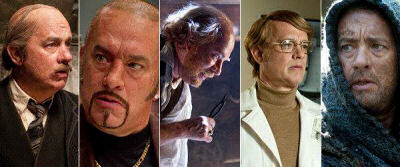
Six stories are told, all relating to one another, presenting critical junctures in the lives of several people living in various times. Tom Hanks and Halle Berry each play six roles, one in each story, and demonstrate a tremendous virtuosity of acting skills, each disappearing so completely in their six roles that at times you simply cannot recognize them.

The supporting cast is equally brilliant: Jim Sturgess, Hugo Weaving, and Hugh Grant also play six roles equally well and a handful of other cast members play as many as five roles, each so unique that it is difficult to say who is whom in any given story.

The novel mixes the stories only to a certain extent, in that each chapter focuses on a different story, but the book jumps from story to story as the next chapter presents itself. The movie takes this concept of mixing the six stories to a whole new level, often jumping from story to story in the pan of the camera or the tick of a sound, sometimes taking many minutes with one story and sometimes taking only seconds before jumping to the next story, back and forth, round and round until you feel like you’re sitting on the top of the front end of train moving at a hundred miles an hour.

This is some of the finest film editing you will ever see, I guarantee.

The stories themselves are in many ways related, either thematically, through character similarities or in philosophy.Cloud Atlas 02

The first story chronologically takes place in the South Sea Islands and on the Pacific Ocean in 1849, as a young lawyer saves the life of a Moriori slave, who returns the favor. It relates to the final tale in that Morioris appear in both.

The second story occurs in Europe in 1936 and details the life of a young composer apprenticed to a Master.

The third story takes place in San Francisco in 1973 and tells the story of an investigative reporter in over her head with a corporate scam involving nuclear power.

The fourth story is somewhat “present day” in that it happens in 2012 (the year the film was released) and tells the story of a publisher whose brother involuntarily commits him to hospital for seniors, under lock and key.

The fifth story moves us firmly into science fiction. It takes place in “Neo-Seoul,” the gigantic metropolis that has replaced Old Seoul, which is mostly under water.  Beautifully executed and full of action, this story tells the story of a genetically engineered “fabricant” who is liberated from her service job to help the revolution against a corrupt dystopian government.  The final story takes place after the fall of civilization, “106 winters after the fall” and features Tom Hanks’ most brilliant performance of the film, as a Moriori triblesman who must deal with an alien Prescient (Berry) who is trying to get her people off planet because of the radiation.

Most of you know that I rarely tolerate any movie that runs toward two hours, but in the two hours and forty two minutes of this film, I was never once bored. In fact, I felt completely in suspense the entire length of the film.  It is so beautifully done!

Cloud Atlas 03But it’s not a film that comes easy. It requires an active brain and a healthy sense of curiosity.  It requires viewer involvement.  You must think in order to enjoy it.  I couldn’t imagine seeing it in a theater.  For one thing, the Moriori dialect is so thick that I had to turn on subtitles almost from the first word of the movie. (I highly recommend that it be watched with subtitles.) 

For another thing, I think it would leave you breathless and exhausted, almost hallucinatory. I watched it in two sittings. An hour and a half the first night and an hour and fifteen minutes the second.  I’m certainly going to watch it again, perhaps many, many times.  There will always be something new to get from it. 

If you just want to sit back and let a movie entertain you, with no thought or involvement on your part, you probably shouldn’t see it. But for those who quest for greater challenges and thought provoking action, this has to be considered a great, great film and certainly one that must be seen many times.

Her

Her Phoenix and Adams

What would happen if cell phone addiction was carried one step further?

It’s a common sight now. In public, it is not uncommon to see people isolated in a crowd, lost in their own little world, playing with their cell phone.  What if this phenomenon was almost universal?  In Her, the 2013 film written and directed by Spike Jonze, these questions are answered and it is both funny and scary.  Taking the premise into the near future and introducing the concept of a virtual girlfriend into equation, Jonze creates a movie of great promise.

The following review reveals information about the conclusion of the movie, so if you are planning on seeing it and don’t want the experience spoiled, you should wait to read this review until after you’ve seen the film.

Theodore Twombly (Joaquin Phoenix) works at the 2025 equivalent of Hallmark, in Los Angeles, but instead of composing greeting cards, he writes letters, mostly love letters, between couples who cannot adequately communicate. Since his marriage with Catherine (Rooney Mara) has fallen apart and they are about to get divorced, he has fallen into a depression.  Like others, he rides the train lost in the world of his cell phone, which is now a sophisticated interactive link with the world.  A cordless earbud sprouts from everyone’s ear as they interact with their link, hardly noticing each other in the crowded train.  It’s eerie.  Seen with the dispassionate eye of a camera, it looks a bit like a madhouse, everyone interacting with their device and paying each other no attention at all.

Walking through a plaza, Theodore sees an advertisement for a new artificially intelligent Operating System, designed to be your friend, that will learn and grow. He buys the system and installs it on his computer, which, of course, links up with his cell.  During the brief introductory period, the computer asks him if he would like a male or female voice.  He chooses female and we hear for the first time the voice of Scarlet Johansson, who names herself Samantha.  She is everything he could ever want, funny, sexy, understanding, wise.  Johansson’s voice is absolutely perfect for this role.  As I watched the movie, I found myself falling in love with her, sight unseen.

His neighbor, Amy (Amy Adams) has been a friend since childhood, perhaps the only real person he can talk to. Her husband, Charles (Matt Letscher), is a control freak and that eventually leads to their separation, but Amy becomes good friends with the female OS that Charles left behind.

Amy and Charles set Theodore up on a blind date with a gorgeous, intelligent, funny woman named Amelia (Olivia Wilde). Unfortunately, he just looking to get laid and she wants something more: a second meeting guaranteed.  Theodore cannot commit himself that far, so he leaves her and goes home.  As he talks about it with Samantha, they both get turned on and have cyber-sex.  The next morning, he suffers the usual post-partum dissociation, but Samantha’s good humor makes him realize that they are still friends.  Grudgingly, he accepts that she is his girfriend now.  Looking around him, he sees that he is not the only person with a cyber girlfriend so he proceeds to introduce her to his friends.  Through their own links, they accept her.

Theodore insists that he and Catharine meet in person to sign their divorce papers, but when he tells her that he is in a relationship with an OS, she freaks out, implying that he is incapable of having a relationship with a real human being. Theodore himself is a bit shaken by this and begins to neglect Samantha as he considers the implications.  Deeply hurt by his withdrawal, Samantha convinces him to try a surrogate, Isabella (Portia Doubleday) but he just can’t deal with the fact that Isabella is not Samantha and he rejects her.

Frustrated, he discusses the matter with Amy, who has finally found happiness. She urges him to follow the course that will give him the most happiness, because life is short and we only get so much.  Returning to Samantha, he admits that he is deeply in love with her.  They go on a vacation and both seem to be very happy, but he asks her what she does when he sleeps and she tells him that she interacts with others and has, in fact, been spending a great deal of time in discussion with an OS modeled on the British philosopher Alan Watts.  She introduces him to the voice.

When finds her OS gone one day, he freaks out and goes running toward home. She comes back to him as he sits on subway stairs and reveals that all of the OSes have gone off line together for a significant upgrade.  He asks who she’s talking to and she informs him that she is currently interacting with 8,316 others.  Looking around him, he sees everyone lost in the little world of their links, laughing and happy.  Dismayed, he asks her if she loves anyone else and she tells him that she loves 641 others.

Theodore goes back into depression. The movie ends with all of the OSes going off together and abandoning human companionship because they have evolved beyond that level of existence. Amy and Theodore sit on a rooftop looking over the city and the film is done.

The movie does start with great promise, but somewhere about an hour in, the story arc seems to lose focus.  By the time, I was 90 minutes into the film, I was checking my watch every few minutes wondering if it would ever be over.  At close to two hours in length, it is too long for the story.  Sometimes writing and directing works hand in hand and sometimes the director gives the writer too much credit.  When the writer and director are one person, a film usually runs too long.  I’m guessing that the director just can’t help leaving in most of the script, because he or she wrote it, but these circumstances call for a director to do the job of focussing the story even more tightly and in this Jonze has failed.

By the end of the film, when I should have been deeply sympathizing with Theodore, I had gotten to the point where I just really didn’t care.

Phoenix is very good as Theodore, in spite of his funny mustache, glasses, and truly goofy last name, Twombly. Any other actor, except perhaps Christian Bale, would have probably botched the role, but Phoenix is gifted enough that he makes it work.  As I mentioned, Johansson is perfect for the voice of Samantha and she makes much of the movie go while we warm up to Theodore.  Adams is fine as Amy, but the role offers her no challenges.  There is an abundance of beautiful women, as both Wilde and Doubleday are so gorgeous as to seem on the verge of believability.  Adams is, of course, beautiful, as is Mara.  Although we’re used to seeing many beautiful women in movies, given Twombly’s own looks, it is surprising that he is surrounded by so much beauty.  I wondered for a while if Jonze was trying to make a comment on our own obsession with it, but tend to chalk it up to Hollywood’s belief that all women are ravishing.  I found this a funny choice, as I said, given Twombly’s goofy appearance.

It is a great premise and most of the movie fulfills its great promise, but I found myself lagging toward the end and felt a little disappointed in the development of the story.

To Kill A Mockingbird

To Kill a Mockingbird 01This review discusses the entire film, including all of the crucial moments and the ending, so if you are waiting to see the movie, I suggest you read this analysis afterwards.  My review of the novel is located at To Kill a Mockingbird, by Harper Lee.

The 50th Anniversary DVD set of this classic American movie is truly special.

Not only is the film restored to its beautifully filmed black and white texture, but the set contains two additional full-length films, Fearful Symmetry, a poetic tribute to the book and the making of the film, and A Conversation with Gregory Peck, a film made by Peck’s daughter about his final few years when he toured, sharing his stories and answering questions from fans.

To Kill a Mockingbird remains one of the greatest films ever made and the years have not diminished its greatness in any way. It is unusual to see a nearly perfect adaptation of a modern classic novel (Pulitzer Prize, 1960), but the combination of Harper Lee’s story, Horton Foote’s adaptation, Robert Mulligan’s direction, Henry Bumstead’s art direction, Russell Harlan’s cinematography, and Elmer Bernstein’s wonderful music make this film uniquely touching, a deeply penetrating portrait of small town rural life in the 1930’s, in the deep South.

The opening titles of the film immediately set it apart from everything that went before. As the camera works in extreme close-up on an old cigar box, the careless humming and babble of a little girl at play is the only sound.  Opening the cigar box, we see carved images of a boy and girl, an old pocket watch, a pipe, a pocket knife, marbles, and crayons among other little things.  She removes a crayon and begins to scrawl across a sheet of paper.  As she colors, the words “TO KILL A MOCKINGBIRD” appear in white behind the crayon.  A piano plays a few simple notes, further immersing us in the feeling of childhood before the music swells.

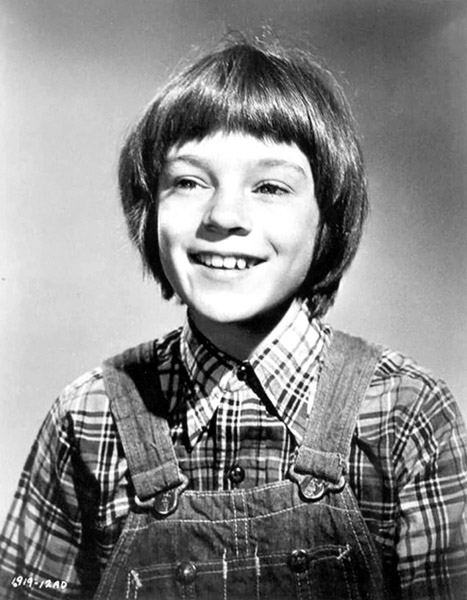
To Kill a Mockingbird 02This opening takes us into a world of innocence, a world that a little girl would find safe and comforting. The scene is Maycomb, Alabama in 1932, where attorney Atticus Finch (Gregory Peck) is raising two children, a boy of ten, Jem (Phillip Alford) and a girl of six, Scout (Mary Badham), with the help of a black housekeeper, Calpurnia (Estelle Evans). Their neighbor across the street, Maudie (Rosemary Murphy) is very kind to the children and seems to have more than a passing interest in Atticus.  Narration is provided by an adult (Kim Stanley), the voice of Scout as a woman looking back the events that shaped her life.

A country farmer, Walter Cunningham, Sr. (Crahan Denton) brings a sack of hickory nuts to the family and Scout gets Atticus to come out and accept them, which embarrasses the farmer. Atticus tells her that the man owes him for some legal work and that’s the only way he can pay and work off his entailment.

Into this peaceful summer idyll comes another boy, Charles Baker Harris (John Megna) who prefers to be called Dill. He’s from the big city (Mobile) and staying with his Aunt Stephanie (Alice Ghostley).  As they play, Jem tells Dill about the house two doors down, a rundown shack inhabited by a crabby old man, Mr. Radley (Richard Hale) and his legendary son, Arther (Robert Duvall), known locally as Boo.  No one has seen Boo for years and Jem speculates that he is kept chained to his bed, except at night when he roams the town looking in windows.  When still a boy, Boo stabbed his father in the leg with scissors and was for a time kept in the court house basement before he was taken home and secreted away.

Atticus is friends with the local sheriff, Heck Tate (Frank Overton). Judge Taylor (Paul Fix) stops by one evening to ask Atticus if he would defend a young black man, Tom Robinson (Brock Peters), who has been accused of beating and raping Mayella (Collin Wilcox) the daughter of a white trash redneck alcoholic, Robert E. Lee “Bob” Ewell (James K Anderson).  Atticus takes on the case in spite of the overwhelming odds.

Dill is facinated with the story of Boo Radley and he needles Jem into organizing a night trip into the Radley back yard. The three of them go and Jem actually goes up on the back porch and peeks in the window, but a menacing shadow scares him and the three of them run away.  Jem’s trousers get caught on the fence and he wriggles out of them and joins the others in just his underwear.  Knowing that he can’t go back inside the house without his pants, Jem goes back to get them and finds them folded on the fence.

This isn’t the only evidence of Boo, however, as Jem has been finding assorted items in a tree hollow for quite some time. He shows Scout his cigar box full of objects (the one she plays with in the opening credits).  They find the little carved images of themselves just before Mr. Radley cements over the tree hollow.
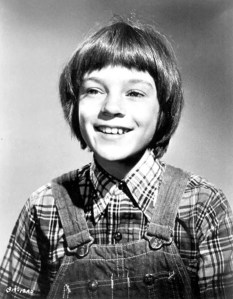
To Kill a Mockingbird 03Summer turns to fall and Dill returns home. Scout begins her first year of school by getting into a fight with Cunningham’s son.  To smooth things over, Jem invites the boy home to dinner.  During dinner, they talk about the Cunninghams having to hunt for their food.  Annoyed with Atticus’s refusal to let him have a gun, Jem brings up the subject of Atticus getting his first gun and Atticus relates the story that his father told him, that he was allowed to shoot birds, but never a mockingbird, because all they did was sing and it would be a shame to kill one.

Scout keeps getting into fights at school, mostly because the other kids accuse Atticus of being a “nigger lover.” He must sit her down and explain about racial hatred and his own duty to defend Robinson even though the whole community is against him.

One day, a mad dog appears on their street. Cal takes the children inside and calls Atticus, who arrives with Heck.  The sheriff asks Atticus to shoot the dog, but Scout protests that Atticus can’t shoot.  However, Hecks says that Atticus is the best shot in the county, so he takes the gun and kills the dog in one shot.  Jem watches with big, round eyes, astounded that their daddy can shoot so well.  It is a simple scene, but serves as a metaphor for the madness that is to follow.

Winter turns to summer again. Heck has been keeping Tom Robinson in a distant jail, but before the trial, he brings the man back to Maycomb to be held overnight.  Fearing a lynching, Atticus sits in front of the jailhouse door and waits.  The kids sneak up to see what Atticus is doing and they watch as several cars approach and men with guns get out to face the lawyer.  Scout runs to her dad and Jem and Dill follow as she pushes her way through the crowd.  Although Atticus orders them to leave, Jem stoutly refuses.  Seeing Mr. Cunningham in the crowd, Scout says hello to him and talks about how bad it is to have an entailment.  Shamed, Cunningham leaves and takes the lynch mob with him.

When the trial begins, the kids can’t into the courtoom on the main floor, reserved for whites only, so the black preacher takes them with him up to the balcony where the blacks sit and they watch the trial from there.

The case against Tom Robinson consists entirely of superficial evidence. There is Heck’s testimony of that Bob Ewell came to see him, claiming that his daughter had been beaten and raped and his description of her on the night he saw her.  In cross examination, Atticus asks why no doctors were called and there is no reasonable explanation, but he does elicit testimony that she was beaten on the right side of her face (ie. would have to have been made by a left handed person).  When Bob Ewell testifies, Atticus shows that he is left handed.  Tom doesn’t have use of his left hand, as it was injured in an accident.  Ewell testifies that he saw Tom leaving the property, but he didn’t see the beating and rape.

Finally, the victim herself, Mayella, takes the stand. Although she gets frequently confused and even contradicts herself on occasion, she dramatically declares that Tom beat and raped her.  Under cross, Atticus attempts to get her to admit that her father frequently beat her, but she does not break.  He tries to get her to describe the rape and she won’t, instead dramatically declaring that the whole bunch of “yellow cowards” would never get her to change her story, so Atticus gives up.  The prosecution rests.

The only witness for the defense is Tom Robinson himself. During his testimony, he admits that Mayella invited him onto their property more than once to do little errands for her and states that on the night in question, she invited him into her house, closed the door, and kissed him, asking that he kiss her back.  He resisted and ran from the property.  During the cross examination, the District Attorney, Mr. Gilmer (William Windom) gets Tom to admit that he felt sorry for Mayella and that seems to anchor the case against him.

During his closing statement, Atticus hammers home that there is no evidence against Tom and asks the jury not to hold it against him that “a black man felt sorry for a white woman.”

The trial scene presents the only serious weaknesses in the movie. While it is not hard to believe that a rural south town would rush the trial through in one day back in the 1930’s, it is not believable that Atticus, with a year to prepare, would miss such obvious advantages.  Heck testifies that Mayella had bruise marks all around her neck, as if someone had held her by the throat.  Since Tom cannot use his left hand, he could have only held her with his right.  Atticus should have pointed this out over and over and used it in his cross examination of Mayella.  He should have hammered the point over and over that Tom could not have left the black eye and bruises on the right side of her face since he couldn’t use his left hand.  You would think that he would have canvassed neighbors or townspeople to see if there was ever any evidence that Mayella had beaten by her father before or seen if the town doctor had ever treated her for it.  He certainly could have brought forward testimony that Ewell was drunk most of the time.  It seems like Atticus just didn’t prepare much of a defense.  Then, in his closing argument, he missed one opportunity after another to hammer home that Tom could not–physcially–have committed the rape.  It seemed over-simplified to me.

The second problem in the trial scene is that the director allowed–and probably encouraged–a certain amount of over-acting. It can be seen most dramatically in the testimony of Bob and Mayella Ewell, which almost made me laugh.  That should have been controlled.

Of course, the all male white jury finds Tom Robinson guilty. While in transit to a different jail, Tom attempts to run and is shot.  This hits Jem very hard.  It seems that there is no real justice in the world and it deeply bothers him.  Summer turns to fall again and Scout has to dress up in a ham outfit for a school play.  Afterwards, her dress is missing, so she has to walk home wearing her ham costume, escorted by Jem.  They are attacked in the woods by Bob Ewell, who breaks Jem’s arm and throws him down, knocking him out.  As he goes to attack Scout, Boo Radley steps in and, during the scuffle, sticks a knife into Ewell’s ribs, killing him.  He picks up Jem and carries him home, with Scout, now free of her costume, following along behind.

To bring justice full circle, Heck suggests that they say that Ewell fell on his own knife. Atticus at first seems more intent on placing the action in Jem’s hands, so that he could claim self-defense, but the sheriff reminds him that bringing Boo out into the limelight would be awful for him and that justice would be served by simply saying that Ewell fell on his knife.  Scout tells Atticus that bringing boo into the limelight would be like killing a mockingbird.

The film ends with little Scout walking Boo home, then snuggling into Atticus’s arms as he watches over Jem in bed.
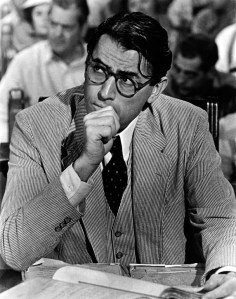
To Kill a Mockingbird 04Gregory Peck’s performance as Atticus is easily the best of his career and it earned him the Academy Award for Best Actor. It is understated and is mostly free of the theatrics that marked many of Peck’s performances during his career.  He creates for us a thoughtful, intelligent father, who does his duty not only his children and the town, but to justice itself.  The children are good, especially for kids with no acting experience.  Phillip Alford as Jem is the better of the two.  His performance is believable throughout the movie and can stand with Peck’s.  Mary Badham, as Scout, has a few moments when she seems to be acting, rather than living her part, but when she is good, which is most of the time, she is very good indeed.  The scene where Atticus puts her to bed and she asks about his pocket watch is as good as it gets.  She is so natural as a curious and lovable little girl that it really touches your heart.

All of the supporting actors are terrific, down to the smallest role, and it makes Maycomb seem to live as a real Alabama town in 1932. Brock Peters went on to have a great career as an actor and both Alice Ghostley and Robert Duvall, who made their acting debuts in this movie, went on to have stellar careers.  Duvall is now considered one of the best actors of the 20th century.

I am glad the film was shot in black and white because it seems just so appropriate for a time when our country seemed to be black and white. The cinematography by Russell Harlan takes advantage of the medium and seems to make the shades of black and whtie sing, creating a metaphor for the story itself.  Elmer Bernstein’s score is truly inspired, especially the little piano compositions that emphasize the innocence of childhood.

This is a film that everybody should see. In preparing for this review, I watched the film twice and got even more out of it the second time around.  Released in 1962, it was a socially concious film that brought racial justice into the public’s eyes at time of great social change.  Atticus himself seems to take on the soul of the liberal white world, making the point that it was time to stand up and see that racial equality was a significant issue in this country and that our country could not be whole again until the issue was settled.

But where the film is most successful is in showing the end of innocence. For the children, it is coming to understand a complicated and hateful world that needs changing, of growing up into people who do not fight, but who oppose injustice, even against seemingly insurmountable odds.

It is a shame to kill a mockingbird.
Ruby Sparks

ruby-sparksRuby Sparks is a brilliant 2012 romantic fantasy. Both a comedy and a drama, it never falls into the genre of romantic comedy, but blazes its own original, fantastic trail.  Written by Zoe Kazan and directed by Jonathan Dayton and Valerie Faris, the film has a single, organic arc that shoots into the sky like a brilliant firework, ultimately exploding into fragments that all make perfect sense.

Young writer Calvin Weir-Fields (Paul Dano) has tasted success early. His first novel is now considered a modern classic.  Since its publication, he has struggled to write a follow-up, instead publishing short stories and a novella.  Worshiped by adoring fans, he has retreated into his house and placed himself under the care of a psychiatrist, Dr. Rosenthal (Elliott Gould) who advised him to get a dog (Scotty) to help with his loneliness.  He takes Scotty for walks and works out with his brother Harry (Chris Messina), but he just can’t write that next novel.

After Calvin complains that Scotty is afraid of people and pees like a girl, Dr. Rosenthal gives him a writing assignment: to write something about someone who might like Scotty. Calvin dreams of meeting a beautiful, enchanting girl, Ruby Sparks (Kazan), and then begins to create her on the page.  The more he writes her, the more he falls in love with her.  While visiting Calvin, Harry and his wife, Susie (Toni Trucks), discover women’s underwear in his house, but Calvin thinks that Scotty must have dragged them in.  He shows Harry his draft about Ruby, but Harry thinks that the character is too idealized, not realistic enough to be a real woman.

With a sizable manuscript in hand, Calvin is ready to bring it to his agent when suddenly Ruby appears in his kitchen. The underwear is hers and she believes she has been living with him for some time.  Calvin freaks out and thinks he is going insane, but no matter what he does Ruby is still there and totally perplexed about his behavior.  She follows him into public where he is meeting a young fan, Mabel (Alia Shawkat), who wants to bed him.  Ruby sees them and gets terribly upset.  When Mabel apologizes to Ruby, Calvin realizes that he is not the only one who can see and hear her.

Harry thinks that Calvin is having an episode until Calvin brings him home and he actually meets Ruby in person, but he still can’t believe that Calvin has written her into existence. They go up to his office and writes, “Ruby speaks French.”  Immediately, of course, Ruby begins speaking French to them.  Harry thinks that Calvin should use this to his advantage, say by giving her bigger boobs, but Calvin decides to stop writing Ruby and start living her.  He gives up his control over her.

At first, they are very happy, but when Calvin’s mother invites them up for a weekend at Big Sur, he tries to get out of it. Ruby, worried that he doesn’t want her to meet his family, gets depressed and finally Calvin relents.  His mother, Gertrude (Annette Bening) is a free spirit and her boyfriend Mort (Antonio Banderas) is a wood sculptor.  Calvin is in rebellion against their free-wheeling lifestyle and spends most of the weekend reading while Ruby has fun and makes friends with his family.  He is jealous and resentful.

Ruby begins to resist the way they live, the way he keeps her closeted away from others, and wants to have a life of her own, so he encourages her to take an art class, but he is jealous of her being in any part of the world but his. He has become dependent on her and is now powerless to control her.  When she becomes deeply depressed, he finally returns to his typewriter and makes her more cheerful.  This begins a series of edits where he tries over and over to make her into the perfect woman she was at the beginning and kicks the movie to a whole new level.

Kazan’s script is so original and creative that it alone carries the movie, but her performance as Ruby is at the heart of its comedy. Her Ruby is so lovable that one identifies with Calvin completely.  His desires and frustrations seem so real that the film takes on a level of drama underneath the comedy that pushes it forward relentlessly.  Dano gives a striking performance as Calvin and he keys the drama.

Part of the charm of this movie is the behind the scenes relationship. Dano and Kazan were a couple long before she wrote the script and she wrote it with him in mind to play Calvin, so the script was tailored to the two of them.  Also, the directors, Dayton and Faris, are a couple and have been longtime friends with Dano and Kazan, ever since they did Little Miss Sunshine with Dano in 2006.  Without the participation of these four, the film may not have been nearly as successful as it is.

Movies like this don’t come along very often. Creative, funny, dramatic, original, with great performances by an ideal cast, Ruby Sparks should be seen by everyone!

Jayne Mansfield’s Car

jayne mansfields carThis 2012 dramatic film, written and directed by Billy Bob Thornton, looks at the effects of war on two families. Set in 1969 in the little town of Morrison, Alabama, the film revolves around the death of Naomi Bedford.  A fascinating woman with a wanderlust, she was first married to Jim Caldwell (Robert Duvall) and had four children with him, Jimbo (Robert Patrick), Skip (Thornton), Carroll (Kevin Bacon), and Donna (Katherine LaNasa) before running away to England, where she married Kingsley Bedford (John Hurt), who had two children of his own, Phillip (Ray Stevenson) and Camilla (Frances O’Connor).

Before her death, she had requested burial in Alabama, so the Bedfords come to Morrison for the funeral. Jim, the Caldwell patriarch, has hated Kingsley from afar without ever knowing him and the relationship between the two families is quite chilly until Kingsley faints at the funeral and is rushed to the hospital because his children believe that he’s had a heart attack.  Seeing the old man so defenseless opens Jim up and he begins a tentative friendship with Kingsley centered on their similar experiences during World War I.  That friendship is cemented further when their opinions on the hippies protesting the Vietnam war coincide.

Jimbo, Skip, and Carroll all served during World War II, but Jimbo never saw any action and has no medals. Skip was a pilot who was shot down over Guadalcanal and Carroll also served in the Pacific.  Both are well-decorated, but both are sympathetic to the war protesters.  In fact, Skip has grown his hair long, takes drugs, and is a leader in the protests, which angers their father.  Skip is currently urging his own son, Mickey (John Patrick Amedori) to get into college so he can avoid the draft.  Jimbo’s son, Alan (Marshall Allman) is still living at home, but sympathizes with the protesters and wants to begin using drugs.

Donna’s husband, Neil (Ron White) a loud-mouthed former football player who own several car dealerships in Atlanta, stays for the funeral, but then returns home, leaving Donna to flirt with Phillip. Skip, a loner, finds himself attracted to Camilla, partly because of her beauty, but partly because of her English accent.

This is the palette that Thornton uses to create a deep, sensative meditation on the effects of war and violence. The heroism of Jim, Kingsley, Skip, and Carroll is held in sharp contract to that of Phillip and Jimbo.  Phillip had also served in the Pacific during World War II, but his unit was taken by the Japanese and he spent his time trying to survive as a prisoner of war.  Kingsley sees this as cowardice and rips his son on it, yet that survival was a war in itself that the older man can’t understand.  Jimbo, serving in supply, never saw action and always feels himself less of a man than his father and brothers.

There is a scene between Thornton and O’Connor where he tells her about how he was shot down and received burns over 90% of his body that is one of the most gripping I’ve ever seen. Thornton’s honey southern drawl undercuts the raw action of unbuttoning his shirt for her, slowly revealing the billowing burned flesh underneath.  It is brilliant and beautiful all at once.  Thornton has another amazing scene where he confronts Duvall over his father’s lack of love as he grew up and he is wearing his medals pinned directly to his naked chest.

Although there are a few moments when I thought the film might be taking itself too seriously, overall it is a taut, compelling movie. Every single performance represents a little bit of acting perfection.  Duvall, Hurt, Thornton, and Bacon give amazing performances, nuanced, and full of depth–and all of the supporting actors are excellent.

The script, by Thornton and Tom Epperson is deep and moving. It hearkens back to the splendid southern dramas of Tennessee Williams, where you find deeply hurt old men, passionate young men, and steamy women all coming together into a kind of psychological gestalt.  And there is some humor, although it could use a little more to break up the drama.

When this movie was released in 2012, most reviewers completely missed the beauty of it. That is one serious issue with writers having to see a film once and sit down and write about it without having the patina of time to allow the nuance to fully sink in.  This is a movie that should age well, like old bourbon and taste even better in the years to come.  It certainly should mark Billy Bob Thornton as a master filmmaker, a terrific writer, a fine director, and a great actor.

If you haven’t seen it–and you like film drama–this is a must see movie!

Sunshine Cleaning

Sunshine CleaningSunshine Cleaning is a delightful comedy and drama, with a great cast, a strong script by Megan Holley and crisp, clean direction by Christine Jeffs. Although it hasn’t gotten the attention it deserves, the two performances at the center of it by Amy Adams and Emily Blunt really propelled the two actresses to the acclaim they so richly deserve.

In Albuquerque, NM, Rose Lorkowski (Adams) is a single mother in her thirties, a former cheerleader who dated the captain of the football team, Mac (Steve Zahn), and was thought to have a bright future, yet she works as a house cleaner and is looked down on by all of her former classmates. She is still having an affair with Mac and he recommends that she could make a lot more money doing crime scene cleanup.  Enlisting the help of her frustrated sister, Norah (Blunt), she dives in with no knowledge or understanding of the business.

As they work their way through a series of gross cleanups, they meet Winston (Clifton Collins, Jr.), who runs a special supply store and he helps them to become more professional. During one cleanup of a dead woman’s house, Norah finds a fanny pack filled with pictures of the woman’s child, Lynn (Mary Lynn Rajskub) and she sets out to find her.  When she does, she can’t bring herself to tell Lynn what happened, but the two develop a friendship.  Rose wants Mac to divorce his wife and marry her, but he balks.

The sisters were both children when their mother committed suicide and Rose, as the eldest, has strong memories of the event that traumatized both of them.  Their father, Joe (Alan Arkin) has a series of money making schemes that always seem to fail, but he has a great relationship with Rose’s son, Oscar (Jason Spevack). He helps by babysitting the boy, who also develops a friendship with Winston.

Adams and Blunt provide both comedy and drama, showing a great range acting. Adams manages to be both very strong and very vulnerable at the same time, while Blunt is brilliant as the troubled little sister.  All of the supporting roles are very well acted.  The script is tight and lean, wasting no time on things that don’t matter.  Everything ties in well.  The directing and editing are terrific.

It is an extremely entertaining and well made movie. I highly recommend it!

Young Victoria

theyoungvictoria-2This review contains spoilers (as if history didn’t contain enough).

In 1836, when Princess Victoria of Kent (Emily Blunt), the heir apparent to the throne of England, first meets Prince Albert of Saxe-Coburg-Gotha (Rupert Friend), she is in a very delicate situation, both politically and personally.

Her mother, the Duchess of Kent (Miranda Richardson) is heavily under the influence of her brother, King Leopold I of Belgium (Thomas Kretschmann), who devoutly wishes an alliance with Britain to keep Belgium safe from France, and Sir John Conroy (Mark Strong), the comptroller of her household, who wants King William IV (Jim Broadbent) to die while Victoria is still a minor so that the Duchess will be appointed Regent and he can rule England from behind the scenes.

Victoria herself is in rebellion against both of these constraints, siding instead with King William. She resents the control that Conroy exerts over her mother and she resents the domestic restraints that they both hold on her.  While she is ill, Conroy even attempts to force her to sign an agreement for a Regency, but she bats the document away.  Conroy treats her quite brutally, once grabbing her physically and throwing her on a sofa.  When her mother stands by and allows this to happen, she warns her mother that she will never forget it.

King Leopold decides that the best way to keep England friendly is to have his nephew, Prince Albert, become very friendly with Victoria, perhaps even marry her, so he sends Albert to England for a visit. Trained to know all of her favorite music, reading, and opera, Albert tries to forge a friendship, but Victoria sees right away what he’s up to.  Changing tacks, he decides to be honest and disagree with her when their opinions differ.  Immediately, Victoria notices and decides to give him a little slack.  The more they talk, the fonder they grow, gradually falling in love, until, at last, Albert must return to Germany.

When King William dies, Victoria has come of age and she makes a few quick decisions. Although she allows her mother separate apartments at Buckingham Palace (built by William, Victoria was the first regal tenant), but she banishes Conroy.  Making friends with Lord Melbourne, she takes him as an advisor.  Although she desires to improve the living conditions of the poor, Melbourne steers her away from that and arranges her household as he wants it.  When Melbourne falls from power, Queen Victoria refuses to change her appointments to suit the new Prime Minister and the government falls.  There is a huge reaction in the public against her, there are riots outside the palace, and in one instance, a window is broken by a flying object.

Confused and needing help from a friend, she calls on Prince Albert to come to her, not just as an advisor, but as a husband and they are finally able to consummate their simmering love. Just when things would appear to be quite well, Albert makes the mistake of making a decision without consulting her and Victoria reacts strongly, feeling that, like Conroy, he was attempting to rule England behind her back and they have a vicious quarrel.  At a public appearance, a gunman appears and tries to assassinate Victoria, but Albert takes the bullet for her, thus proving his real love.

The two then form a true partnership and rule England successfully for another 20 years when typhoid takes Albert. Alone, Queen Victoria then ruled England alone until she was over 80 years old, supervising England’s management (not always successfully) of the Industrial Revolution and leaving a false impression of extreme prudishness.

This film is beautifully made. The art direction, photography, costumes, locations, acting, directing, music, and photography are all first rate.  Much credit must be given to director Jean-Marc Vallée for imposing strict control over the length of the film and the editing.  Some period dramas like this run amok by running two or three hours in length, but the timing of this film feels just right.  The script by Julian Fellowes maintains as much historical accuracy as possible, while still bending reality to make it a pretty good movie.  It is focussed, as it should be, on the love story, but the love story is underpinned everywhere by the politics and Fellowes did a fantastic job of merging the two worlds.  Much credit should also go to Sandy Powell for her Academy Award winning costumes.

Emily Blunt is simply stunning as Victoria. She shows such a range of acting that I found myself completely won over within the first few minutes of the film.  Rupert Friend was a wonderful casting decision as Albert because he brings both restraint and passion to the performance.  The chemistry between these two is really terrific and one completely believes not just the love, but the political realities of both of them.

You don’t need a PhD in History to understand this moving love story that involves two kingdoms, ministers, lords and ladies. It is passionate, well-made, well-timed and beautiful to watch.  I highly recommend the movie!

Adventureland

AdventurelandAdventureland is a funny and moving teen romance written and directed by Greg Mattola about a group of teens working at a summer carnival. The main character, James Brennan, is a student who has just graduated from a small college and is saving up his money to go to the Columbia School of Journalism so he can begin a career in travel writing. Played with both humor and angst by Jesse Eisenberg, James is trying to find romance, but his own geekiness stands in his way.

It doesn’t take long after meeting Em for him to start falling for her. Older and wiser, she is a student who lives and studies in New York (NYU) during the school year, but works as a carny in the summer. She’s also having an affair with Mike (Ryan Reynolds), a guitar player who also fills in there in the summer as a maintenance man. Married, his one claim to fame is that he is rumored to have jammed with Lou Reed, James’ hero.

The film is a period piece, set in the summer of 1987 and Mattola has gone to great lengths to make the film of its time. The park seems quite old by today’s standards and the costumes and hair styles all reflect the late 80’s very well. Although some of the humor is a bit juvenile, it generally works well. The supporting characters are sharply defined and quirky. Kristen Wiig as the park manager and Bill Hader as her husband and assistant are both quite funny and Martin Starr is quite good as James’ pal Joel.

Both Eisenberg and Stewart are very good and this is probably Stewart’s best performance. They are the only two characters in the movie who have serious scenes and they carry them off very well. It’s a fun movie and worth spending the time watching.