The Songs of Distant Earth by Arthur C. Clarke

The Songs of Distant Earth is a very thoughtful science fiction novel. It’s not chock full of chases and weird experiments or other derring-do, but it keeps the reader involved and more importantly it makes the reader think. It is a good example of what is known as “hard science fiction”. Written by Arthur C. Clarke, a man who is no stranger to science, the book deals more with real possibilities than with theories that have no apparent foundation in reality.

Songs of Distant Earth

The main portion of the book occurs somewhere during the 39th century, around 200 years after the Earth’s sun has gone nova. With the benefit of a thousand years’ warning, mankind has developed and sent seed ships to the stars with the most hospitable planets orbiting them. The ships contain the seeds to rebuild mankind, from humans to domestic animals to bacteria necessary for human survival, to be shepherded into life by robots. The ships cannot travel very fast so the great distances take hundreds to thousands of years. But humans keep making the ships better and by the time the solar system is incinerated, they have developed a quantum drive, which allows them to travel at close to 20% of the speed of light.

One of these advanced starships, among the last to leave Earth, the Magellan, is travelling toward a system with a planet that has been named Sagan Two. The planet is presently inhospitable to life, but is covered in massive amounts of ice. The Magellan aims to terraform the planet by melting the ice and using their quantum starship to maneuver the planet into a more biofriendly orbit.

Along the way, they travel very close to the planet Thalassa, which had been the destination of an earlier seed ship, which reported in upon colonization, but then had lost contact with Earth. The Magellan decides to investigate and to look into using the water on the planet to re-ice their deflector, which has become worn out from constant collision with space dust.

Thalassa is a beautiful planet, mostly covered in oceans, but with three large islands that support a functioning human society. But it is a society that has become complacent and happy in their idyllic existence. The Magellan upsets this becalmed life when it appears and sets up its ice factory. The crew from the Magellan mingle with the population and become involved with the people who live there.

Of course, the inevitable happens and several crew members want to stay on Thalassa. Others want to end the mission and stay permanently on Thalassa, using the volcanism of the planet to create new land masses for the colonists sleeping on the ship.

Ultimately, the novel deals with the question of whether humanity can thrive without the existence of challenge. Our history has been the story of struggle against the elements, survival against the wild beasts and survival against each other. Our literature is full of strife and most people would say that any good story depends on it. What happens when that gets bred out of the species? If you remove challenge and aggression, will we stagnate?

It is a well-written story that I highly recommend.
Capote

Philip-Seymour-Hoffman-Capote

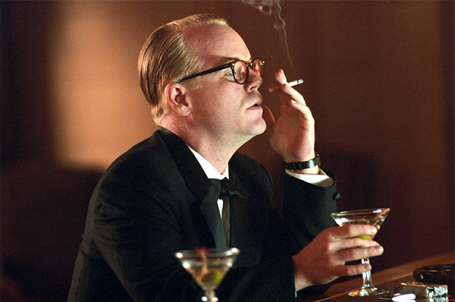
Bennett Miller’s film Capote is a well-crafted, thoughtful look at the process by which Truman Capote sculpted his novel In Cold Blood. The restrained control of color, minimal sets and costumes, and stark cinematography make this film so good that it should be studied in film schools as a masterful use of time and funding.

At the heart of the film, though, is a great performance by Phillip Seymour Hoffman as the diminutive novelist who followed his instincts to a small Kansas town to investigate the murder of the Clutters, a family of four, execution style, in their own home. The way he insinuated himself into their landscape was nothing less than audacious, especially for a flamboyant New York homosexual. Hoffman won the Academy Award as Best Actor for this beautiful, studied performance. He portrays Truman Capote as the consummate artist searching for the heart of the story and finding it in the person of the primary killer, Perry Smith, portrayed with restrained power by Clifton Collins, Jr. The relationship that develops between this unlikely pair is pinned on the fact that both of them had difficult childhoods.

Capote lies repeatedly to Perry to get the answers he needs. The heart of In Cold Blood resides with Perry’s unpredictable rampage that turned a robbery gone wrong into a heartless mass killing. The novelist takes his time to slowly lead Perry to tell the story until time runs out and he must manipulate the killer into telling how everything went down that night at the farmhouse.

A number of subordinate performances are also of extremely high quality, including Catherine Keener as Capote’s research assistant and brilliant novelist in her own right Harper Lee (To Kill A Mockingbird) and Chris Cooper as the officer in charge of the investigation.

I urge anyone interested in either filmmaking or the art of the novel to see this movie. It is truly brilliant.


Steve McQueen by Marc Eliot

Steve McQueen

Steve McQueen by Marc Eliot is a spare and generalized biography that focuses on the films made by the iconic actor. While the films are examined in some detail, Eliot spends the rest of his time detailing McQueen’s life outside the set.

The actor was a troubled child who was moved around the country and dropped off with various relatives for extensive blocks of time. His father left them when he was still an infant and his mother could not maintain a steady relationship throughout his life. Steve spent a lot of time running with gangs on the streets of Los Angeles and spent stints in the boy’s reformatory in Chino, California and in the United States Marine Corps.

His last trip to New York City, saw him hooking with up an aspiring actress and following her into various acting studios. With his chiseled good looks, he was a natural to follow Marlon Brando and others into the Method school of acting.

From the time he was old enough, he went from one woman to another until he finally met Neile Adams, fell in love, and married her. He went quickly from off-Broadway plays into the live television scene that was hot in New York. When his wife got a job in Los Angeles, they relocated and he translated his career from television to film. Although they had two children, Neile had to put up with his constant infidelity. He also began using drugs, first pot, then coke and finally hallucinogenics. With his monster macho ego, he began spending his earnings on fast cars and motorcycles, even racing with professionals.

After sixteen years of marriage, he forced his wife to admit that she’d had an affair. Even though he had slept with hundreds, perhaps thousands, of women, he was enraged and beat her up. He practically isolated his second wife, Ali McGraw, in their home and he hit her once before she filed for divorce. And he was married a third time, very briefly before his death of mesothelioma, lung cancer caused by excessive exposure to asbestos. (He was exposed while in the Marines, where he worked in the engine room, cleaning and repairing asbestos covered pipes and he was also exposed throughout his adult life to asbestos coating inside race cars.)

His filmography includes such classic films as The Blob (1958), Never So Few (1959), The Magnificent Seven (1960), The Great Escape (1963), The Cincinnati Kid (1965), The Sand Pebbles (1966), The Thomas Crown Affair (1968), Bullitt (1968), The Getaway (1972), Papillon (1973), and The Towering Inferno (1974).

The book moves very quickly, an easy and engaging read. Even though Eliot presents a very unbiased narrative, I have to admit that I went into the book admiring McQueen’s acting and I left it absolutely hating him as a human being. Of course, he lived in a different era, but that is still no excuse for the way he treated other people. He was like a hurt child who never, ever grew up to take responsibility for his actions. And he died with no remorse at all for what he did to his first wife. In spite of the hefty list of good films and good performances he left behind, Steve McQueen was ultimately far less of a man than the “King of Cool” he presented

20 Feet From Stardom

20 Feet From Stardom is a documentary about all of the really great backup singers from the ’50’s, ’60’s and ’70’s, the people, especially black women, who broke the mold and changed the sound of pop music.

Darlene Love

The movie focusses in especially on Darlene Love, who sang lead on the recordings, “He’s A Rebel,” “Da Doo Ron Ron”, and “Uptown,” Merry Clayton, who has backed up everyone and is known primarily for her kick-ass solo on the Rolling Stones’ Gimme Shelter, and Lisa Fischer, a remarkable singer who has now been with the Rolling Stones since 1980 singing a variety of stuff. She’s won a Grammy for her solo work and she has an amazing Jazz voice.

This movie also explores some of the more talented young singers working today, including Judith Hill, who started out with Michael Jackson. A wonderful film full of lots of really great music and interviews with Mick Jagger, Bette Midler, Sting, and a whole bunch of others. This is a must see for anybody even remotely involved in music!

                                                                                                    
Lisa Fischer 


Merry Clayton

Juno

10010314_837456596284292_3801910112889141540_o

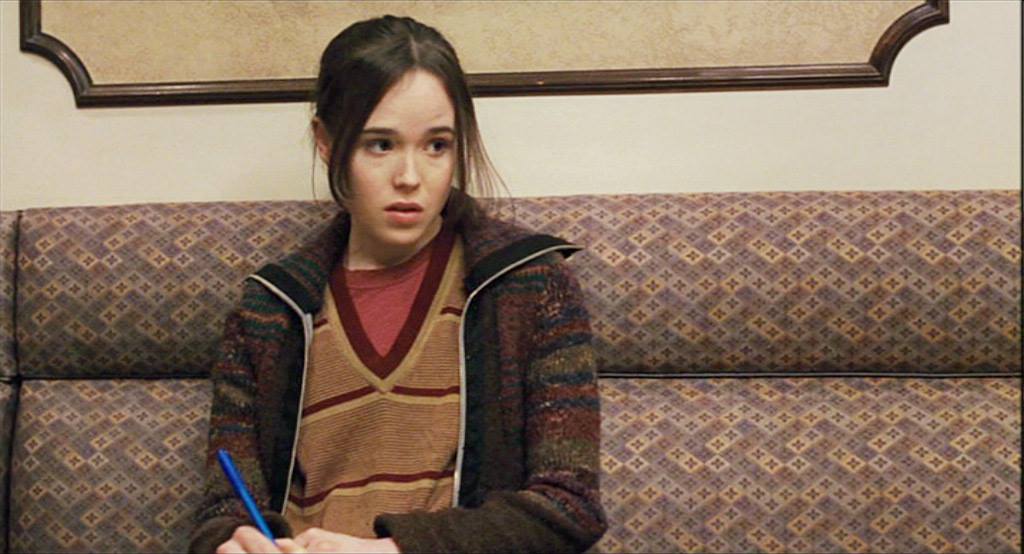
I was really bowled away by Juno. What a great film!  The story of a teenage girl named Juno MacGuff (Ellen Page) who gets pregnant and decides to carry the baby and give it up for adoption to a needy couple, this movie really delivers great comedy and great drama.  Page is so natural and relaxed in her performance that she is completely believable and she literally carries the movie. The Academy Award-winning script by Diablo Cody is a wonder.  The dialogue is quick, witty, full of pithy phrases that separate Juno and her friends from the run-of-the-mill teenagers at her high school (“Desperately seeking spawn” LOL).  Directed by Jason Reitman, it hits every note spot-on and leaves you with just an amazingly good feeling.

It’s full of wonderful supporting performances, including: Michael Cera as Paulie Bleeker, Juno’s dorky boyfriend and father of the child, J. K. Simmons (the wonderful pitchman at Farmer’s Insurance University) as her dad, Allison Janney as her step-mother, Jason Bateman and Jennifer Garner as the anticipated foster parents. They all work together brilliantly in an ensemble cast all clustered around the wonderful performance by Ellen Page at the center and heart of the movie.

So GOOD! I highly recommend this film to literally EVERYBODY!