Silver Linings Playbook

“The world will break your heart ten ways to Sunday. That’s guaranteed. I can’t begin to explain that. Or the craziness inside myself and everyone else. But guess what? Sunday’s my favorite day again. I think of what everyone did for me, and I feel like a very lucky guy.”

Cooper and Lawrence Silver Linings PlaybookThis delightful comedy/drama was written and directed by David O. Russell, adapted from the book The Silver Linings Playbook by Matthew Quick.  Centered around two quirky people, both at a crossroads in their lives, the film presents bi-polar disorder as a condition that can be overcome.

Pat Solatano, Jr. (Bradley Cooper), a former high school teacher, is held in a Baltimore psychiatric hospital for an episode in which he beat another teacher after finding him in the shower with his wife Nikki (Brea Bee). After serving his court-ordered eight months, his mother Dolores (Jacki Weaver) gets him out.  In the parking lot, a fellow inmate, Danny (Chris Tucker) jumps in the car, announcing that he has been released, too, but Dolores gets a call from the hospital asking that Danny be returned.  Arguing with his mother, Pat grabs the steering wheel and almost gets them in an accident.

Returning home, Pat stops by the library to pick up all of the books in Nikki’s literature syllabus, intending to read all of the books. He is determined that their marriage can be saved, even though Nikki has moved and taken out a restraining order against him.  Pat’s father, Pat, Sr. (Robert De Niro) has recently lost his job and is supporting the family working as a bookie, although he intends to open a restaurant so that he can look legitimate.  Family and neighbors are all passionate Philiadelphia Eagles fans and Pat, Sr. is hopelessly superstitious about wearing the right jersey, putting his remote controls in certain positions, and rubbing a green handkerchief so that the can bring good luck, “juju” to the Eagles.  He also has a temper and is barred from actually attending Eagles games because of his violent behavior.  His friend, Randy (Paul Herman), is a Cowboys fan and tries to make money in bets off of Pat, Sr. by gaoding him into making foolish bets.

Pat stays up all night reading Ernest Hemmingway’s novel A Farewell to Arms and then blows up at 4 AM because it doesn’t have a happy ending.  He throws the book out the window and harangues his parents.  Pat believes that the key to overcoming his illness is to find a silver linings in his every day life.  He tries to live by the motto Excelsior (ever upwards) and shares this vision with his therapist, Dr. Cliff Patel (Anupam Kher), who replies that he must get a strategy to live with his illness.

His friend, Ronnie (John Ortiz), invites him to a Sunday dinner. Married to a beautiful girl, Veronica (Julia Stiles), and with a baby, Ronnie is a broker who is suffering anxiety from fluctuations in the market.  Veronica’s sister, Tiffany (Jennifer Lawrence), whose cop husband was recently killed, shows up at the dinner and she and Pat find that they can talk about their various medications.

Tiffany agrees to deliver a letter to Nikki if Pat will dance with her in a competition and he reluctantly agrees. They begin to rehearse, but the dance competition takes on a new meaning when Pat, Sr. and Randy make a parlay bet that the Eagles will beat the Cowboys and that Tiffany and Pat can score at least a 5 in the dance competition.

The story is completely engaging. Even though the film runs nearly two hours, every single moment is compelling and one doesn’t notice the time.  Cooper and Lawrence are both really terrific, portraying characters that are complicated and yet disarmingly simple.  Lawrence won Best Actress for her role as Tiffany.  DeNiro is at his very best as Pat, Sr. and Jacki Weaver gives wonderfully believable and warming performance as Dolores.  All of the supporting cast are terrific.

Russell’s script and direction are spot on. The editing is amazing, as is the use of music and sound.

It is a movie that deserved all of its nominations and it should be seen by everyone. It is funny, full of pathos, and very moving.

Nick & Norah’s Infinite Playlist

Nick and Norah PhotoWhen a movie has as its basis such an incredible novel as Rachel Cohn and David Levithan’s Nick & Norah’s Infinite Playlist, there should be no way that it could fail, yet this insipid teen comedy manages to toss aside all of the best stuff from the novel, including, amazingly, some of the best comedy.  It changes the course of events, and ends without a single note of the beauty that gave the book such raw power.

Cute, geeky Nick (Michael Cera) mopes around his house in suburban New Jersey, leaving long voice mails and making mix disks for his ex-girlfriend Tris (Alexis Dziena), a beautiful senior at a Catholic high school. Nick plays bass in an indie band called “The Jerk Offs” with gay musicians Dev (Rafi Gavron) and Thom (Aaron Yoo) who beg him to play this gig they have lined up and look for clues to the “secret” show that the band “Where’s Fluffy” will be playing somewhere in NYC later that night.  At the Catholic school, Norah (Kat Dennings) plans the evening with her ditzy friend Caroline (Ari Graynor) and tries to avoid Tris.  When Tris throws away the latest “break-up mix” CD from Nick, Norah picks it out of the trash, as she has done many times before, because she loves the way he mixes songs.  Even though she’s never met him, she knows she likes him because of the CDs.

They all show up at The Jerk Offs’ gig, Norah hits on Nick, Caroline gets drunk, and Tris shows up with her new boyfriend. Dev and Thom offer to give Caroline a ride home while Nick takes Norah out in his Yugo to look for Where’s Fluffy.  An evening of hijinks ensues as Norah avoids her ex, Tal (Jay Baruchel), Tris tries to get Nick back, and the gay guys drive around in the band’s van, losing Caroline, hooking back up with Nick and Norah, looking for Caroline, and getting back together.  When they finally locate the Where’s Fluffy show, Tal claims Norah, Tris claims Nick, and are both rejected as Nick and Norah head off on their own.

The movie itself is a failure on its own merits. It’s not funny or charming or even remotely romantic.  However, when compared against the original novel, it must be seen as one of the most seriously blown opportunities in the history of filmmaking.

The novel is steeped in punk music, not indie music, and the writing makes the reader feel like they are inside the insane mosh pit. Nick is an edgy bass player in the group called The Fuck Offs, not a cute, geeky guy.  The miscasting of Michael Cera, perhaps the result of the hideous screenplay by Lorene Scafaria or the Happy Days directing of Peter Sollett, dooms the movie from the very beginning and keeps it dredging the bottom throughout the 90 minutes of the film.  The gay sexuality in the book, which was absolutely electric, is completely absent and the homosexual characters are made to look like harmless dolts.  The book had serious balls on teenage gays, but the movie totally emasculates them.  One of the best characters in the book, Tony, the transvestite bouncer dressed in a Playboy bunny costume was cut from the movie.

There is breathless feeling in the novel, partly derived from the thrashing punk and partly from the sparks that fly back and forth between Nick and Norah. The movie has no spark to it at all.  Where the novel thrashed, the movie bounces.  The plot of the book bowls along on a story arc that is lightning tight, but the film plot is unnecessarily convoluted, mostly because Dev, Thom, and Caroline and brought back time and again.  When it should have been focussed on Nick and Norah, it was wasting its time trying to be funny and failing miserably.

The one bright spot in the movie is Kat Dennings’ performance as Norah. While the filmmakers eviscerated Nick, they almost left Norah her own quirky self.  She also has the best line in the movie when she calls The Jerk Offs a fistful of assholes and Dev and Thom realize they’ve just found a new name for the band.  (That’s not in the book.)

Don’t waste your time on this movie. Read the book.

My review of the book is located at Nick & Norah’s Infinite Playlist, by Rachel Cohn and David Levithan.

Gravity

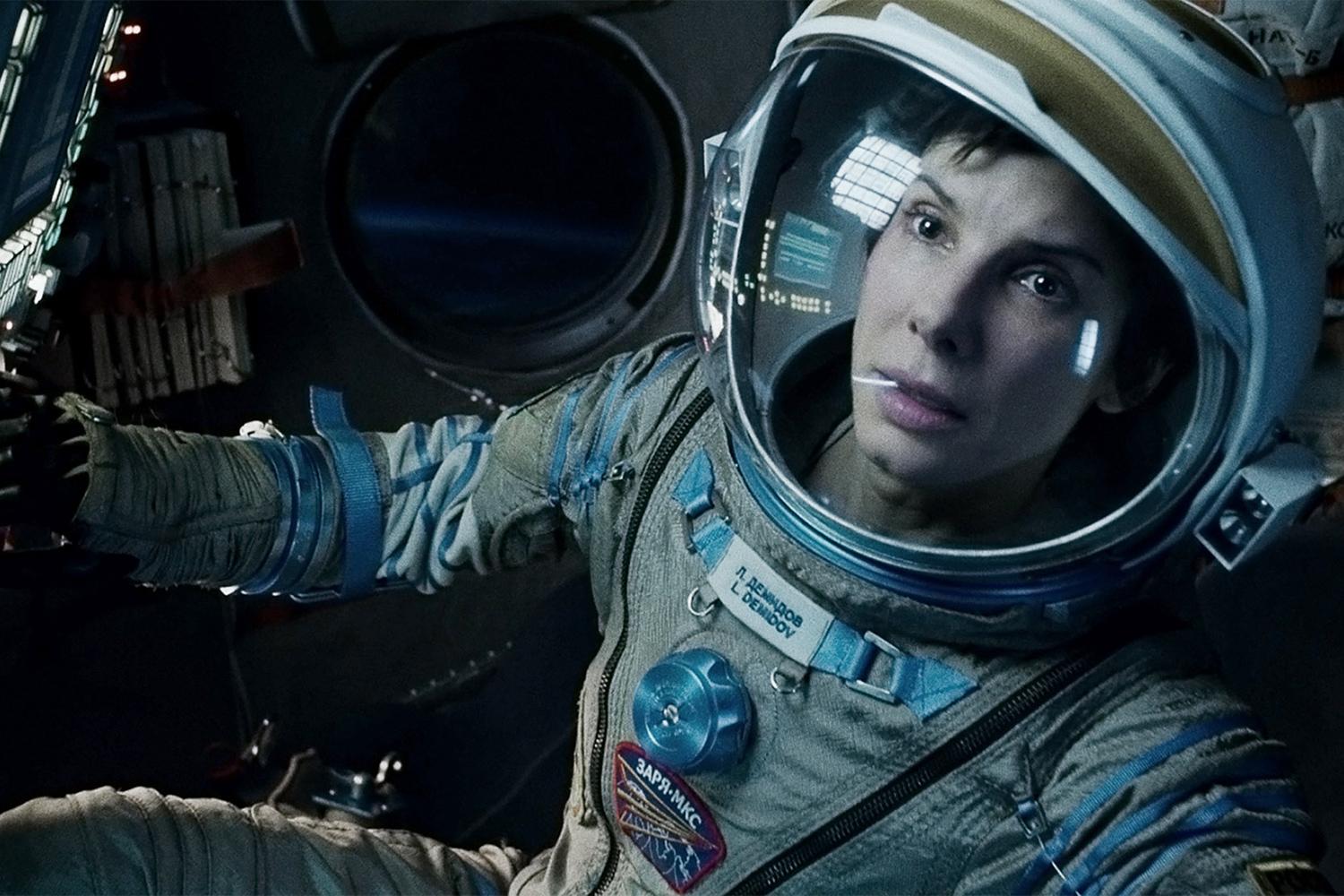
Gravity Sandra BullockAlfonso Cuarón’s 2013 science fiction film Gravity is extremely well-made, a tight thriller that will keep you on the edge of your seat for an hour and twenty-four minutes holding on for dear life.  It is almost a perfect movie.

This review includes vital information about the plot that may prevent a first-time viewer from enjoying the movie. Please read on if you’ve already seen the film.

On a mission to the Hubble Space Telescope, Dr. Ryan Stone (Sandra Bullock), on her first space shuttle mission, works to install upgrades to the system. Veteran astronaut Matt Kowalski (George Clooney) flits around her using his maneuvering back pack as he attempts to break the record for the longest space walk, knowing he will never have enough time to do it.  Mission Control interrupts them to abort the mission.  Apparently, Russia has demolished one of their satellites using a missile and debris is now hurtling through space toward them.  As they make their way back to the shuttle, Houston tells them that the debris is taking out other satellites and they will probably lose contact, which happens almost immediately.

Before they can get back into shuttle to return to earth, the junk comes shooting through their area. Although it misses the two astronauts, the shuttle is destroyed and the other mission specialists are killed.   Kowalski and Stone must now take a very long space walk to reach the International Space Station (ISS).  Time is of the essence because the debris will returns once it has made its way around the earth.  Unfortunately, the ISS has also suffered damage.  One of the two Soyuz escape modules has been used to evacuate the station and the other has been rendered useless because the parachute has already been deployed.  In spite of this Kowalski believes that they can use this useless module to reach the Chinese space station and use their escape module to return to earth.  Their approach is fast and they bounce off the craft, but finally Stone’s foot becomes entangled in the chute lines.  As Kowalski flies by her, she grabs his tether and holds him tight, but Kowalski’s momentum means pulls against her hold.  To save her, he unhooks his tether and drifts away.

From that point on, the film is sharply focussed on Stone’s survival from the Soyuz capsule to the Chinese space station, which is disintegrating in the upper atmosphere, to her entry into its escape module and flight to earth.

Obviously, in winning seven Academy Awards, including Best Director, Best Cinematography, Best Visual Effects, Best Film Editing, Best Original Score, Best Sound Editing and Best Sound Mixing, it was clearly the best movie of the year and probably should have won Best Picture as well.

Cuarón’s hand is in most of the movie. Not only did he direct it, but he co-wrote the script with his son, Jonás, co-produced and co-edited it, so he deserved all of his awards, which also included six BAFTA Awards, including Outstanding British Film and Best Director, the Golden Globe Award for Best Director, and seven Critics Choice Awards.  The other artists that he surrounded himself with all made major contributions to the success of this movie.  The score by Steven Price is amazing, complimenting the action exactly as it should to keep the suspense at a high level.  The sound was so good that it was breathtaking at times.  Emmanuel Lubezki’s cinematography is both flawless and inspired and the special effects by British artists Framestore is simply stunning.  Considering that nearly 80% of the movie consists of computer generated graphics, they certainly deserve a huge share of the praise for this awesome movie.

The human heart of the movie exists in Sandra Bullock’s inspired performance. Although George Clooney contributes somewhat to the action, his character is gone by the time the action really gets rolling and the only other in the movie is Dr. Stone.  This is Bullock’s film and she carries it from beginning to end with a high-energy emotional presence perfectly in compliment with the music, sound, cinematography.  Bullock has grown tremendously as an actress in the last ten years, especially with her role in Blind Side, but she tops that performance in Gravity.

Although it must be considered one of the best space films ever made, right up there with Apollo 13, there were a few things that bothered me and would probably keep the movie out of the top ten best science fiction films on my list.

There are many inaccuracies in the film, most of which can be easily overlooked, but not all. First, I do not believe that neither Kowalski’s mass, nor their speed would have realistically created the situation that forced him to un-tether himself so that Stone might be saved.  Their attempt to grab onto the ISS, hurtling into it and bouncing off, is a violent scene.  When Stone finally makes it inside, I expected to see bruises and contusions all over her body, but instead, she emerges from her space suit looking squeaky clean.  When she finally boards the Chinese space station, the same thing happens, but her grabbing a handhold while hurting at a prohibitive speed with the clumsy glove is extremely unrealistic.  The final problem for me occurred during her attempts to figure out how to operate the Chinese capsule as she pushed buttons at random and finally found the one that magically allowed her to re-enter earth’s atmosphere at the proper angle to avoid a complete burn-up.

I might be overly critical on these scenes—I’m sure most people wouldn’t have an objection—but I thought that all of these problems, with a little tweaking, could have been easily made more realistic and would have really made it a flawless film.

This is still a great and powerful film, a rollercoaster of a movie that shoots its way along an arc that is tightly plotted, with every aspect of the film working in complete harmony, and it does it with no discernable fat in terms of scenes or timing. Everybody should see this movie!

Nick & Norah’s Infinite Playlist by Rachel Cohn & David Levithan

nick and norah book cover

This novel comes rumbling out of some torn up Manhattan tunnel like a queercore punk nightmare, full of profanity, revolt, degradation, and the sweetest young love you’ve ever tasted on some strange Jack Kerouac night full of piss and vinegar.

Much the way On the Road roared at the right side of the highway from America’s kick back against conformity in the 1950’s, Nick & Norah’s Infinite Playlist assaults the reader from the first page and doesn’t stop jumping until literally the last word of the book, which is, appropriately: “Jump.”  Young adult authors Rachel Cohn and David Levithan trade chapters in this novel, with her writing as Norah and him writing as Nick.  That accounts for the distinctive voice of each character (written in the ever present YA Biblical tense of FIRST PERSON PRESENT).

The book begins with Nick on stage at some Manhattan club playing bass with his queercore punk band, The Fuck Offs. He’s the only straight guy in the group, comprised of high school seniors.  The drummer, Thom (with an H), is less than talented and waits for a solo that never comes in the two minute screaming slashes that they burn, and the lead singer, Dev, is a beautiful slut, ever on the make for his next guy.  Nick nearly loses it when his ex-girlfriend Tris comes smoking into the club with her newest guy because she is truly, eternally hot and he is still desperate for her.  After the set, he goes to the bar and when Tris approaches him, he turns to the girl next to him, who wears of all things, a flannel shirt in this den of trendy commercially run Ramones tee shirts, and says, “I know this is going to sound strange, but would you mind being my girlfriend for the next five minutes?” Norah answers his question by giving a deep, eye-opening kiss that begins a six hour trip for these two angst ridden teens that doesn’t stop until, well, like, you know, the end.

Alternately attracted and repulsed, Nick tries to deal with Tris strutting around with her new guy, while Norah, who is Jewish, tries to deal with her ex-boyfriend who has just returned from a kibbutz in Israel.  They are both POSITIVELY unhip and yet at the same time are the two COOLEST people in the novel.  Norah, it turns out, is the daughter of a lifelong A&R man and she grew up traveling the country, going to concerts, and listening to every kind of music there is and digging it all.  Right now, she is deeply, wholly, into punk and so, of course, is Nick, who himself is into all different kinds of music, even though right now he’s really into punk.  Although he doesn’t know who Norah is, she knows all about him because she’s an old friend of Tris and has listened to and admired the mixes he’s made and the songs he’s written.  They are both trying really hard to be people that they’re really not because they love this kind of music and nothing exhilarates either of them more than jumping into the mosh pit when Where’s Fluffy? plays their trashed out rejection of The Man.  As Norah sagely remarks: “The mosh pit never lies.”

Although there are things in book that made me seriously pause, look out the window, and wonder how it was possible to write something that sounded so trite and yet rang so true, I raced through the 183 pages in less than a day. The prose carries you forward as if you were just a passenger on their crazy train or a thrashing punk song, and after a while, you don’t really want to get off or see the song end.  Long sentences that riff like one of Kerouac’s stream-of-consciousness poems run into even longer paragraphs that run into pages that occur inside one brain or the other and at the end you realize that only a few seconds have passed in the story and it only felt like a few seconds as these pages devoured you!

Most of the book is just laugh-out-loud funny, although there are some pages where you might develop a permanent little chuckle. Cohn and Levithan have such a grip on their writing, however, that this humor can change to heart-rending angst or unexpectedly profound observation within a few words.

The push and pull back and forth between Nick and Norah is a kind of song in itself as they feel their way through their anxieties, work out their past failures, and grope toward a relationship. They are, in some ways, metaphors for our fractured world and if they can work it out, maybe we can work it out.  This must be considered a break-through novel in the YA genre, not just for the language, but for the compression of time, the driving style, and the unique young voices that push it forward.

This is a compelling book that should be LOUD on YA radar.

Like it or not.

My review of the movie is located at Nick & Norah’s Infinite Playlist.

Broken Arrow

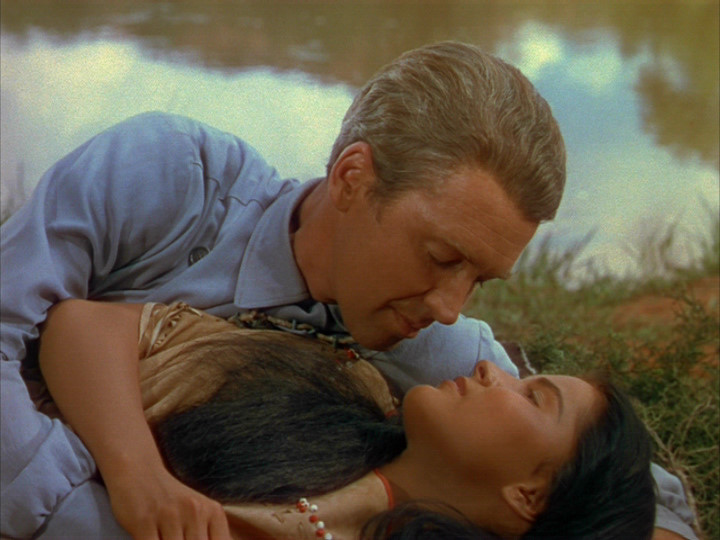
Broken Arrow Stewart PagetThis 1950 movie was one of the first to portray western Native Americans in a balanced manner and carries as its message racial equality and peaceful relations between Indians and Anglos. Based on the popular novel, Blood Brother, by Elliott Arnold, the film adaptation by Michael Blankfort dramatizes the historical relationship between Tom Jeffords (James Stewart) and Chiricahua Apache leader Cochise (Jeff Chandler).

When Jeffords goes panhandling for gold in Apache territory, he runs across a boy who is dying from buckshot wounds. He nurses the lad back to health, but is discovered by members of the tribe.  The boy intervenes on his behalf and they decide to spare him.  They are interrupted by the arrival of prospectors.  The Indians tie up and gag Jeffords while they ambush the prospectors, killing most of them.  When the melee is over, Jeffords is released.

In Tucson, he hears one of the prospectors who survived the raid giving a false picture of it and he corrects the man, then must describe what happened to him. The men berate him for being friendly to the Indians, but Jeffords has a plan to bring peace between the Chiricahuas and Whites.  He learns to speak Apache and is taught smoke signals by a member of the tribe living in the city, then he travels to meet Cochise face to face.  Impressed with Jeffords bravery and honesty, he agrees to let the mail go through unmolested.  While in the Apache camp, he meets a young girl, Sonseeahray (Debra Paget) and falls in love.

An Army unit, attempting to catch Cochise off-guard, goes into Apache territory and gets caught in an ambush. Although many of the soldiers are killed and their wagons stolen, General Oliver Otis Howard (Basil Ruysdael) survives and returns to Tucson, just in time to save Jeffords from being lynched as a collaborator with the Apaches.  The general has been dispatched from Washington to negotiate a peace with Cochise that will give the tribe 50,000 acres of land as a reservation.

Directed by Delmer Daves, the film strives for historical accuracy, but succeeds only in a Hollywood-skewed way. It was filmed near Sedona, Arizona, although the action should have been filmed hundreds of miles south near Tucson.  Even so, hundreds of Apaches from the Fort Apache Indian Reservation were used as extras. 

It is very unfortunate that Hollywood did not trust real Indian actors to accomplish most of the major Apache roles, although the venerable Jay Silverheels (“Tonto”) played the renegade Geronimo in the movie. Although both Jeff Chandler and Debra Paget are not completely believable as Indians, they are the only two Anglos to portray Native Americans in the film.  Paget, by the way, was only 15 years old at filming.  The actors were aided by a script that readily swapped out English for the assumption that they were all speaking Apache.  At least, no one spoke the broken English that ruled in films of the day.  Paget may have been misdirected to speak too proper English, but it doesn’t detract from the movie.

Most of the performances are quite acceptable, although none stands out as being a great performance.

The true value of the film is in its message, that we can all live side by side in peace. In 1950, this was rather a brave stand.  The film goes out of its way to make the point that there are both good and bad Indians and Anglos and it is more important to be true to an ideal than to condemn a man based on his ethnicity.  This was also a complete break from other Westerns.

The music in the film is unobtrusive, which is a good thing in a movie like this. There is no Hollywood orchestra playing some hackneyed Anglo version of an Indian war song, thank goodness.  The scenes with Indian music and dancing feel authentic, perhaps because they are being performed by real Indians. 

Broken Arrow claims high ground in the Western genre of filmmaking. The presence of James Stewart certainly adds weight to the message of racial equality and justice.  It’s a very good film that I would recommend for the entire family.


The Dust Bowl PBS A Ken Burns Film

Dust Bowl 02In 2012, PBS aired this four part miniseries by famed documentary director Ken Burns that looks at the ecological catastrophe that occurred in America’s Great Plains between approximately 1931 and 1938. Written by Dayton Duncan and narrated by Peter Coyote, the film combines still photographs and film from the period with color film shot specifically for the program, interviews with survivors of the calamity, and voice-overs of writing from various victims.

The first part of the film, “The Great Plow-Up” looks at the land before the disaster, showing how the tough area survived the incessant wind and drought by evolving the sturdy buffalo grass that grew deep into the soil for hundreds of miles from Canada to the Texas panhandle. Native Americans were ideally suited as inhabitants because they did not depend on agriculture, but rather on the buffalo who roamed this great, free expanse of prairie.

When Indians were routed onto reservations, Anglos first used the grazing land for cattle, but the frequent droughts, long and difficult transportation to markets, and division of the land into individual, fenced parcels were but a few of the obstacles to successful ranching. The true changes in the land began to occur when Oklahoma was opened to homesteading settlers and immigrants and poor tenant farmers spilled into the territory on the promise of owning their own property. The wheat boom prior to and during World War I spurred further settlement. The tough buffalo grass was torn out by plows and wheat was planted in its stead. “Suitcase farmers” streamed in from cities, present only long enough to plow and sow before returning to cities and wait for the rain to grow the wheat before returning to harvest it. This “great plow-up” was aided by one of the wettest decades the Great Plains ever saw, during the 1920s. The boom carried through the stock market crash of 1929 and beyond as millions of acres were plowed up for cash crops.

“Dust to Eat” then chronicles the Great Depression’s effects on the wheat market as prices fell due to the excess of wheat and millions of tons filled grain elevators or were strewn out rotting on the prairie. At the same time, a periodic drought assaulted the land and the constant winds picked up the topsoil and circulated it in the sky. Beginning in 1931, simple dust storms escalated into gigantic billows of earth, born by the winds across the plains and dumped back onto the land as loose, dry pellets mixed with sand. As the 30’s continued, more and more of these storms assaulted the farmers, blossoming into deadly concentrations of tiny particles that worked their way into the lungs of human beings. “Dust pneumonia” became a common cause of death. These storms reached their apex on “Black Sunday,” April 14, 1935 when a wall of concentrated dirty air two hundred miles wide and ten thousand feet high swept across “No Man’s Land.”

The effects of this “end of the world” storm fell in Chicago, then Washington D.C. and New York, finally dumping the last of its dust over the Atlantic Ocean. Springing into action, the administration of Franklin D. Roosevelt started the work that would eventually reclaim the Great Plains, but it would take a long time.

The third installment of the series, “Reaping the Whirlwind” details the continued catastrophe through the late ’30’s and the final installment, “The Hardy Ones” covers the mass exodus to California and the farmers who stayed and eventually saw the land regenerate through improved farming techniques, such as terracing, planting of wind-break trees, and so forth.

Overall, the film is totally captivating and at its best deeply moving. Photographs by Dorothea Lange and other photographers who memorialized the face of the ecological disaster are stunning and deeply evocative, as are the voices of those who were only children when the dust clouds descended on them. The stature of the Black Sunday storm is fully realized in Burns’ beautiful camera movement and Duncan’s terrific script.

This film should be seen by all mid-westerners and most certainly by farmers and anyone intimately connected to the land. This catastrophe was not forced on us by nature, but we brought it about ourselves through excessive greed, lack of forethought, and our tampering with an ecosystem that was perfectly evolved to survive and continue on its own. This was mankind’s mistake.

It was a mistake whose lessons we should take to heart. Near the end of the film, as we see the effect of irrigation on miles of fields, we are reminded that the water comes directly from the Oglala Aquifer, whose capacity is dwindling, year by year, as we extract millions of gallons to dump on our crops.

What will happen to us when it is gone and our Bread Basket reverts to the windswept prairie of our past?

Jane Eyre by Charlotte Brontë

Jane EyreThis 1847 classic novel both delights and confounds a modern reader.

Told mostly in first person past (with brief lapses into first person present) by the heroine, Jane Eyre, the book was originally subtitled An Autobiography.  It begins with Jane as a young girl of ten years as an orphan living with her Aunt Reed at Gateshead Hall. Her parents died several years earlier and she was taken on by her Uncle Reed as a ward of the family.  After her uncle’s death, she lives in misery as an obstinate, sullen girl and is mistreated by her aunt and her three cousins.  Her only friend is her governess, Bessie, who is also stern, but not malicious.

After a series of incidents, she is packed off to Lowood Institution, a school for girls run by Reverend Brocklehurst, a miserly man who starves and treats the girls to a form of discipline that would put him in jail today. She makes friends with a girl named Helen, who accepts her own punishments meekly, knowing that God sees that she is righteous and will reward her when she goes to heaven, which she does sooner rather than later when an epidemic of typhus ravages the school and she dies of “consumption.”  Under investigation, the school must change its practices and Jane receives a fair education and teaches at the school for two years after she finishes her six years as a student.

Now eighteen and wishing to find a place for herself in the world, she places an advertisement looking for work as a governess and is hired to work at Thornfield Hall. When she arrives, the housekeeper, Mrs. Fairfax, informs her that she will be educating a French child named Adele, who is a ward of the master of the house, Mr. Rochester.

When Rochester finally arrives at Thornfield from one of his travels, he is abrupt with Jane, but comes to think very fondly of her. He tells her of his disappointment with the world and of his affair with a French dancer, who claimed that Adele was his child.  When the little girl was abandoned, he decided to make her his ward.  He seems a very tortured sort of man, but comes to value his time with Jane, seeking her conversation every evening.  She is honest and open with him, blunt at times, and he appreciates her manner.

During her stay at Thornfield, her Aunt Reed falls ill and summons her back to attend her while she’s dying. Jane finds out that her male cousin has himself committed suicide after failing to control his drinking and debauchery.  She finds a truce with her female cousins and forgives Aunt Reed before she dies.  She has learned this forbearance from her friendship with Helen at Lowood.  Before her aunt’s death, she learns of another uncle who wishes to contact her, but she doesn’t follow up on it.

Thornfield Hall is definitely a strange place.  When Jane hears laughter on the third floor, it turns out to be a most unusual woman named Grace Poole, who is employed as a seamstress.  Jane grows closer to Mr. Rochester, but one night discovers his room afire.  She puts it out and he counsels her to silence on the matter.  Rochester manipulates her into thinking he is serious about marrying a beautiful society lady in order to make her jealous.  It works and Jane grows to love him.  Finally, he asks her to marry him, but on the alter, another calamity occurs that turns the plot on its head and sends Jane off to an entirely different life.

The delights of this novel are plentiful, so much so that it is almost impossible to put down. The prose is stellar.  It carries one along as on a gentle English breeze.  The story is an utterly engaging Gothic romance, full of thrilling mystery and great characters.  It takes the time required to unfold a handful of prickly themes and it does so in a voice that completely engages the reader from beginning to end.  In all of these regards, it is an undisputed masterpiece.

For the modern reader, however, there are certain drawbacks.  The length is a serious issue.  As with most novels of the early 19th Century, it was published in multiple volumes, three to be exact.  It should have been edited quite a bit.  There are long, convoluted sentences, which were the style of the time (see Jane Austen) and at times one must exercise patience in riddling out their meaning.  The dialogue is, for the most part, completely unbelievable.  People simply don’t talk that way, then or now.

The major drawback for me was the constant pounding of the Christian message. It is a highly religious book and I find it laughable that the Quarterly Review, when it first came out, called it a “pre-eminently an anti-Christian composition.” Don’t believe it.  This book drips with religious messages.  I read the Norton Critical Edition and had to read each and every footnote just to keep up with the Biblical references.  It is also funny that one of the characters wants to become a missionary in order to stamp out “superstition.”  Toward the end of the novel, this  religiosity becomes a very serious problem indeed, interrupting the plot to such a level that the book stops dead to preach for pages on end.

Despite these drawbacks, I still found it a marvelous novel, certainly one of the best ever written. Some of the themes were quite revolutionary for the time.  Brontë gets into issues of class, morality, ethics, and feminism that were scandalous fare in 1847 and in that regard she was way ahead of her time, particularly in expounding the theme that a woman could be both independent and equal to men.  Each of the men in her life struggles to dominate her and Jane always asserts her own independence.  In addition, the writing style, especially the use of first person narration, creates a kind of inner personal universe for Jane that was a breakthrough in style and highly influential on other novelists through the early 20th Century..

It is a truly great novel, even now, and should be on everyone’s reading list.


Jane Eyre 1996Read my review of the 1996 Franco Zeffirelli movie!

Adapting a classic novel to the big screen is always a dicey proposition.  The screen writer and director have a limited amount of time, yet there is so much in a classic novel that readers depend on for a satisfying experience. 


Samantha Morton2_Jane EyreRead my review of the 1997 ITV/A&E movie!

This film adaptation of the classic novel Jane Eyre by Charlotte Brontë was originally aired on Great Britain’s ITV in March of 1997 runs approximately one hour and 45 minutes.  Obviously, a great deal had to be cut from the story in order to fit it into that kind of time parameter, but Kay Mellor’s script concentrates rightly on the romance between Jane Eyre and Edward Rochester and the Gothic suspense of Thornfield.


Jane Eyre 2011Read my review of the 2011 Cary Fukunaga movie of Jane Eyre.

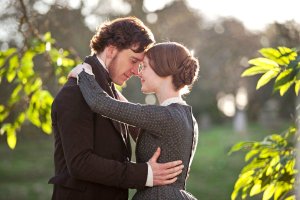
This adaptation of Charlotte Brontë’s classic novel Jane Eyre was produced in 2011.  Directed by Cary Fukunaga from a script by Moira Buffini, this is clearly the best of the recent movie versions of the novel.  Ms. Buffini’s script is faithful to the novel, yet innovative in the way it tells the story, bringing a passion lacking in the other attempts.

Quite a Year for Plums by Bailey White

Quite a Year for PlumsThis fascinating character study is called a “novel,” but, speaking as a novelist, I just can’t call it that. There are some characteristics it has in common with novels:  It is fiction, it has characters, some themes are examined, and things happen.  What is missing is structure.  It’s like spending a day fishing and not catching anything.

In a small south Georgia town, a group of strange people live their lives. The major characters are three older women, Eula, Meade, and Hilma.  Eula is the glue that holds them all together.  Her sister, Louise, is suffering Alzheimer’s Disease, and believes that sexually charged space aliens will visit her if she can only put together the correct letters and numbers to attract them.  Louise’s daughter, Ethel, herself sexually charged, was once married to Roger, a plant pathologist, but now goes through men like a knife through cheese.  Roger is a down-to-earth man who has been adopted by all of the women.  When he was married to Ethel, Eula’s husband taught him how to play old time banjo and he has mastered that talent.  Meade and Hilma, retired school teachers, worry about him constantly as they each work on their own obsessions.

An artist, Della, comes to the town to paint birds and becomes obsessed with chicken feet. A fragile, flighty person, she begins to leave her stuff at the dump, with little notes explaining, for example, what is wrong with the fan she’s leaving there.  This fascinates Roger and he begins a relationship with her.

Everyone, except for Roger, seems consumed with their obsessions (and even he does, to a lesser extent). Those obsessions, White seems to indicate, are what makes them unique individuals.  In spite of this, only two characters truly stand out as individuals, Roger and Della.  They are the only ones who are given enough of a physical description to delineate them from the others.  Unfortunately, their relationship never really develops or goes anywhere.  One of the most common complaints about this book is it’s hard to tell the characters apart and that lack of definition is a serious problem.  For example, there really isn’t any way to keep Meade and Hilma separate.  They seem to be the same character.  Honestly, I don’t think White did that to make a point.

Two things seem apparent in the book. First, the world is changing for the worse, and second, we are all ravaged by our own concerns.  Rich old woodland is being subdivided and suburbs are being built.  No one takes the time to learn the names of birds.  Some people are so concentrated on the little things that interest them that they can’t even carry on a normal conversation with others.  Romantic relationships appear to be impossible.

In other words, things have deteriorated and we will not be able to fix them.

If you have heard and like Bailey White’s commentary on NPR, you will probably like this book. It’s very funny in places and it is certainly interesting to lose yourself in this little community.  It feels like a series of her commentaries strung together in an attempt to create a novel, but the lack of any identifiable structure keeps it from being a successful novel.

Stories live in their construction.  Things don’t happen randomly, but are shaped by the author to a purpose.  White does this admirably in her short works, but a novel must have several arcs to it.  The main story arc develops from humble beginnings to reach a denouement and the main character arc does the same thing.  Events in a story shape the development of the character, who grows through their experience.  The events and themes must be shaped so that they work themselves to a fine point and if they don’t, then the reader feels like they’re sitting in a boat, rocking on the water, and not going anywhere.

Bring your bait and tackle.

Warm Bodies

WARM-BODIES_510x317There are few films that boast a truly original premise, but Warm Bodies is one of them.  What genre is it?  Well, it’s the only zombie romantic comedy I’ve ever seen.  Written and directed by Jonathon Levine, it was adapted from a Young Adult novel of the same name by Isaac Marion.  I haven’t read the novel yet, but the movie carries that “first person present” feel to it that is omnipresent in YA dystopian books.

The movie is narrated by a teenage zombie, R (Nicholas Hoult), who knows there’s something missing in his death, but just can’t figure out what. He lives in an abandoned airplane that he has appropriated for his use and stocked with lots of stuff that he has collected, including a stereo with a turntable and an impressive collection of disks, because he values the purity of the sound.  By day, he shuffles around the airport groaning, occasionally grunting with his “friend” M (Rob Corddry) and going out to eat with him.  The food, of course, is human and R cherishes human brains because they allow him to vicariously experience life by re-living the memories of the deceased.

Ultimately, the zombies turn into living skeletons called Boneys. Although the skeletons leave the zombies alone, they also exist by eating humans and they are extremely deadly.

In a city within the city, protected by towering walls, humans live under the authoritarian leadership of Colonel Grigio (John Malkovich). The Colonel’s daughter, Julie (Theresa Palmer), her boyfriend, Perry (Dave Franco), and her best friend, Nora (Analeigh Tipton) volunteer to go outside the walls to search for medical supplies and this expedition coincides with a search for human food by R and M (the initials are all they can remember of their former names) and some of their zombie friends.

During the fight that ensues, R is attacked by Perry and kills him. As he eats the boys brains, he relives memories of Perry’s time with Julie and he develops a soft spot for her, so when the raid is over, he rescues Julie and brings her back to his airplane.  Unsure what to do next, he plays music for her and rescues her again when she tries to escape.  As he attempts to talk to her and finds a few human words, she wonders why he keeps saving her.  During the next few days, they talk, play games, and listen to music, but finally she convinces him that she must go back to her father.  When M and the other zombies see them holding hands, they begin to develop feelings, too, and allow them to go.  The zombies are beginning to regain their humanity.

If there are a few things here that seem a little familiar, it’s because there are some similarities to Shakespeare’s Romeo and Juliet.  Yes, R and Julie suggest that.  So does the story of “two houses divided” in a great city.  And yes, there is even a balcony scene, but that is where the similarity ends.  There is nothing tragic in this “feel-good” dark comedy.

Hoult and Palmer are splendid as the young lovers. Hoult’s voice and narration are both hilarious and oddly touching at the same time.  It’s the only zombie movie where you will find yourself identifying with the zombies.  Hoult is English and Palmer is Australian, yet they are perfectly believable American teens.  Palmer is beautiful and sexy, yet very down-to-earth.  They should both have terrific film careers.

Malkovich is a little one-note as Colonel Grigio, but the role was written that way. Tipton may be the big surprise in the film.  Although her role is fairly small, she seems consistently to get the best lines not given to Hoult and she is laugh-out-loud funny in places.  Corddry gives a very restrained and heart-felt performance as M.

It’s hard to do the movie the credit it deserves in a short review, but it is the kind of film that should have a big crossover audience. The characters are well-drawn, the situation bizarre and hilarious and the film-making is first rate from the beginning to the end.  At 91 minutes, it is the perfect length and that shows that director-writer Levine was really in tune with the material.  Many other directors might have cluttered up this charming film with all kinds of nonsense or overplayed the comedy, but he hits the right note in every scene.  The cinematography, art direction, costume, and make-up are all spot on.

I highly recommend this movie!