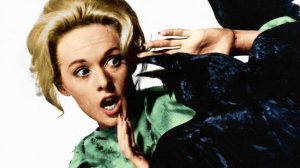
Katharine Hepburn by Barbara Holland

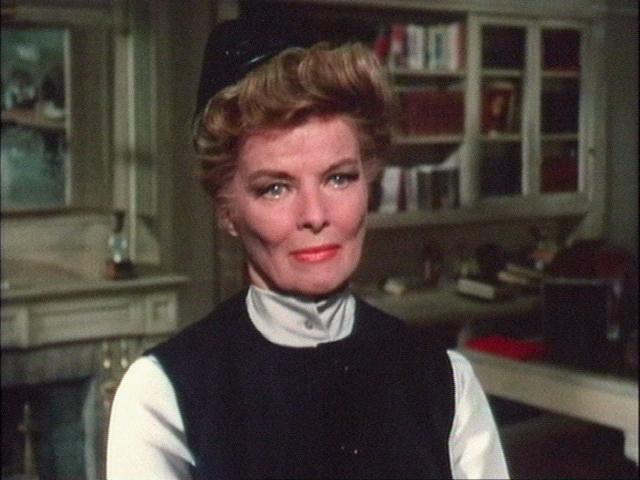
Katharine Hepburn 01This brief look into the life of one of our greatest actresses was written in association with the Biography television program and it has the feel of that breezy show as it reduces a great life into a few cogent points, concentrating instead on the mention of her films and stage appearances.

Hepburn was certainly an enigmatic personality.

Although her birth date remains in doubt to this day, it is reckoned that she was born in either May or November of 1907 in Hartford, Connecticut to Dr. Tom Hepburn and Katharine Houghton (of the Houghton-Mifflin publishing firm and Corning Glass Works).  Her father was a very strong conservative figure, who encouraged his children to take risks, but it was almost impossible to gain his good graces.  Her mother was rather liberal and was involved in the women’s rights movement in America from the earliest stages.  Kate grew up torn in two directions.

Her family had a history of suicides and biographer Holland hints that it may have been due to heredity, although the rigid, emotionless aspects of her father certainly hints at rebellion against convention.

Her older brother Tommy committed suicide while on a trip to New York with Kate, but the whole family glossed over it, almost as if it didn’t happen.  Kate’s family believed that you should never dwell on the past, but always look ahead to the future.  Planning and working were the things that you got you through life and that partly accounts for her optimistic views, healthy lifestyle, and prodigious work right up until her death in 1996.

Katharine Hepburn 02Much is made of her relationships, specifically with director John Ford and actor Spencer Tracy.  Likening each of these men to father figures, the book ponders whether her lifelong obsession with pleasing her father didn’t spill over into her love life.  Both men were married and yet each carried on a 30 year love affair with Kate.  Tracy, it is stated, was the love of her life, but he would not divorce his wife because of his strict Catholic background.  He comes off very badly in this biography, as a bully who ruined Katharine’s career by insisting that she be at his beck and call.  When he went on drinking binges for days at a time, she would wait outside his door and tend to his needs.  Apparently, he did not live with his wife, but spent many years living in a Los Angeles hotel before retiring to guest house on George Cukor’s estate.

Many people may not realize that Katharine Hepburn had an extensive state career and was a failure at stage acting for many years because she always appeared to be so manic.  In middle and late years, she began to act Shakespeare, touring and playing a variety of roles, relaxing in her celebrity and doing very well.  She was a big hit in the Broadway musical Coco, even though she couldn’t sing.

During her career, she won four Academy Awards for Best Actress, even though critics constantly complained that she only played herself.  That is not unusual at all, even now, when most film actors don’t really act.  Since the early days of silent film, audiences have flocked to the theater to see the personalities, not to see them disappear into their characters.  Spencer Tracy did not even want to have any make-up applied at all.  But even though these celebrity actors play themselves, they are still able to carve out excellent performances from the force of their character and Hepburn did that in a great many of her films.

Katharine Hepburn 03She remained a health nut, swimming in icy Long Island Channel into her 80’s, cooking her own food, and staying true to herself.

Her films will certainly remain as classics long into the future.

The Graduate

Graduate 01“Hello, darkness, my old friend… I’ve come to talk with you again…”

Packed like a factory assembled doll among a throng of passengers, Benjamin Braddock (Dustin Hoffman) sits anonymously on an airplane about to land in Los Angeles.  As “The Sound of Silence” plays, he steps up onto a conveyor belt, his figure black against a white wall, as if he were on an assembly line about to be delivered for final packaging.

A recent graduate of a prestigious east coast college, Ben has no idea what to do with himself, no idea what he wants to do with himself.  He feels lost, adrift.  His parents (William Daniels and Elizabeth Wilson) hold a party to celebrate his graduation, but it is attended only by their wealthy friends, not one person his own age.  Lying in bed, in front of his fish tank, he stares blankly out into the world.  Forced to attend the party, he searches for some escape, but is cornered by a man who has only one word for him: plastics.

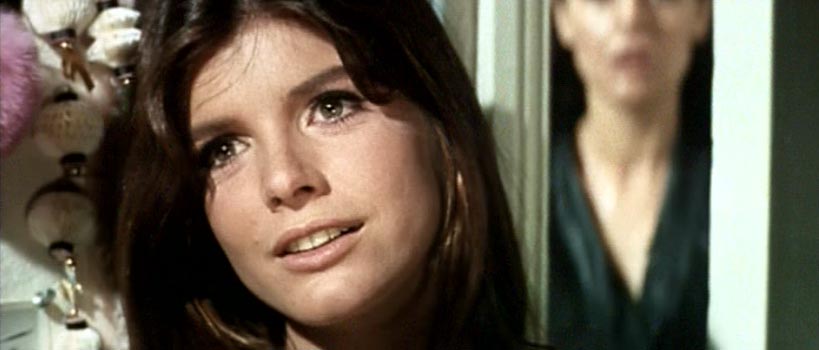
Retreating to his room, his privacy is broken by Mrs. Robinson (Anne Bancroft), the wife of his father’s law partner (Murray Hamilton), who nearly forces him to give her a ride home.  Getting him inside on the pretense that she needs the lights on, she fixes him a drink.  Ben figures out that she’s trying to seduce him and attempts to escape, but can’t seem to get away.  Mrs. Robinson then invites him up into the bedroom of her daughter Elaine (Katherine Ross) to see the girl’s portrait.  She is currently away at school attending the University of California-Berkeley.  Mrs. Robinson begins to undress in spite of Ben’s obvious nervousness, but is interrupted by the return of Mr. Robinson.  Ben quickly runs downstairs and sits with his drink when the man comes in the front door.  Mr. Robinson encourages him to date Elaine when she returns to L.A. on a school break.

Graduate 02At her request, Ben calls up Mrs. Robinson and she agrees to meet him at a hotel.  Overcome with nervousness, Ben goes through with his tryst and begins a summer of laziness, lying around in the pool during the day and meeting Mrs. Robinson for sex at night.  Gradually, he begins to want more from their relationship and forces Mrs. Robinson to begin talking about herself.  When the conversation comes around to Elaine, she forbids him to date her.  Ben rebels and they each say hurtful things, but when Mrs. Robinson begins to dress to leave, he apologizes and they continue their sexual meetings.

After Elaine has returned, Ben’s parents force him into dating her, over Mrs. Robinson’s objections.  In order to make it a horrible date, Ben takes Elaine to a strip joint and the stripper on stage twirls her pasties directly over Elaine’s head as silent tears fall from her eyes.  Humiliated, Elaine runs out and Ben follows her, feeling horrible about what he’s done.  He catches her, apologizes profusely, and they go out for burgers.  Whether through guilt or genuine attraction, Ben falls for Elaine and she seems to be falling for him.  He makes another date with her, but when he pulls up at the house, in a rainy downpour, Mrs. Robinson gets into his car instead, once again forbidding him to see Elaine, this time with the threat that she will tell Elaine about their affair.

Graduate 03Ben runs back to the house and reveals to Elaine that he has been having an affair with her mother.  Appalled, she throws him out and tells him she never wants to see him again.  Ben watches from a distance as she returns to Berkeley, then he follows her there and finally gets her to admit that she loves him, too.  Mr. Robinson shows up at Ben’s apartment and forbids the relationship, leading Elaine to leave school and marry her boyfriend.  Frantically driving back and forth, Ben finds the church, but he can’t get in.  Running up to the second story, he looks down as the wedding vows are concluded and begins to scream her name.  Seeing the vicious faces of those around her, Elaine screams back Ben’s name.  Using a cross to fight off the angry wedding party, Ben and Elaine escape, getting into the back of a bus and riding away.

The Graduate, released in 1967, still stands today as one of the best films ever made.  The screenplay by Calder Willingham and Buck Henry is based on the 1962 novel of the same name by Charles Webb.  Produced by Lawrence Turman and directed by Mike Nichols, the movie was delayed for several years because they simply could not find the right cast.  Almost every big name in Hollywood was considered for every major role, but no one seemed to fit.

Actresses considered for the role of Elaine included Patty Duke, Faye Dunaway, Sally Field, Shirley MacLaine, Raquel Welch, Joan Collins, Carroll Baker, Candice Bergen, Goldie Hawn, Jane Fonda, Ann-Margret, Elizabeth Ashley, Carol Lynley, Sue Lyon, Yvette Mimieux, Suzanne Pleshette, Lee Remick, Pamela Tiffin, Julie Christie, and Tuesday Weld. 

Robert Osborne of TCM said, “Mike Nichols wanted Doris Day for Mrs. Robinson, Robert Redford for Benjamin Braddock, and Gene Hackman for Mr. Robinson.”

Other actresses considered for Mrs. Robinson included Jeanne Moreau, Joan Crawford, Lauren Bacall, Audrey Hepburn, Patricia Neal, Geraldine Page, Claire Bloom, Angie Dickinson, Sophia Loren, Judy Garland, Rita Hayworth, Susan Hayward, Anouk Aimee, Jennifer Jones, Deborah Kerr, Eva Marie Saint, Rosalind Russell, Simone Signoret, Jean Simmons, Lana Turner, Eleanor Parker, Anne Baxter, Shelley Winters, Angela Lansbury, Natalie Wood, and Ava Gardner.  All were either turned down, refused to appear nude, or were unimpressed with the part.  Anne Bancroft, an accomplished stage and screen actress, wife of director Mel Brooks, took the part even though she was only seven years older than Dustin Hoffman

Graduate 05Hoffman and Ross were both chosen as Ben and Elaine when they tested together.  He was a 29 year old New York actor who was virtually unknown outside the live theater, but Turman brought him to Los Angeles to test.  Even though he was very much against the type they wanted for Ben, Nichols liked him very much and gave him the role.

The Graduate was also Nichols’ first film, although he was very well known from his Broadway successes.  It is surprising that a stage director should create one of the best films ever made in his first effort.  Maybe the long wait while they searched for the right cast gave him the extra time to craft the film into the beauty that it became.  Every single shot is lovingly assembled and extraordinarily powerful.  Hitchcock had mastered the art of framing long before this film was made, but Nichols uses camera angles in an even more powerful way.  The most iconic shot in the film is, of course, the one that shows Ben framed behind Mrs. Robinson’s leg, sheathed in a black stocking, but it is only one of hundreds of nearly perfect shots.

The creative use of dark and light in a color film was nearly unprecedented at the time.  For example, there is a scene early in the seduction when Mrs. Robinson is sitting at the bar in her home and Ben nervously paces back and forth in front of her.  It is shot from behind Ben who appears only as a black silhouette moving with a kind of nervy relentlessness back and forth, revealing Mrs. Robinson sitting with one leg propped on a bar stool, allowing Ben a tantalizing view.

Mirror shots are used to extreme advantage, the most obvious one when Mrs. Robinson takes Ben to Elaine’s room to seduce him.  As he looks at the portrait of Elaine, Mrs. Robinson appears nude in the reflection off of the glass.  Brilliant!  Not only is it a visually stunning image, but it also points up the terrible situation that Ben will be in later when he has to choose between the mother and daughter.

The use of music and sound is also brilliant.  “The Sound of Silence” is such a perfect representation of Ben’s state of mind at the beginning of the movie that the simple image of Ben’s head framed against the aquarium as it plays tells a whole story without any dialogue whatsoever.  The other Paul Simon songs, performed by Simon and Garfunkel, are super appropriate and set the mood wherever they are used.  The song “Mrs. Robinson” was adapted by Paul Simon especially for the film and it went on to become a huge hit.  Quite often Nichols uses silence itself to punctuate that deep, dark mood that Ben brings into the movie, relieving it with the beautiful Paul Simon melodies.

The acting is all superb.  Dustin Hoffman is wonderful as Ben, creating all kinds of great little mannerisms that make him a complete person, not the least of which is the short falsetto “Humpf” that comes out when he is particularly nervous.  Anne Bancroft gives a great performance as Mrs. Robinson, terribly restrained, yet allowing the viewer to see how great her own boredom is and how much her affair with Ben means to her, despite the fact that it is exclusively sexual.  Although Katherine Ross’s part is not huge, she does a great deal with it, especially in the scene where Ben reveals he’s been having an affair with her mother.

In addition, the supporting roles are extremely well done, most especially William Daniels as Mr. Robinson.  The cast list isn’t dense, but there are also a large number of cameo appearances, including Buck Henry, Alice Ghostley, Elaine May, Mike Farrell, and Richard Dreyfuss.

In spite of Ben’s heavy attitude coming into the film, it is really a first rate comedy and also a feel-good movie.  Although it was made in 1967, the comedy isn’t dated at all.  In fact, it could have been made last year and still hold up to scrutiny.  The only real reference to the time it was made was when Ben gets a room in Berkeley, his landlord tells him that he won’t tolerate any “agitators.”  In places, the costumes or hairstyles may give away the time, but they are nearly invisible, unlike many other period movies where they are obvious.  It comes in at under two hours and it doesn’t feel long at all.  In fact, it moves really fast.

The only “error” I found in the movie is that when Ben is driving north to see Elaine in Berkeley, he crosses the Bay Bridge into San Francisco, which he wouldn’t have done without a specific purpose.  It doesn’t really make sense in an otherwise perfectly crafted movie.

All of the parts of this film work so harmoniously that it should stand the test of time going forward in the future.  Many other good films may be made, but I believe that The Graduate will remain one of the best films ever made.  It certainly makes my Top Ten.  Because of the adult situations, I will recommend it for mature viewers.

A brilliant, long-lasting movie with great comedy, great angst, and a feel-good ending!
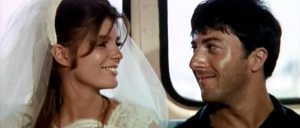
Graduate 04

O

Ordinary Tim Hutton Elizabeteh McGovernOrdinary People

For those who remember what life was like in 1980, Ordinary People will be a real trip to the past.  For those who are too young to know, this movie will give you a brief tutorial in clothing, hair styles, cars, and so on.  For both types of people, this will be an extraordinary family drama, full of terrific performances, raw and deeply moving.

N

Nick and Norah PhotoNick & Norah’s Infinite Playlist

When a movie has as its basis such an incredible novel as Rachel Cohn and David Levithan’s Nick & Norah’s Infinite Playlist, there should be no way that it could fail, yet this insipid teen comedy manages to toss aside all of the best stuff from the novel, including, amazingly, some of the best comedy.  It changes the course of events and ends without a single note of the beauty that gave the book such raw power.


Norma Rae 04Norma Rae

Freedom can be understood in many ways, but anyone who ever worked a factory job before the advent of unions understands freedom as the right to be treated as a human being, rather than as a machine part that can be worked to death and then thrown away.  Martin Ritt’s 1979 movie, Norma Rae, shows the difficult road to obtain that freedom.


North by Northwest - Saint on RushmoreNorth by Northwest

Mistaken identity, an innocent man, bloodthirsty spies, a long train trip, a beautiful, sexy blond, and suspense building to a nail-biting conclusion—all these staples of legendary director Alfred Hitchcock drive his epic 1959 film, North by Northwest.


Notorious 03Notorious

The sexiest and most mature of all Alfred Hitchcock’s films, Notorious is also one of his most suspenseful movies.  It’s a torchy love story set among dangerous ex-Nazis in Rio de Janeiro, with Ingrid Bergman putting her life in danger to prove to the American agent she loves that she has become an honest woman.  Beautifully shot in black and white, all of Hitchcock’s mastery drives a story that is thrilling right up to the end.

Fargo

Fargo Paul BunyanAlfred Hitchcock would have liked this 1996 Joel Coen and Ethan Coen quirky thriller that contains so much comedy it transcends genres.  It borrows a number of techniques from the master of thriller movies, including a clever McGuffin, a villain with empathy, horrific incidents that are hilarious, and a tremendous environmental atmosphere.

The following review contains plot spoilers!

Minneapolis car salesman Jerry Lundegaard (William H. Macy) is caught in a deep financial bind during the winter of 1987 and hatches a scheme to hire two thugs, Carl (Steve Buscemi) and Gaear (Peter Stormare) to kidnap his wife, Jean (Kristin Rudrüd) so that her wealthy father, Wade Gustafson (Harve Presnell) will pay enough money to pay off the kidnappers and leave him high and dry financially.  At the same time, he has been working on a real estate deal that would leave him wealthy enough to quit the car business altogether.  He has been pitching this scheme to his father-in-law hoping that the man will loan him $750,000 to complete the deal.

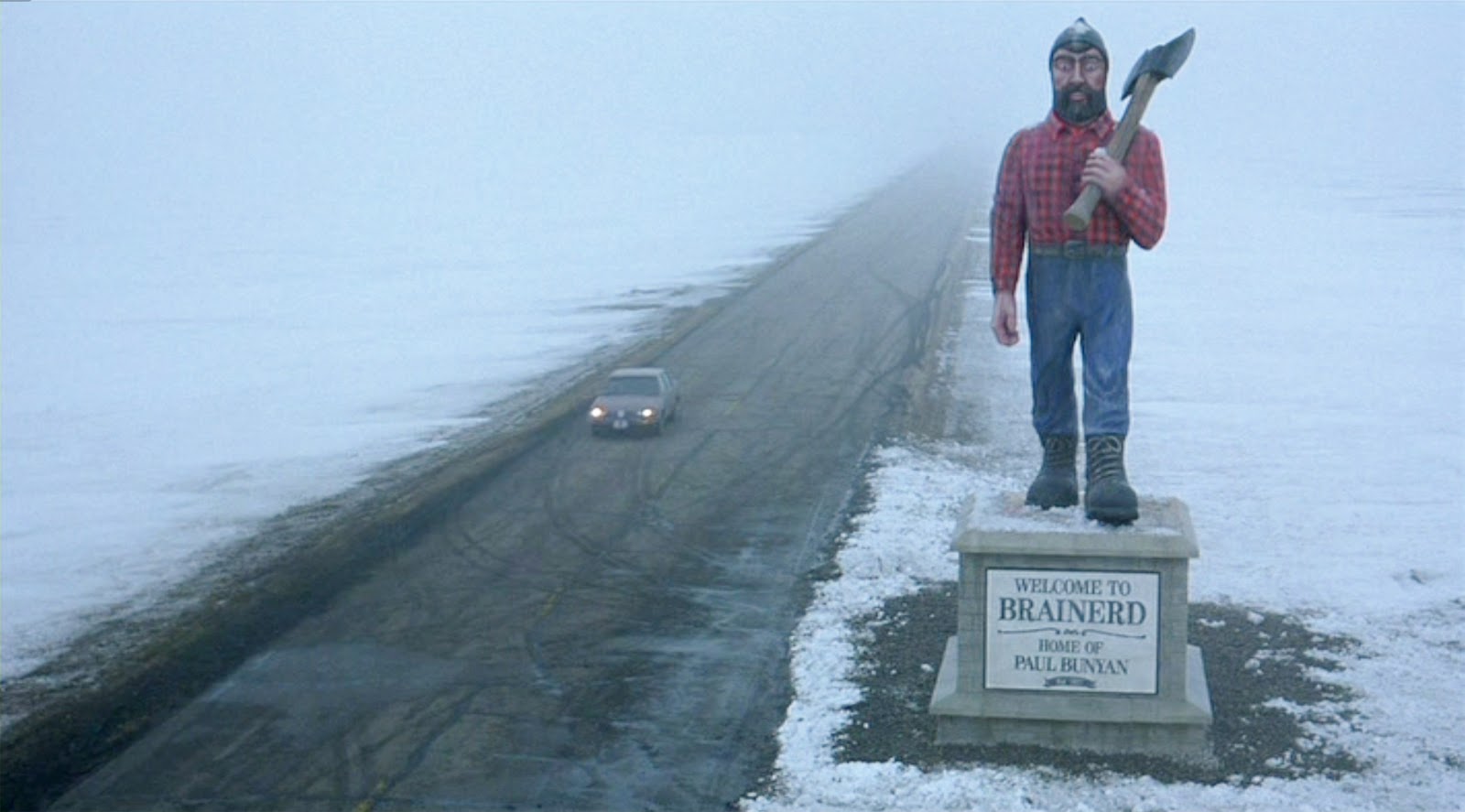
Fargo William MacyHe drives to Fargo to give the prospective kidnappers a 1987 Oldsmobile Ciera to cement the deal, passing through the hamlet of Brainerd, Minnesota, home of Paul Bunyan.  Returning to Minneapolis, Jerry is shocked to find that Wade is actually interested in the real estate deal, so he hastily tries to contact the kidnappers to cancel the deal, but they are already on the road to the Twin Cities.  In a meeting with Wade and his financial officer, Stan Grossman (Larry Brandenburg), Jerry finds that they only want to pay him a finder’s fee and will not loan him the $750,000.  Although Jean puts of nominal resistance, Carl and Gaear wrap her up in a shower curtain (there are several reverential Psycho moments) and head back to Fargo.  When Jerry finds Jean missing, he tells Wade that the kidnappers want one million dollars for her return, thinking he can get the money for the real estate deal, but that the kidnappers will only deal with him.

Fargo Steve BuscemiOutside Brainerd, Carl and Gaear get stopped by a state patrolman because Carl has forgotten to put tags on the Ciera.  While he attempts to smooth things over with the officer, Jean moans under the shower curtain in the back seat and the trooper asks them to exit the vehicle.  On impulse, Gaear grabs the officer and shoots him in the head.  He tells Carl to move the body off the highway and while Carl is trying to drag the dead man out of the way, a car happens by and two people witness it.  Gaear puts the Ciera in gear, chases down the witnesses and shoots both of them after their car has flipped into a field.

Fargo Frances McDormandBrainerd Sheriff Marge Gunderson (Frances McDormand) is awakened in the early morning hours by her deputies who need her at the scene of the triple homicide.  Her husband, Norm (John Carroll Lynch), faithfully fixes his seven-month pregnant wife breakfast, jumps her patrol car, and sends her off.  Marge quickly figures out exactly what happens and launches an investigation that leads her to the Blue Ox Motel where the two men stayed on their way to Minneapolis.  She interviews the two girls who bedded the men and follows up on several phone calls made to Jerry’s mechanic, Shep Proudfoot (Steve Reevis) who had set the deal up for Jerry.  Following up this lead, she goes to Minneapolis only to find that Shep has disappeared.  She interviews an extremely nervous Jerry, ultimately growing suspicious of him.

Jerry’s plans are derailed when Wade takes the money and heads for a rooftop parking lot to meet Carl.  Jerry follows, but Carl gets annoyed by Wade and shoots him.  Wade gets in one shot that goes through Carl’s jaw.  Further annoyed, Carl empties his gun into Wade’s body and runs with the money, shooting the parking lot attendant on the way out.  Stopping on a lonely highway, he looks into the bag and discovers a million dollars.  He takes out enough to account for the original small ransom that Jerry had told him about and buries the bag in the snow along a fence, marking the spot with his ice scraper.

Thinking that Jerry may have lied to her, Marge goes back to the dealership, but Jerry storms out and disappears, so she puts him on the radar for the state police.  When Carl returns to their Moose Lake hideout, he finds that Gaear has killed Jean.  He gives the man his half of the money, but Gaear is upset that they were also supposed to divide the Ciera.  Carl yells at him, but on his way out, Gaear kills him, too.  A tip leads Marge to Moose Lake where she discovers Gaear feeding Carl’s body into a wood chipper.  She confronts him and when he tries to run, she wounds him and then arrests him.  On the way in, she adds up the deaths and remarks that the money wasn’t worth it.  Jerry is found at a motel and arrested.

Right from the very beginning of the movie, the atmosphere is stark and it sets up the cold northern winter that is the blanketing background of the movie.  A wash of white fills the camera and only fleetingly do we see Jerry’s car moving through the hazy bleak whiteness.  The cinematography is extraordinary and the use of color is truly dazzling.

The script and the editing are extremely tight, leading to a film that runs only one hour and thirty-eight minutes, yet tells a completely compelling story.  The dialogue is crisp and taut, full of the deep northern dialect that lends a comedic feel from the first time Jerry opens his mouth.  Each scene is so succinct and well written that the story moves inexorably to its conclusion.  There is only one plot element that slows it down: a subplot with an old acquaintance of Marge that makes her think Jerry might be lying.  It takes up more space than it probably warrants, but it is the only detraction from an intricate, well balanced script.

The acting is amazing, beginning with Frances McDormand and William H. Macy.  Although McDormand doesn’t even make an appearance until nearly 30 minutes into the movie, her presence takes it over.  Marge is a pretty simple character and she keeps everything in perspective, casually adding up the elements of the crime while dealing with her pregnancy.  Her Minnesota dialect is pitch perfect and it keeps the comedy always working for the good of the film.  Macy, a relatively unknown character actor before Fargo, is terrific as Jerry, a character that we instinctively don’t like, yet we feel his terror as the situation gets further and further out of hand.  It is a brilliant performance.

All of the supporting actors are great, from Buscemi and Stormare as the kidnappers to Lynch as Marge’s supportive wildlife artist husband, Norm.  Presnell is truly funny as Jean’s father.  Everyone works together to create a wonderful ensemble of acting that all goes back to support the script.

Fargo was amply rewarded with seven Academy Award nominations, with Oscars for Frances McDormand for Best Actress and Best Original Screenplay for the Coen brothers.  It was also up for Best Picture (Ethan Coen), Director (Joel Coen), Best Supporting Actor (William H. Macy), Best Cinematography (Roger Deakins), and Best Editing (Roderick Jaynes).

It remains the best of a deep and impressive body of work by the Coen brothers.  In spite of the violence, it is a film that can be enjoyed over and over.  It is a classic of American cinema that should have a place in every serious film buff’s collection.  The DVD special edition contains a “making of” featurette, as well as a Charlie Rose interview with the Coens and Frances McDormand.

As I said at the beginning, Hitchcock would have loved this one!

F

Fargo Frances McDormandFargo

Alfred Hitchcock would have liked this 1996 Joel Coen and Ethan Coen quirky thriller that contains so much comedy it transcends genres.  It borrows a number of techniques from the master of thriller movies, including a clever McGuffin, a villain with empathy, horrific incidents that are hilarious, and a tremendous environmental atmosphere.


THE FIGHTERThe Fighter

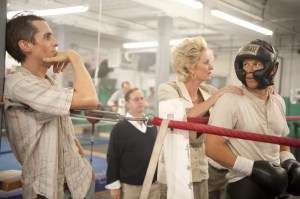
There are just a handful of good boxing movies, but The Fighter must be ranked among them.  This 2010 film written by Scott Silver, Paul Tamasy, and Eric Johnson is based on the true story of two brothers who each attained some degree of success in the world of boxing.  There is some stretching of the truth in order to make a good movie—and that is just what director David O. Russell gives us.


First TimeThe First Time

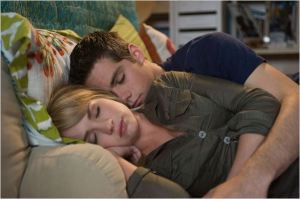
The very sweet teen romance written and directed by Jon Kasdan is disarmingly honest, with characters that feel so real there isn’t the hint of artifice.  Centered around two teens who meet by accident, become friends, and each decide to give up their virginity to the other, this film will leave you with a warm, gooey feeling that makes it a worthwhile viewing experience.


Fly Away PictureFly Away

Written and directed by Emmy Award winner Janet Grillo, this 2011 low-budget independent film, shot in a mere 14 days is full of emotional punch and great characters brought to life by a bright and talented cast.


French ConnectionThe French Connection

If you are looking for the meaning of life, this movie is not for you.  Indeed, if you are looking for any meaning at all, this is not your movie.  Rather, it is a completely kinetic film.  Directed by William Friedkin, it echoes the French cinema of the 1950’s, which itself echoes the American gangster films of the 1930’s.  It is all movement and action, with practically no dialogue, moving in a steady arc of energy toward a violent ending.


french kissFrench Kiss

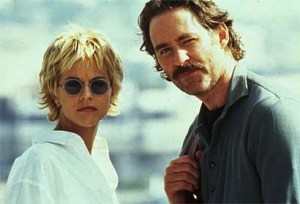
Sometimes the charm of two charismatic actors with great chemistry, combined with a smart, talented director, can make even the most banal of screenplays work to perfection.  Such is the case with Lawrence Kasdan’s 1995 romantic comedy, French Kiss.


Friends with KidsFriends with Kids

This 2011 movie, written, produced and directed by Jennifer Westfeldt, is about a group of shallow, sex-obsessed Manhattan Yuppies who start having children. It stars Adam Scott, Westfeldt, Chris O’Dowd, Kristen Wiig, Jon Hamm and Maya Rudolph.


frozen-river-pic-melissa-leoFrozen River

There are a lot of great movies that somehow never make it into the public eye and Frozen River is one of those films.  It deserves to be seen–and probably deserved a lot more national attention than what it actually got.

E

 Edge of TomorrowEdge of Tomorrow

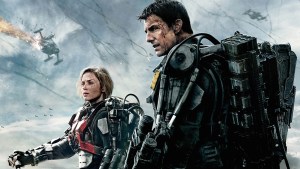
Using the same plot device as Harold Ramis’s temporal breakthrough script Groundhog Day, Edge of Tomorrow gives a more plausible rationale for a person living the same day over and over again, but couches the story in a science fiction action adventure format.


An Education - MulliganAn Education

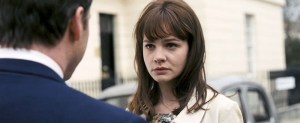
An Education is both a very scary and ultimately very satisfying movie.  Any film that balances tension in such an evocative way deserves attention and this one more than most.  Fortunately, it got it in the form of three Academy Award nominations in 2010, for Best Picture, Best Adapted Screenplay, and Best Actress.


ElizabethtownElizabethtown

If ever there was a candidate for a movie that needed a Second Look, it is the 2005 Cameron Crowe romantic comedy-drama, Elizabethtown.  Crowe wrote and directed the film, which features music by his wife, Nancy Wilson, one-half of the musical duo Heart.  As romantic comedies go, this is a very smart one, always entertaining, and deeper than it probably should be. 


amy-adams encxhantedEnchanted

Walt Disney Pictures has given us a most enchanting film in this entertaining blend of animation, CGI, and live action.  Released in 2007, Enchanted was written by Bill Kelly and directed by Kevin Lima with an eye toward both parody and reverence toward the Disney classic animated movies.  It contains wonderful songs by Alan Menken and Stephen Schwartz and sparkles with good humor.


English PatientThe English Patient

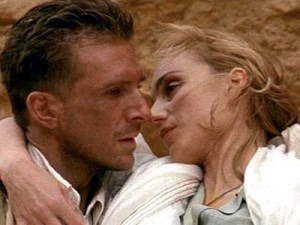
The English Patient is a highly overblown World War II romance. Based on the novel by Michael Ondaatje, the movie was adapted and directed by Anthony Minghella.  It tells a rather choppy story that uses lots of flashbacks to flesh out (literally) the illicit romance between cartographer Count László de Almásy and the wife of his benefactor, Katherine Clifton.

The French Connection

French ConnectionIf you are looking for the meaning of life, this movie is not for you. Indeed, if you are looking for any meaning at all, this is not your movie.  Rather, it is a completely kinetic film.  Directed by William Friedkin, it echoes the French cinema of the 1950’s, which itself echoes the American gangster films of the 1930’s.  It is all movement and action, with practically no dialogue, moving in a steady arc of energy toward a violent ending.

In Marseille, a powerful French drug dealer, Alain Charnier (Fernando Rey) sets up a major deal in the United States by bringing in a famous French television star, Henri Devereaux (Frédéric de Pasquale), to be the front. An undercover policeman following him is assassinated by his heavy, Pierre Nicoli (Marcel Bozzuffi).  Meanwhile, in Brooklyn, two narcotics policemen, Jimmy “Popeye” Doyle (Gene Hackman) and Buddy “Cloudy” Russo (Roy Scheider) are sick of all their small busts and are looking for a big score.  Noticing that a local small-time hood, Salvatore “Sal” Boca (Tony Lo Bianco) and his young wife Angie (Arlene Farber) are courting the mafia, they begin to tail the couple and find that they are leading a double life, running a small neighborhood deli by day and carousing at night.  As they follow the Bocas around, they see Sal make a connection with Joel Weinstock (Harold Gary), a suspected big-time drug trafficker.  From their sources on the street, they find out that the city has been pretty dry, but a big connection is supposed to be arriving soon.  With this information, they convince their boss to wiretap the Bocas and find themselves saddled with Federal involvement, in the form of a man named Mulderig (Bill Hickman), who blames Popeye for the loss of a policeman on a different bust.

When the French arrive, they beef up their operation, putting permanent tails on both the Bocas and the French, but Charnier loses Doyle in the subway and flies to Washington to meet with Boca, who tries to stall him because Joel Weinstock is worried about the police. Charnier is determined that the deal will go through on his timetable.  Back in Brooklyn, Nicoli attempts to assassinate Doyle, but misses.  As he roars off on an El, Popeye follows him on the street using an appropriated automobile in a chase that comes off as one of the best ever done in film.  Nicoli loses control of the situation and shoots several operators on the train, then escapes when the train collides with the one in front of it, but Doyle is waiting below.  When Nicoli attempts to flee, Doyle shoots him in the back.

Henri Devereaux has brought his car, a Lincoln, to New York, so Doyle impounds it and they tear it apart looking for the junk, finally finding it in the rocker panels. Replacing it, they put the car back to together and return it to Devereaux, who loans it o Charnier as a part of their deal.  Charnier drives the car to Wards Island where the dope–several hundred pounds of world class heroin–is extracted from the rocker panels and replaced with the cash that Weinstock pays for it.  The dope is hidden in the old factory, but when Charnier attempts to drive back to New York, the bridge has been blocked off by Popeye, Cloudy, and the police.  Charnier returns to the Island, but a shootout follows in which Doyle follows him into an abandoned building and accidentally shoots the Federal agent.  Charnier escapes and most of the hoods get off, but the one innocent man, Devereaux, gets prison time.  Doyle and Russo get reassigned off of the narco squad.  As the French might say, “this is life.”

Any student of chase scenes or the building of tension in a movie can look to The French Connection almost as a textbook because it is done brilliantly.  The kinetic nature of the film won it a handful of Academy Awards, including Best Picture, Best Director, Best Actor (Hackman), Best Film Editing, and Best Adapted Screenplay (Ernest Tidyman).  It was nominated, but did not win, other awards, but neglected was the great score by Don Ellis.

For me, though, it just didn’t add up to anything. No real theme is explored, no light is shed on the dreary, meaningless lives of the cops or the dealers.  Hitchcock would have admired the extreme lack of dialogue and the way the tension built, but there is nothing to carry away with you except that life sucks.  I can recommend this movie to film students and to those whose only value in cinema is kinetic energy, but there is no depth.  It is a one hour and forty minute thrill ride, full of action, but with no meaning or real entertainment value whatsoever.

B

teresa wright & dana andrews - the best years of our lives 1946The Best Years of Our Lives

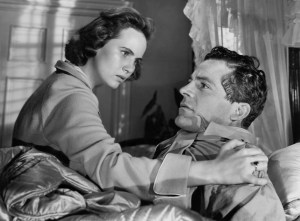
The stark reality of surviving life after war is best faced with the aid of friends and loved ones and that is story that is told in this 1946 film which remains one of the best films ever made.


The-Big-Sleep Bogart BacallThe Big Sleep

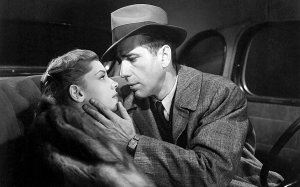
This 1946 film adaptation of Raymond Chandler’s hard-boiled detective novel remains one of the best films ever made for a variety of reasons.  Start with Chandler’s novel, written in a unique voice and style, that delved into the underworld of big city vice, using dangerous and edgy behavior that were normally hidden from the public eye: pornography, promiscuity, and homosexuality.


 Hitchcock The Birds 02The Birds

I was thirteen years old in 1963 when I went to a movie theater to Alfred Hitchcock’s latest move, The Birds, and I can still remember the effect it had, the tension it engendered, the thrill of fright, and my jangled nerves when I left the theater and stepped out into the sunlight.


 the-blind-side-22-550x366The Blind Side

The Blind Side, written and directed by John Lee Hancock, is a biographical drama that tells the story of how Michael Oher (Quinton Aaron), a rather large African-American, gets adopted into a white family, defeats his educational issues, and goes on to develop into a terrific left tackle on the football field.


Breakfast ClubThe Breakfast Club

Yelling one minute, giggling the next, while cool music plays throughout.  Welcome to The Breakfast Club, John Hughes’ 1985 comedy-drama about five teenagers confined to a Saturday detention in the Shermer High School library in Shermer, Illinois, a suburb of Chicago.


 renee zellweger bridge jonesBridget Jones’s Diary

Based ever so loosely on Jane Austen’s Pride and Prejudice, this 2001 British romantic comedy directed by Sharon Maguire is full of hits and misses.  The hits are all punches thrown between the two men who seek Bridget’s attention and the misses are all those single women who wish they had a choice between Colin Firth and Hugh Grant.


bright-star cornish and wishawBright Star

Written and directed by Jane Campion and based on the John Keats biography by Andrew Motion, this 2009 film is one of the most beautiful movies I’ve ever seen and it captures one of the most touching romances in history.  It takes its title from one of Keats’ most moving poems, “Bright star, would I were stedfast as thou art.”


Broken Arrow Stewart PagetBroken Arrow

This 1950 movie was one of the first to portray western Native Americans in a balanced manner and carries as its message racial equality and peaceful relations between Indians and Anglos.  Based on the popular novel, Blood Brother, by Elliott Arnold, the film adaptation by Michael Blankfort dramatizes the historical relationship between Tom Jeffords (James Stewart) and Chiricahua Apache leader Cochise (Jeff Chandler).