Waitress

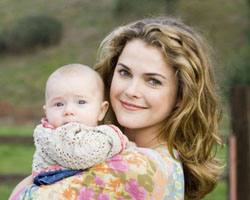
waitress keri russell with babyFunny, touching, tough: three words that truly describe this vastly underrated 2007 comedy-drama, written and directed by the late Adrienne Shelly.

Jenna (Keri Russell) is an amazing pie-maker in some unnamed southern town. She works at Joe’s Pie Diner with her friends, Becky (Cheryl Hines) and Dawn (Adrienne Shelly), under the management of Cal (Lew Temple) and the ownership of Joe (Andy Griffith).  She’s married to a domineering redneck man named Earl (Jeremy Sisto), who takes all of her tip money and bullies her relentlessly, but she’s been hiding away some of the money and she hopes to enter a pie contest where the prize is $25,000–with the intention of leaving him as soon as she can.  This plan gets derailed at the very beginning of the movie when she discovers she’s pregnant.

waitress I don't want earl's baby pieThis brings on the inspiration for her to make tomorrow’s featured pie, the “I Don’t Want Earl’s Baby Pie.” Dawn remarks that she shouldn’t probably write that on the menu board, so Jenna changes the name to the “Bad Baby Pie,” a quiche with Brie cheese and a smoked ham center.

waitress I hate my husband pieShe considers making an “I Hate My Husband Pie” made of bittersweet chocolate–unsweetened–made into a pudding and drowned in caramel. Deciding to keep the baby, she goes to see her doctor only to find that her gynecologist has gone into semi-retirement and most of her cases have been taken over by young, attractive Dr. Jim Pomatter (Nathan Fillion).  When he congratulates her, she tells him that she doesn’t really want the baby, but is having it anyway, so please don’t be all happy for her.  “It’s not a party.”

Her mother taught her to bake as a child, singing this little song (written by Adrienne Shelly):

Baby, don’t you cry, gonna make a pie
Gonna make a pie with a heart in the middle
Baby, don’t be blue, gonna make for you
Gonna make a pie with a heart in the middle
Gonna be a pie from heaven above
Gonna be filled with strawberry love
Baby, don’t you cry, gonna make a pie
Hold you forever in the middle of my heart.

waitress marshmallow-mermaid-pieEverything is about pie creation. She brings the doctor her “Marshmallow Mermaid Pie” that she created when she was nine years old.  She makes a “Falling In Love Pie” (chocolate mousse) for Dawn’s date, and she fantasizes about new pies night and day.  At one point, she considers making a “Baby Screaming Its Head Off in the Middle of the Night and Ruining My Life Pie” that would be a New York cheesecake brushed with brandy and topped with pecans and nutmeg.

waitress earl wants to kill me pie

“I Can’t Have An Affair Because It’s Wrong and I Don’t Want Earl to Kill Me Pie”

Finding Dr. Pomatter irresistible, she begins an affair with him and considers making an “Earl Murders Me ‘Cause I’m Having An Affair Pie” made with smashed blackberries and raspberries in a chocolate crust, but decides it would be better to make an “I Can’t Have An Affair Because It’s Wrong and I Don’t Want Earl to Kill Me Pie” with vanilla custard and banana–no–hold the banana. Among the other pies mentioned in the movie are the “Spanish Dancer Pie,” the “Naughty Pumpkin Pie,” the “Singing Tuna Casserole,” and “Jenna’s Special Strawberry Chocolate Oasis Pie.”

After she discovers that Becky is having an affair with Cal, she asks him, “Are you happy?” He answers, “I’m happy enough.  I don’t expect much, give much.  I don’t get much.  I generally enjoy whatever comes up.”  Dawn finds happiness with a little accountant named Ogie, but Earl continues to make Jenna’s life miserable, forcing her to have sex with him, slapping her around, and controlling her.  In fact, she conceives of the “Pregnant, Miserable Self-Pitying Loser Pie,” made of lumpy oatmeal with fruitcake mashed in and served flambé.

In spite of the comedy, the movie holds a very dark side. Earl, for example, though an ignorant bully, has unexpected depth.  He’s never really been loved and he depends on his control over Jenna to give meaning to his life.  Joe, the owner of the Pie Shop, is himself an old loser, but he advises Jenna to leave Earl and start all over.  “This life will kill you,” he says.  “Make the right choice.”

The script contains many unexpected depths and Shelly’s deft direction and control of the story arc keep the movie on point through its one hour and forty-eight minutes. Keri Russell is beautiful, with a big heart that makes you love and root for Jenna to find a way out of her mess.  Nathan Fillion is charming as the nervous, tender Dr. Pomatter.  Cheryl Hines and Adrienne Shelly are funny and poignant as her waitress friends and Andy Griffith is terrific as Joe–again providing unexpected depths.

But the pies are magnificent. Every pie in the movie looks absolutely beautiful and each one acts like a Greek chorus, providing commentary on the action.

waitress adrienne shellyUnfortunately, Adrienne Shelly did not live to see her movie appear at the Sundance Film Festival or to see its critical success. Three months before it was due to open, Shelly discovered a thief in her apartment.  The man panicked and killed her.  A foundation has since been established in her name to help young female filmmakers fulfill their dreams and you man contribute at The Adrienne Shelly Foundation.

Everyone should see this movie! It’s a film that can be seen over and over again with a kind of sensual culinary pleasure, with laughter and tears, and lots and lots of love.

Funny, touching, tough.

Jack Goes Boating

Jack Goes BoatingThis movie is about two relationships going in opposite directions. One of them, just beginning, is very sweet and the other is clearly at the end of its shelf life.

Jack (Phillip Seymour Hoffman) is a shy and sensitive New York limo driver who works for his uncle and lives in his uncle’s basement. He listens to raggae, tries to whirl his blond locks into dreads, and dreams about working for the MTA.  His best friend, Clyde (John Ortiz) also works for his uncle as a limo driver and is married to Lucy (Daphne Ruben-Vega) who works in the office of a mortician.

The couple sets Jack up with Lucy’s new co-worker, Connie (Amy Ryan), a shy, nervous girl who seems to be right for him. Their own shyness really works to their advantage as each one takes it nice and slow, careful to make sure of each other before taking any big steps at all.  As Jack walks Connie to a cab on their first date, she mentions that she’d like to go boating some time.  They are walking through the snow at the time and Jack remarks that it might be better to wait for summer.  But he takes it seriously and Clyde sets out to teach him how to swim at a Harlem pool.

Connie is approached by a strange man in the subway on her way to work and she violently resists, breaking her nose. Lucy calls 911 and she is taken to the hospital.  Jack buys a little stuffed koala bear for her and they talk about a second date, maybe for dinner.  She tells him that no one has ever cooked for her, so Jack decides to learn how to cook and make a splendid meal for her.  Clyde recommends a chef he knows from the Waldorf Astoria that he calls “the Cannoli.”  Without Jack prompting him, Clyde then volunteers that Lucy had an affair with the chef that lasted two years.  It’s obviously bothering him, but he tries to pretend that they’ve worked the problem out.

Applying himself to his swimming and cooking lessons, Jack gets good at both. After a few initial problems, he gets his application into the MTA and waits to hear whether he will be called for an interview.  As he and Connie become more intimate, he comes to understand that she has serious psychological issues about sex, but he is understanding and goes slow, much to her relief.

Without revealing how the movie ends, I will say that both situations come to a head when Jack finally cooks his big meal for Connie at Clyde and Lucy’s apartment.

Phillip Seymour Hoffman directed this moving film, based on the stage play he appeared in, adapted for the screen by the playwright, Robert Glaudini. The study in opposites is very funny at times, but a feeling of tension runs underneath the surface and it kept me on the edge of my seat wondering what would happen.  At an hour and twenty-four minutes in length, the pacing and timing are perfect.

Hoffman’s performance as Jack is just amazing. It is a pleasure to watch such a gifted actor creating such a layered character.  Amy Ryan gives a great performance as Connie and she works as a perfect foil for Jack.  You find yourself hoping that these two gentle, injured people will find a way to make their relationship work, even as it hurts to see what can happen to a relationship at the other end of the scale.  John Ortiz is excellent as Clyde and Daphne Ruben-Vega compliments him very well as the two cope with a relationship that doesn’t have the glue to hold it together.

I’m an innocent when it comes to betrayal. I’ll never understand how partners in a marriage can turn away and wound the other so deeply.  Jealousy remains one of the great emotional themes of art.

This is a very fine movie and it should be seen. When it was released, it kind of slid by me–and pretty much everyone else, I gather, but it is really good filmmaking.  It’s a story well-crafted and well-filmed and it deserves far more attention than it has gotten.  I highly recommend it for adult audiences.

Il Postino (The Postman)

Il Postino Poster

I love you without knowing how, or when, or from where. I love you simply, without problems or pride: I love you in this way because I do not know any other way of loving but this, in which there is no I or you, so intimate that your hand upon my chest is my hand, so intimate that when I fall asleep your eyes close.

~ Pablo Neruda, 100 Love Sonnets

On a small, nearly isolated Italian island, a fisherman, Mario Ruoppolo (Massimo Troisi), lives with his father. A rather simple-minded young man, Mario hates being out on boats all day and complains of the moisture, so his father tells him to get a job. One night, at the movies, he sees a newsreel covering the arrival of famed Chilean poet Pablo Neruda (Philippe Noiret) to Italy.  A communist, Neruda has been exiled by political opponents and has come to live on Mario’s little island.

Mario sees a sign on the door of the post office advertising for a postman with a bicycle to deliver mail. The next morning Mario applies and finds out that it is a part time job to deliver Neruda’s mail.  As he does his job, he begins a dialogue with the poet.  At first, he is looking for an autograph, so he can show he is a friend of great Neruda and get girls, but as he reads the poetry, he discovers that it appeals to him in some way that he can’t explain.  The poetry stirs in him both a desire for love and a desire to fight for the cause of the oppressed.  Wanting to write his own poetry, he asks Pablo how to go about it and that leads to an explanation of metaphors.

When Mario falls in love with Beatrice (Maria Grazia Cucinotta), the niece of the local inn owner, he begs Pablo to help him win her by writing some poetry for him, but the poet refuses, instead giving Mario a beautiful book of paper to begin writing his own poetry. He brings Mario to the inn and signs the book in front of Beatrice.  Using Pablo’s poetry, Mario begins to woo her with great success, so much so that Beatrice’s aunt becomes upset, complaining about the evil metaphors in the poetry.

Massimo Troisi was a beloved Italian actor long before Il Postino, mostly for his wonderful comedic roles.  When he found the book Ardiente paciencia by Antonio Skármeta, he bound himself to the project, committing to not only star in the film, but to help write the screenplay, along with director Michael Radford, Anna Pavignano, Furio Scarpelli, and Giacomo Scarpelli, even though he was having serious heart problems.  He put off surgery in order to the film and dies shortly after it was completed.

The film is beautifully photographed, full of light and color, with the sea surrounding the island always prominent. There is a great deal of Neruda’s poetry included in the movie and it certainly enhances the beauty.  The film’s Academy Award winning score, composed by Luis Enríquez Bacalov, is beautiful and gives the film a heightened sense of the love not only between Mario and Beatrice, but the brotherly love between Mario and Pablo.

Besides the win for film score, it was also nominated for Best Picture, Best Director, Best Actor, and Best Screeplay Adaptation. The soundtrack features many well known actors reading Neruda’s poetry to the film score.  Some of the readers include Julia Roberts, who backed the project, Glenn Close, Ethan Hawke, Andy Garcia, Madonna, and Wesley Snipes, among others.

This is an excellent film. It is beautiful, full of poetry, music, and love.  In Italian, with subtitles in English, it runs an hour and forty-eight minutes.

Ordinary People

Ordinary Tim Hutton Elizabeteh McGovernFor those who remember what life was like in 1980, Ordinary People will be a real trip to the past.  For those who are too young to know, this movie will give you a brief tutorial in clothing, hair styles, cars, and so on.  For both types of people, this will be an extraordinary family drama, full of terrific performances, raw and deeply moving.  It won four Academy Awards including Best Picture and Best Director for Robert Redford.

Conrad Jarrett (Timothy Hutton) is a high school senior in Lake Forest, Illinois, a suburb of Chicago. Plagued with insomnia, he is a loner who shuns his friends and can barely communicate with his father Calvin (Donald Sutherland) and mother Beth (Mary Tyler Moore).  Recently released from a psychiatric hospital following a suicide attempt that was foiled by his father, Conrad has been home now for over a month, but still has not started therapy.  The false happiness and optimism of his parents grates against him as they all attempt to cope with the incident that started everything down this crazy road: the death of Buck, the older son in the family.  Calvin pretends that life can go on without regard to the death, while Beth seems to have retreated into a coldness that allows for no emotion whatsoever.

Finally, Conrad goes to see a therapist, Dr. Berger (Judd Hirsch), but all he can talk about is maintaining control over his life. Berger would like to see the boy experience some emotion, to face his own anger, terror, and remorse, but Conrad tries desperately to hold on.  Remembering how much he liked his time in the hospital, Conrad seeks out a girl that he had been friends with there, Karen (Dinah Manoff), but she seems reluctant to find a relationship with him.  She tells him that she is happy now and that he should be optimistic, too.  “Let’s have the best year of our lives,” she tells him.  At school, he continues on the swim team, which had been previously dominated by his brother, with all of the awards to prove it, but Calvin is, at best, a mediocre swimmer.  He finds it impossible to relate to his old friends, who were all friends of Buck’s, too.

The girl who stands in front of him in choir, Jeannine (Elizabeth McGovern) makes friends with him and a mutual attraction develops. For the first time since the accident that killed his brother, Conrad begins to have a sense of optimism.  But the tension within the family contains more than just Conrad’s angst.  Calvin has serious trouble dealing with Beth’s apparent lack of emotion and he goes to see Dr. Berger himself, discovering that he still has lingering grief over his son’s death and openly questions why his wife didn’t cry at the funeral.

As Christmas approaches, two dynamic incidents explode the plot wide open. Beth discovers that Conrad quit the swim team a month earlier and hadn’t told them, then Conrad finds out that his friend Karen has committed suicide.

Director Robert Redford handles this emotionally charged story very deftly. It could very easily have gone maudlin and mushy, but it always seems real and always completely honest.  There’s no fancy camera work or other tricks to divert us from the story, but Redford has a keen sense of pacing.  Two hours and four minutes of emotionally charged angst could have been way too much, but I never noticed the action dragging for one moment.  To be perfectly honest, I don’t really like dramas, but I couldn’t stop watching this one.  It is superbly crafted and Redford was deserving of the two Academy Awards.

The heartbeat of the story is provided by Timothy Hutton. His performance as Conrad is one of the best dramatic performances ever and he was given an Academy Award for it.  I’m not sure why they gave him Best Supporting Actor, when he is clearly the lead in this movie, but he would have deserved either one.  Donald Sutherland is terrific as Conrad’s father, giving a deep, heartfelt performance.  I felt a little bad for Mary Tyler Moore, because her character was so emotionally in control that she didn’t have the opportunity to really reveal her talents.  Nevertheless, she did an awful lot with very little to go on.  I kept wishing that they could have gotten Beth in to see the psychiatrist, because I felt that she was the one of all three that actually needed therapy more.  Hirsch is very good as the psychiatrist and both McGovern and Manoff are believable as the two girls.

The fourth Academy Award went to Alvin Sargent for his adaptation of the novel by Judith Guest. It is a really good screenplay, very tight, and beautifully crafted.

The title of the movie is enigmatic. On one hand, this really isn’t an ordinary family.  They are quite wealthy.  The parents golf, they are members of the country club, and their friends are all equally rich, if not more so.  But the title isn’t “ordinary family,” it’s Ordinary People and the title rings true on that level.  Stripped of their wealth, these people are just like everyone, struggling with their problems, trying to figure out how to live their lives in the face of adversity, trying to pretend that things are better than they really are so they won’t have to think about them.

One revealing scene occurs on Calvin’s first date with Jeannine. As they sit in McDonald’s eating burgers, she asks him what it was like to commit suicide.  He looks at her and remarks that she is the only person–outside of therapy–who has asked him about it.  That one stretch of dialogue speaks volumes about the level of disconnect that exists in this family, their utter refusal to face Conrad’s problems.

This is a great film and it is certainly one of the best domestic dramas of all time. Everyone should see it!

Roman Holiday

This classic romantic comedy is as much fun today as it was when the film was first released in 1953. It is built around two lies of identity told to each other by the main characters so that they can spend a day together in Rome.

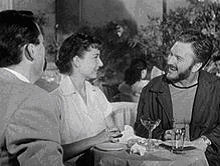
Audry Hepburn Roman HolidayPrincess Ann (Audrey Hepburn in her first starring role) of some unnamed kingdom is touring the capitals of Europe on a goodwill tour and has landed in Rome, her last stop. Young, bored with her grueling daily schedule, and rebellious against her keepers, the Princess throws a fit of pique at her bedtime and is given a shot of sedative to help her sleep.  Before the shot can take effect, however, she quickly dresses and sneaks out of the embassy in the back of a service truck.  As she wanders the streets of Rome alone, she falls asleep on a public bench.

Foreign correspondent Joe Bradley (Gregory Peck), after losing badly in a poker game with his pal, photographer Irving Radovich (Eddie Albert) and other reporters, heads home, but spots Ann sleeping on her bench. Concerned for the girl’s welfare, he tries to wake her up and put her in a taxi, but she can’t function without him, so he brings her back to his tiny apartment and lets her sleep on his ottoman.  The next afternoon, while she’s still sleeping, he goes into his office, sure that he’ll get in trouble for missing the Princess’s press conference.  Not knowing that the meeting has been canceled due to a royal “illness,” he tries to convince his boss, Mr. Hennessy (Hartley Power), that he has interviewed her and narrowly avoids getting fired over his lie.  However, when he sees a picture of the Princess in the paper, he realizes that she’s the girl in his apartment and he may be able to get a terrific story out of it.

Gregory Peck Roman HolidayHiding his identity from Ann, Joe plays the part of an innocent American businessman on holiday and she makes up the name Smith (Smitty) so that he won’t think she’s a princess. In this regard, he takes unfair advantage of her.  While he knows who she is, she has no idea that he’s a reporter trying to get a story.  He proposes that they spend the day doing all of the things she’s always wanted to do.  He ropes Irving into coming along for most of the day to take pictures of her using his cigarette lighter camera.  Ann gets a haircut, eats at a sidewalk café, goes riding on a scooter with Joe, and goes dancing on a boat, all liberating her in ways she’d never imagined.  As Joe gets his story, he begins to fall in love with her and she with him.

Part of the movie’s strong appeal when it was released was that England–indeed, the whole world–was then currently enthralled in Princess Margaret’s love affair with a commoner, Peter Townsend.

The other part almost exclusively relates to Audrey Hepburn’s stunning debut. Although she had appeared on Broadway, acclaimed in performing the title role in Gigi, she was virtually unknown in the world of film and took the industry by storm with her performance in Roman Holiday.  Under William Wyler’s expert direction, her performance is restrained and vulnerable, yet one never doubts that she is absolutely extraordinary, a real princess, and a true beauty.  Among the awards she received was the Academy Award, the Golden Globe, the BAFTA, and the New York Film Critics Circle Award, all for Best Actress.  She was aided by Edith Head’s amazing costumes, which also earned an Oscar.

Roman HolidayGregory Peck and Eddie Albert are perfect in their roles, too. Peck brings a calmness and dignity to the hard-nosed reporter that elevates the role far beyond what it might have been and he is the perfect foil for Hepburn.  They have a chemistry that is truly magnetic.  Albert is almost unrecognizable as Irving.  With a beard and full head of hair, he adds a Bohemian element to the role that really makes him seem a natural part of the European scene.

The script was written by John Dighton and the great film screenwriter Dalton Trumbo, but because he was blacklisted for refusing to cooperate with the House Un-American Activities Committee, Trumbo did not receive credit for his writing. Instead, author Ian McLellan Hunter was listed on the credits and was nominated, along with Dighton for the Academy Award for Best Screenplay.  The pair actually won the Writers Guild of America Award for Best Written American Comedy, but Hunter’s award was later transferred to Trumbo’s widow Cleo in 1993.

William Wyler’s direction is superb. He decided to shoot the film in black and white, even though color in vogue in 1953 and, in retrospect, it was a great decision.  The beauty of Audrey Hepburn is truly shown to great advantage, as is the chiseled manly face Gregory Peck.  The third major star of the film is Rome itself.  Wyler decided to shoot the film entirely on location, a notion that Hollywood shunned at the time, preferring to shoot all their films on the back lots of the studios, using rear projection of world-famous landscapes and buildings.  In Roman Holiday, again, the black and white film loves the city in its pre-gaudy, non-Felliniesque gray tones.  The coliseum, the churches, the plazas, sidewalk cafés and little scooters running around everywhere gives the movie a truly authentic aura that meshes so well with Hepburn and Peck’s performances.

The DVD includes a terrific documentary, “Remembering Roman Holiday,” the featurettes “Restoring Roman Holiday” and “Edith Head – The Paramount Years,” plus photo galleries and some really interesting trailers, including Audrey Hepburn’s interview following her screen test and her modeling some of Edith Head’s costumes.

Funny, beautiful, frolicsome, Roman Holiday remains one of the great classic love stories of all time and should be seen by everyone–should, in fact, be a part of everyone’s film collection.

Survival in the Storm by Katelan Janke


The Dust Bowl Diary of Grace Edwards

This Dear America novel of a farm family in Dalhart, Texas in 1935, written by fifteen year old Katlan Janke is presented in the form of a child’s diary.

Janke - Survival in the Storm Book CoverGrace Edwards receives her diary on Saturday, February 16, 1935 as a gift from her friend Helen for her twelfth birthday. She makes her first entry the following day sitting alone in the hayloft. We learn that her father is a farmer, that they have their own spread just outside of Dalhart, Texas, and that besides her mother, she also has a little sister, Ruth, who is seven years old.  Her parents gave her the book Anne of Green Gables for her birthday and Ruth gave her a hand-made bookmark.

The wind howls relentlessly because this family lives at the southern edge of No Man’s Land, what later was called The Dust Bowl. Compared to other families, the Edwards are actually doing reasonably well. They aren’t wealthy, like the McCalls, whose daughter Sadie is always lording it over the other kids in the one room schoolhouse, nor dirt poor like the Walkers, whose daughter is Helen, but they scratch along without government aid.  Somehow, they usually manage get enough out of their garden to can vegetables for the winter and her father usually gets just enough wheat out of the dust-blown fields to make do.  They own two cows, so the kids actually get fresh milk most of the time.

But they don’t have money for the picture show and the girls and their Mama have to sew new dresses from seed bags. When Daddy goes to buy seed, typically the family goes along so they can make sure they get matching bags for the new clothing.  They attend Sunday school and church on most Sundays when the wind isn’t blowing too hard and they put on competitive plays when school shuts down before summer.

This is an especially bad year as there are many dust storms that blow through, gigantic black clouds that roll over the land dropping fine, dry topsoil that has been picked up from the drought-stricken prairie farms. Many times these storms go on for hours, turning the land midnight black and accumulating in the lungs of people and their animals. Dust pneumonia is a common illness.  Cattle die from inhalation.

Grace’s world is torn apart when the Walkers reach the end of the line and head out for California. Losing her best friend is a big blow to Grace and she struggles to comprehend and deal with the loss, but there are bigger problems ahead. Black Sunday occurs on April 14, 1935.  A dust storm rising 10,000 feet high and two hundred miles wide descends across No Man’s Land. As the family prepares the house by wetting and hanging up sheets across windows and doors to catch the dust, Ruth is sent out to get the rest of the whites off the line.  Grace looks for her and sees that she is missing, so she sets out looking for her.  Ruth has chased a blowing dish towel.  Separated from their family as the storm approaches, the two girls take shelter in the abandoned Walker house.  Holding cloth over their faces, they hunker down and try to keep breathing as the storm howls around them.

The book is very well written, especially for a fifteen year old writer. Janke grew up in Dalhart and had local oral sources for original stories, as well as the Dalhart museum for research, including all of the local newspapers of the time.  Her re-creation of 1935 is completely believable, not just in the small details of household life, but in her understanding of the weather, the small local society, clothing, farm animals and so forth.  Neither Grace, nor any of her family or friends rings false.

There are indeed, many moments of the book that are quite moving and Janke must be accorded a great deal of success in her efforts. I loved the book from beginning to end.  If I might find any area of complaint, it’s that the great physical pain that these people suffered does not seem quite visceral enough.  It is a small complain indeed in a largely successful novel for young adults.

I highly recommend this book, not just for young adults, but for families and general readership. It well-written, moving, and a terrific depiction of The Dust Bowl.