Marnie

Marne 01Marnie is undoubtedly Alfred Hitchcock’s most unusual film.  There’s no murder, no spies, no sabotage, and practically no suspense.  It is a straight up psychological drama.

The movie begins with a theft.  A young woman, Marnie (Tippi Hedren) goes under various aliases as she moves from one company to another gaining trust and then stealing money from their safe before disappearing into a new identity.  She has just robbed an accounting firm that represents Rutland and Co., owned by Mark Rutland (Sean Connery), who remembers seeing the girl on a visit.  Following her robbery, Marnie washes the black dye from her hair to reveal her own stunning natural blonde.  She makes her way into the country where she has a standing relationship with a stable and a horse all ready for her to ride.  She also visits her mother (Louise Latham) in Baltimore, where we see her acute jealousy for a little girl that her mother looks after.  She wonders why her own mother hates her so much.

Throughout the early set-up of the film, we are shown glimpses of Marnie’s fears and phobias.  The color of bright red, for example, puts her into a blind, mindless panic.  Her mother urges her to stay away from men, because they will only hurt her and Marnie acknowledges that she’s never had a relationship with a man and never will.

In Philadelphia, she begins her life as a thief yet again, this time taking a job at the Rutland Company, not realizing Rutland’s relationship with the accounting firm she’s recently robbed.  Mark decides to hire her over the objections of his manager.  A woman named Susan (Mariette Hartley) is secretary to the manager, who keeps the combination to the safe in her locked desk.  On her first day in the office, she meets Mark’s former sister-in-law Lil (Diane Baker) who obviously has designs on Mark.  He asks Marnie to come into his office on a Saturday to work, but they are disturbed by a thunderstorm.  The lightning terrifies Marnie and sends into another blind panic.  Mark comforts her and drives her home.  Discovering her love of horses, he arranges a date with her at the horse races in Atlantic City.  Afterwards, he drives her home to meet his family.

Finally seeing her opportunity, she steals the key to Susan’s desk, stays late in the office, and steals a substantial amount of money from the safe.  Realizing the situation, Mark replaces the money and tracks her down at the stable where she rides her horse.  He blackmails her into marrying him and takes her away for a honeymoon cruise, where he rapes her.  Lil becomes suspicious of Marnie.  Snooping around while Mark and Marnie are away, she discovers that Mark has paid off the accounting firm where Marnie previously stole money.  Upon their return, she invites the manager of that firm to a party at the Rutlands.  When Marnie sees her former boss, she freaks out and tries to leave.

Ultimately, Mark must force her to re-live her past and come to terms with the reason for all of her fears.

This is a very uneven film, even though Marnie’s character offers the kind of drama that might have intrigued Tennessee Williams.  The first problem is the length of the movie.  At two hours and 11 minutes, it is simply too long for the subject matter and it becomes deeply bogged down and very difficult to watch.  It seems to me that as Hitchcock became more and more popular as a director, he allowed himself to include many things in his movies that were not essential to the film.  Not only does Marnie suffer from this, but so does North by Northwest, The Man Who Knew Too Much, and others.  These films all required a firm hand in the cutting room, but Hitchcock was a demanding director and editor George Tomasini, who worked with him a large number of his American films, was quite obliging.

There are other technical issues as well.  Hitchcock’s reliance on rear projection and matte painting fails him quite dramatically here, especially in the scenes where Marnie is riding a horse, coming off as very unrealistic.

Marnie 03Although he was dedicated to the elevation of model Tippi Hedren to stardom, her fine performance in The Birds does not carry over well into this psychological drama.  At times she seems rather wooden and signals her emotions, rather than using nuance to fill in the blanks.  Sean Connery, a very accomplished actor, does okay in the movie, but one is always aware that he is Sean Connery.  I don’t think there was a single spot in the movie where I actually thought he was Mark Rutland.  In addition, I don’t sense any kind of chemistry between the two stars in this movie and I didn’t really care what happened to them.  Without any real suspense to drive the movie–and with constantly looking at my watch and wondering when it would be over–it really felt forced.

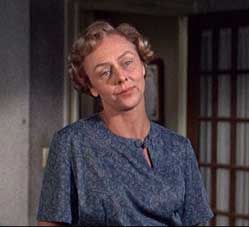
Marnie 02There are two really good performances in the film.  Louise Latham is simply outstanding as Marnie’s mother, bringing the kind of nuance that makes for a starkly realistic character.  And Diane Baker is excellent as Lil, the jilted sister-in-law.

This might have been a great film, with sufficient editing, perhaps with a different leading actress as Marnie and maybe an American actor as Mark, with some of the action sequences done more realistically.  As it is, the movie looks like an overblown Hollywood version of what should be a compelling drama.

I have to rank this near the bottom of Hitchcock’s American films and I find it hard to recommend it to anyone but die-hard Hitchcock fans.

The Dragonriders of Pern


Anne McCaffrey

The Dragonriders of Pern Saga

(An Introduction to the World of Pern)

REVIEWS

The Dragonriders of Pern Trilogy

DragonflightDragonflight

This first book of The Dragonriders of Pern saga began as two novellas, “Weyr Search,” which won the 1968 Hugo Award for Best Novella and “Dragonrider,” which won the Nebula Award for Best Novella in 1969, making author Anne McCaffrey the first woman to ever win either one of the prestigious science fiction writing awards. It is the only Dragonrider novel that focuses exclusively on the relationship between F’lar and Lessa 

dragonquestDragonquest

The sequel to Dragonflight and the second book in the Dragonriders of Pern Trilogy, Dragonquest substantially expands the range of featured characters.  Where the first book concentrated almost exclusively on F’lar and Lessa, the second novel spreads its point of view far and wide.  Masterharper Robinton, Menolly, F’nor, queen rider Brekke, and the boy who is to inherit Ruatha Hold, Lord Jaxom, all take center stage at one point or another, while the Weyrleader and Weyrwoman continue to expand their leadership roles.

White DragonThe White Dragon

Beginning several more Turns after the end of Dragonquest, The White Dragon shifts character perspective slightly away from Benden Weyr to concentrate on the maturing of Jaxom, the rider of the white dragon, Ruth and itinerant Lord Holder of Ruatha Hold.


The Harper Hall of Pern Trilogy

DragonsongMcCaffrey Dragonsong

The youngest daughter of Yanus, Holder of Half-Circle Sea Hold, on the wild Eastern part of the northern continent, Menolly is 15 years old at the beginning of the novel.  Petiron, the Hold Harper, had found her to have an exceptional musical talent when she was very young.  Even though girls were not allowed to be Harpers, he taught her how to play all of the instruments and encouraged her to write her lovely songs.

.

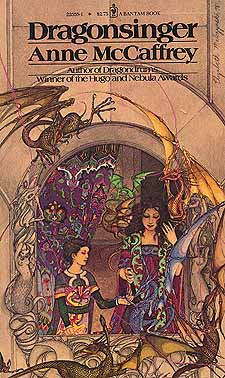
DragonsingerDragonsinger

Dragonsinger is the sequel to Dragonsong and the second book of the Harper Hall Trilogy.  In the main Pern timeline, it occurs roughly at the same time as the later sections of Dragonquest (the second novel of the Dragonriders of Pern Trilogy).  It continues Menolly’s story from the ending of Dragonsong as she arrives at the Harper Hall to begin her new life as a musician.  It is highly recommended that one read Dragonsong before reading Dragonsinger.

Dragondrumsdragon-drums-det_0

Piemer’s voice breaks just as he is preparing to sing the role of Lessa in a new composition by Domick and Menolly, written especially for Lord Groghe’s Spring Festival.  Without his voice, the boy’s world is turned upside down.  Fearing for his future he visits his voice master, Shonagar, only to find that he will be replaced as the man’s apprentice.  Shonagar sends him to the Masterharper of Pern, Robinton, for reassignment.  His depression over his change of circumstances changes to elation as he finds that he will become Robinton’s apprentice now, but there are, of course, complications.


 Other Books in the Series

dragonsdawnDragonsdawn

Dragonsdawn is a prequel to the entire Dragonriders of Pern saga.  This novel tells the story of the group of colonists who actually settled Pern and it explains most of how the society devolved into what readers encountered when they opened their first Pern book, which is normally (and should be) Dragonflight during the Ninth Pass of the Red Star.  If readers had any difficulty understanding that world, this will explain all, from the difference between a wherry and a watchwher to how the dragons were evolved from fire-lizards.


Renegades of PernThe Renegades of Pern

The Renegades of Pern is splintered into lots of little stories and covers the time period just before the beginning of the main Dragonriders of Pern Trilogy, running all the way up to the very beginning of All the Weyrs of Pern.  It contains both vital information regarding the main story line and vast amounts of story that just don’t really matter at all.


All the Weyrs of PernAll the Weyrs of Pern

In what many thought might be the last of the Pern 9th Pass novels, the computer AIVAS (Artificial Intelligence Voice Address System) serves as a major character in the fight to end Thread forever.


Skies of Pern Les EdwardsThe Skies of Pern

In this final book in the 9th Pass saga of The Dragonriders of Pern, the story turns to the aftermath of events in All the Weyrs of Pern.  F’lessan, son of F’lar and Lessa, rider of bronze dragon Golanth, has settled into the ruins of ancient Honshu Hold and is looking for an occupation for the time After the last fall of Thread.  Researching his hold at Landing, he runs into Tai, rider of green dragon Zaranth at Turnover and their meeting changes both of their lives–and the future of Pern.

Shadow of a Doubt

Shadow of a DoubtIs this Alfred Hitchcock’s best movie?  The Master thought so.  Of all the films Hitchcock made in his lifetime, this was his very favorite.  It combines many of his best filmmaking techniques, it is tremendously suspenseful, and the very heart of the movie is loss of innocence.  This review contains plot spoilers, so beware reading the entire summary below if you want to be surprised!

The opening credits show a ballroom with couples dancing to “The Merry Widow Waltz,” an image that will be reprised throughout the movie.

Charlie Oakley (Joseph Cotton) lies on his bed in some nameless Eastern city, a pile of money laying on his bedside table.  His landlady tells him that two men have been looking for him, so he languidly gets himself together, goes downstairs and immediately loses the two men who are following him.  He sends a telegram to his family in Santa Rosa, California, informing them that he will soon arrive for a visit.

His niece, Charlotte “Charlie” Newton (Teresa Wright) lies around her bedroom bored to tears with her life in the small town and wonders if anything exciting will ever happen.  Her father, Joseph (Henry Travers) can’t understand her, but promises that things will get better.  Charlie decides to send a telegram to her uncle Charlie hoping that he will come visit them to make things more exciting and she is stunned when the telegram from her uncle arrives–she calls it mental telepathy that they were thinking of the same thing at the same time.  Uncle Charlie’s sister, Emma (Patricia Collinge) is young Charlie’s mother and the family is completed with brainy little sister Ann (Edna May Wonacott) and a younger brother.  When Uncle Charlie arrives by train, they are all excited to see him, especially Charlie who feels that they are like twins, partly because she was named after him and partly because he seems to bring that excitement that she really wants out of life.  During dinner that night, Emma begins to hum “The Merry Widow Waltz,” but no one can remember what it is called.  Uncle Charlie distracts them so that no one does actually give us the title.

Uncle Charlie gives everyone gifts, including a ring to Charlie that has an inscription inside, but one from someone else to someone else.  A neighbor, Herbie (Hume Cronyn) shows up to discuss crime fiction with Joseph.  Uncle Charlie finds something in the newspaper that disturbs him.  He pretends to play a game with Ann where he tears up the section of the paper he was reading.  Stuffing it into his pocket, he goes upstairs, but Charlie is curious.  Claiming that they have nothing to hide, she steals the bit of paper, but can’t make anything out of it.  Ann tells her that the library is open until 9 PM, so Charlie runs down and finds the paper.  There is an article about the “Merry Widow Killer,” a man who marries rich widows and then kills them for their money.  When two government agents, Jack Graham (Macdonald Carey) and Fred Saunders (Wallace Ford), show up posing as a national survey team, Uncle Charlie gets nervous and refuses to have his picture taken, but Charlie agrees to go out with Jack to show him Santa Rosa and he admits that he is a detective on the trail of the “Merry Widow Killer.”   Uncle Charlie is one of two suspects they are investigating.

Suspicious and torn between family loyalty and fear that Uncle Charlie really is the killer, she proceeds cautiously.  When the suspect on the East Coast is killed trying to run away, it is assumed that the man was the killer, but Uncle Charlie begins to arrange “accidents” for Charlie, including a broken stair step and finally locking her inside their garage with the car running and the key in his pocket, trying to kill her with carbon monoxide poisoning.  The family all go off to a speech that Uncle Charlie is giving, so Charlie tries to call the government agents to no avail.  Later Uncle Charlie announces that he is leaving.  He has carefully arranged to run off with a family friend, who just happens to be a rich widow.

As the train moves off, he holds Charlie prisoner and tries to throw her off the moving train, but as the struggle, he loses his balance.  A little push from Charlie and he falls into the path of an oncoming train.  The final scene shows Charlie talking with Jack at Uncle Charlie’s funeral.  She remarks that Uncle Charlie thought the world was an evil place, but Jack tells her that there is only some evil in the world.

One can understand, especially from a thematic point of view, why this would Hitchcock’s favorite film of his entire canon.  The story develops Charlie’s arc from being an innocent, bored with her simple hometown life, to understanding that evil can lurk in the most unexpected places.  The viewer sees her grow as a person from an immature girl into a mature woman and that is always eminently satisfying.  But the film offers much more than this.  Uncle Charlie and Emma’s wistful view of the past as a beautiful waltz contrasts sharply with his perception that the world has grown into an awful place, full of stupid people who only eat and talk and display their jewelry.  His own bitterness at the world fuels his murder spree and when he sees his hope of that innocence of youth, his niece Charlie, turning cold to him, he can only respond with the despair that leads him to try to kill her.

In addition, the suspense is so finely crafted in this film that the viewer is pulled to the edge of their seat, waiting to see what happens to the girl Charlie.

The performances are uniformly good, but Joseph Cotton is magnificent as Uncle Charlie.  He leads us through all of his moods, from that painful yearning for innocence to the fear of being caught, to the despair of losing his niece’s good graces.  It is a powerful performance.  Teresa Wright is wonderful as the girl Charlie, capturing the essence of a soul at the turning point of her life between childhood and maturity.  Hume Cronyn is delightful as the family friend Herbie, who is always trying to find the perfect murder.  One of the best performances in the film is given by Patricia Collinge as Emma, who may miss the innocent past even more than Uncle Charlie and whose love of him creates the central challenge to Charlie’s struggle about revealing her uncle’s identity as the killer.

However, Macdonald Carey failed to make an impression on me as Jack.  Perhaps the character was written with too many contradiction or maybe I just didn’t buy his romantic interest in Charlie.  For whatever reason, his performance did not ring true for me.  It is the only blip in an otherwise great cast.

All of Hitchcock’s best film techniques are present in Shadow of a Doubt, some of them never more finely executed, and it will remain as one of the best films he ever made.  His best?  That question is still open for debate.

Dragonquest by Anne McCaffrey


dragonquestThe sequel to Dragonflight and the second book in the Dragonriders of Pern Trilogy, Dragonquest substantially expands the range of featured characters.  Where the first book concentrated almost exclusively on F’lar and Lessa, the second novel spreads its point of view far and wide.  Masterharper Robinton, Menolly, F’nor, queen rider Brekke, and the boy who is to inherit Ruatha Hold, Lord Jaxom, all take center stage at one point or another, while the Weyrleader and Weyrwoman continue to expand their leadership roles.

It begins nearly seven years after the initial events of Dragonflight with Master Robinton writing a ballad for the upcoming wedding of Lord Asgenar of Lemos Hold to Lady Famira, a half-sister to Lord Larad of Telgar Hold.  (Larad’s half-sisters are complete contrasts, as Lady Thella in The Renegades of Pern proves to be quite a formidable villain.)  He wants to include as many of the changes to Pern as possible, but he is bothered at the way the Oldtimers have failed to integrate into the new culture.  Coming from 400 turns back and skipping the entire last Interval, they expect privileges that Benden and Southern Weyrs do not and they object to the forestation of the planet that requires them to work harder.  This new world view that has blossomed during the last Interval–and championed by F’lar and Less–has disaffected them greatly.  They are more clearly out of time and Robinton laments that F’lar did not take over leadership at the time they came forward.  The old rule that each weyr be independent and separate is not really appropriate in this new time.  As he write, Robinton hears a drum message notifying Fort Weyr that Thread is falling out of pattern.

F’lar’s half brother F’nor, on a visit to the Smithcraft Hall, interrupts two Fort Hold dragonriders who are attempting to pilfer a knife from Fandarel’s assistant, Terry–a knife that was made on commission as Lord Larad’s wedding gift to Lord Asgenar.  One of the men, T’reb, upset because his green dragon is ready to mate, assaults F’nor, stabbing him with his belt knife.  F’nor is sent to the Southern Weyr to recover and F’lar confronts the Oldtimer weyrleaders with this crime, but T’ron cites the independence of the weyrs and frustrates F’lar.  When they discover that Thread has been falling out of pattern and that the Oldtimers failed to inform them, their frustration grows as the Lord Holders worry about possible damage to their property.

Recovering in the Southern Weyr, F’nor gets to know Brekke, who is the secondary weyrwoman there, rider of queen Wirenth, subordinate to Weyrwoman Kylara, whose queen dragon is Prideth.  However, Kylara is vain and wanton.  She has delegated almost all of her duties to Brekke, who also serves as the chief nurse at Southern and is fostering a teenage girl, Mirrim.  Gradually, F’nor falls in love with Brekke and worries about the prudishness of her Farmcraft upbringing, just as she worries that she will inhibit Wirenth when her queen rises to mate.  F’nor begins to wonder if Canth might possibly fly Wirenth.  Even though he is only a brown dragon, he is as big as many bronzes.  Sleeping on the beach one day, Canth informs him that a newly hatched queen fire lizard is hovering about seeking food.  He speaks softly to her and gives her a meat roll from his pouch, Impressing Grall.  He has Canth call back to Southern Weyr for other riders to come Impress the other hatching fire lizards who are turning cannibal with the lack of food on the beach.  Brekke impresses a bronze, Berd, and Mirrim Impresses two greens, Reppa and Lok, and a brown, Tolly.  Kylara was absent during the Impressions, as she was bedding the evil Lord Maron of Nabol, and she is furious that she doesn’t have one.  She decides to haunt the Southern beaches and find her own clutch.

When F’lar is visiting F’nor, Thread falls and he and Mnementh join the fighting.  Afterward, he discovers that there is no sign of Thread infestation and investigates.  He discovers that Southern has a kind of grub that eats Thread.

Four major events occur in Dragonquest that alter the future of the planet.

The first event occurs when Lord Warder Lytol and young Jaxom come to visit Benden Weyr.  Felessen, the son of F’lar and Lessa, takes Jaxom back into the long abandoned caves of the weyr to a secret place where boys go to view Ramoth’s eggs.  Finding a small one all by itself, Jaxom touches the egg.  Fearing discovery, they head back, but their glows wink out and they are lost in the darkness.  Jaxom accidentally pushes a button that opens a door.  The trapped gas knocks the two boys out, but the adults are all extremely excited by the stuff that the original colonists left behind in the room.  They find a microscope and begin to wonder if there might be a way to alter it so that one could see the Red Star close up.  Later, T’ron discovers a telescope at Fort Weyr.

The second major event happens at the wedding of Asgenar and Famira.  F’lar and Lessa arrive with fire lizard eggs to give to the happy couple as gifts.  They arrive just before Meron and Kylara who now both have their own fire lizards.  Fandarel has developed a “distance writer,” a kind of primitive telegraph and it reports the news that Thread is falling, so F’lar decides to join the other Oldtimers in fighting it.  When T’ron learns this, he grows angry at F’lar for interfering in another weyr’s affairs and they duel.  F’lar severely injures T’ron and gives a passionate speech asking for the weyrleaders, lords, and craftmasters to swear their allegiance to him and they do wholeheartedly.  He banishes the Oldtimers to Southern where they can do little damage and decides to move the current dragon folk from Southern to High Reaches Weyr.  Even though he is injured, he goes to fight Thread anyway.

In High Reaches Weyr, Wirenth rises to mate, but Kylara’s Prideth is at Nabol while she is bedding Meron.  In high heat, Prideth challenges Wirenth’s mating flight and the two dragons fight in mid-air.  Both severely injured, Wirenth takes Prideth into between and they both die.  Brekke goes into a deep depression and Kylara goes mad.

The third major event occurs at the hatching of Ramoth’s new clutch of eggs.  Lessa has put Brekke into the pool of girls hoping that she will Impress the new queen and recover from her severe shock and depression.  This is the point at which Dragonsong, the first novel in the Harper Hall Trilogy interconnects with the main trilogy.  There are two accounts of the hatching, one primarily from Jaxom’s point of view in Dragonquest and one from Menolly’s point of view in Dragonsong.  Although Brekke does not re-Impress, her little fire lizard, Berd, challenges Ramoth by entering the hatching grounds chittering at Brekke.  This breaks her out of her depression and she does not Impress the new queen.  However, once the hatching is over, Jaxom watches the little egg he had touched earlier rocking and shaking as if the dragon was trying to break out.  When no one responds, he jumps into the hatching ground and breaks the shell, cutting the sac with his belt knife.  A little white dragon falls out and Jaxom impresses Ruth.

The fourth major even of the novel happens because the lords are all anxious for the dragonriders to go to the Red Star and eradicate Thread at its source.  Not understanding the breadth of space or how big the Red Star actually is, they continue to press for this venture.  F’lar himself would like to go if he could only see it well enough in the telescope at Fort Weyr to be able to jump between.  Lord Meron is at the viewer night after night trying to give coordinates to his little bronze fire lizard, but the creature is so scared it just jumps between.  Watching, F’nor discovers a could formation on the Red Star that is easy to visualize.  He gives the coordinates to Canth and they jump.  The atmosphere of the Red Star is hot and poisonous.  Canth broadcasts their distress back to Pern and every fire lizard in the world picks it up.  Through Ramoth, the word is broadcast to all of the dragons who come to Benden Weyr to form a living bridge to ease the battered bodies of F’nor and Canth back to earth.  At the Harper Hall, in Dragonsinger, Menolly’s nine fire lizards all go berserk and wake everyone up.

The book ends with F’lar conducting a successful experiment with relocating grubs from the southern continent into the Lord Asgenar’s forests at Lemos.  When the lords express discomfort that dragons may be no longer needed, F’lar intimates that dragonriders may use their time exploring the southern continent or even the other planets in their system.

Obviously, from the above brief plot summary, a great deal happens in the novel.  The simplicity of F’lar and Lessa’s relationship in Dragonflight has been replaced by a much deeper and broader story line.  The introduction of Masterharper Robinton and Mastersmith Fandarel in the first book is expanded out to include many other craftsmen and the push toward innovation dominates the society.  There is an obvious need to have not just the weyrs, but the rest of the planet under one leadership and F’lar and Lessa, with their farsightedness and liberality are clearly the ones to do it.  Although F’lar respects the Oldtimers for their contribution to saving Pern, they are clearly out of step with a society that is moving forward.  The economy is now thriving, especially with the additional forestation, and Fandarel is moving technology ahead with both his own inventions and by using the discovery of material the original colonists had carefully packed away for future use.

Both the discovery and seeding of the Thread-eating grubs and F’nor’s trip to the Red Star move the plot along in the direction of ending the menace of Thread forever.

Most important of all, the book moves the story from borderline fantasy firmly into the realm of science fiction.  A planet was colonized by humans, dragons were genetically engineered from the fire lizards, and, following the collapse of the society into a medieval technological state, the humans are beginning to discover their roots and the level of technology that their ancestors brought to Pern.

The broadening of the characters to include Robinton, Fandarel, Menolly, Jaxom, F’nor, Brekke, Mirrim, as well as the Lord Holders Larad, Asgenar, Groghe, Corman, and the personalities of the dragons and fire lizards gives the book–the whole saga–a depth that sets it apart from most other science fiction franchises.  The third book of the trilogy, The White Dragon, dovetailing with the third book of the Harper Hall Trilogy, Dragondrums, expands the story to such a level that it begins to reach a nearly mythological level.

I find it utterly confounding that no high level film or animation has–to this point, at least–been shot and released.  I think that the story would have great appeal and not just to the Young Adult market.  In addition, there would be a whole market for products based on the Pern dragons, fire lizards, and the deeply appealing characters.

Hopefully, something good in the cinema will eventually come from this terrific saga!

The Lady Vanishes

The Lady Vanishes (1938)Set in the fictitious European country of Bandrika, this 1938 British comedy-mystery  remains one of Alfred Hitchcock’s best movies.  Based on the 1936 novel The Wheel Spins by Ethel Lina White, the script by Sidney Gilliat and Frank Launder is truly funny, even the suspenseful parts.  Enhanced by Hitchcock’s own wit, it emerges as a truly entertaining popular film that reaches well beyond his normal confines of mystery and suspense.

A group of English tourists and businessmen is trapped at an inn in Bandrika by an avalanche that has covered the railroad tracks.  Young, beautiful Iris Henderson (Margaret Lockwood) has been visiting her friends, Blanche (Googie Withers) and Julie (Sally Stewart) before returning to England to marry a blueblood with lots of money.  She isn’t terribly excited about the prospect, but at the same time she can’t really find anything to get excited about.  Two apparently gay British businessmen, Charters (Basil Radford) and Caldicott (Naunton Wayne) are desperately trying to get back to England to see a cricket match.

Upstairs from Iris, a young English folk music enthusiast, Gilbert (Michael Redgrave) has several Bandrikans clogging a folk dance.  Along with her neighbor, Miss Froy (Dame May Whitty), a governess also returning to England, Iris complains about the noise and has Gilbert evicted from his room.  In retaliation, he comes to her room with his things and announces he’s moving in.  Forced to capitulate, she calls the manager and gets his room back.  In the meantime, Charters and Caldicott can’t get a regular room, so the manager has to put them up in the maid’s room, with the lewd suggestion that the maid will have to change her clothes there.  The two men are appalled and go out of their way to avoid seeing the young woman naked.

The next day on the train, Miss Froy befriends Iris who has been hit on the head by an object falling from a window.  The coach they are sitting in includes a Baroness and a magician.  After Iris takes a nap, she wakes up to discover that Miss Froy has disappeared.  The others seated in the coach deny having ever seen Miss Froy at all, so Iris begins to canvas the train trying to find anyone who remembers seeing the woman.  Along the way, she meets back up with Gilbert, who is determined to help her, even if he isn’t convinced that such a woman existed.  She meets Dr. Hartz (Paul Lukas), a Bandrikan neurosurgeon who tries to convince her that she’s been hallucinating, but she can’t let herself believe that Miss Froy wasn’t real.  When Gilbert sees a porter throwing out the trash and notices the brand of tea that Iris told him Miss Froy gave to them, he becomes convinced and helps her to turn the train upside down looking for her friend.  The trains stops to pick up a special patient for Dr. Hartz and Gilbert begins to suspect that Miss Froy has been substituted for the patient.

Part of what makes the movie special is the terrific chemistry between Margaret Lockwood and Michael Redgrave.  A noted actor on the British stage, this was Redgrave’s first starring role and he definitely made the most of it.  His offbeat humor teamed so well with Lockwood that the two are completely engaging throughout the movie.  The rest of the cast is also quite good, but Radford and Wayne as Charters and Caldicott practically steal the show.  Their stiff British correctness, combined with their obviously gay relationship and obsession with cricket, despite the hijinks going on around them is hilarious.  In fact, the two went on to reprise their characters in other British movies after The Lady Vanishes.

Coming as it did, after several unsuccessful films, this major box office hit was what convinced American producer David O. Selzni,k to sign Hitchcock to a contract that would bring him to America and lead him to become one of the most respected directors in film history.

The Lady Vanishes contains many of the elements that were staples of Hitchcock’s movies: the uncertainty of relationships, a long train ride, slanted camera angles to emphasize important objects in the frame, long takes contrasted with fast montage, his fascination with spies, his fear of the police, and, of course, the humor that colored many of his later American films.  This film also carries more political weight than most of his movies, as it was made during the period of time that Chamberlain was capitulating Czechoslovakia to Hitler and the situation is alluded to obliquely throughout the film, but especially near the end when the English on board the train must make a decision to either capitulate to the Bandrikian government or to make a stand.  The one man who decides to capitulate is shot dead holding his white flag, while those who hold fast persevere.

The film showcases many of the great filmmaking techniques that Hitchcock had learned and mastered.  It was given a low budget and restricted to a very small studio at Islington.  No matter.  Hitchcock built one train car in the studio and shot virtually the entire train footage, which takes up most of the film, on his one set, using superb rear projection, camera angles, and masterful dissolves to keep the film moving and make it realistic.

With its great humor, charismatic cast, fine script, and showcasing most of the plot elements and camera techniques that were Hitchcock staples, this stands out among the best of his British films and one of his best films over all.

I highly recommend this movie for all audiences!

Dial M for Murder

Dial_M_For_Murder_Grace KellyIt might be easy to plan the perfect murder, but actually doing it is something else entirely.  That is the theme of Dial M for Murder, Alfred Hitchcock’s 1954 movie adapted by Frederick Knott from his own successful stage play of the same name.

The film opens by showing us the double life led by Margot (Grace Kelly).  We see her first with her husband, Tony (Ray Milland), as she reads a Times article announcing arrival of American crime novelist Mark Halliday (Robert Cummings) on the Queen Mary, then segue to a steamy kiss between her and Mark in the same flat that she shares with her husband.  Through their dialogue, we learn that after meeting Margot and Mark exchanged letters, all of which she burned but one, which she kept with her.  She decided to break it off with him after Tony gave up his professional tennis career to spend more time with her, but then one day her purse was stolen.  She received a blackmail letter from the thief demanding money in exchange for the evidence of her unfaithfulness, but the culprit never returned the letter.

Mark comes home and tells them that he can’t go to the theater with them as he’d planned because of a business meeting, so he sends them off together.  After they leave, he calls a man about buying a car and asks the man to stop over to see him.  When the man, Mr. Swann (Anthony Dawson) arrives, Mark reveals that he’d known him back at Cambridge and was aware that he’d stolen some funds at the time.  In fact, Mark has been following him closely and has substantial information on the man’s criminal career, including a few current schemes.  He explains that when his tennis career was over, he was not well off financially, but that Margot is independently wealthy and that she’s named him in her will as the benefactor of her fortune.  He tells Swann about noticing his wife’s letter, then stealing her purse himself and sending her the blackmail requests.  Removing the letter, he casually drops it to the floor and Swann picks it up.  He then tells Swann that he wants him to murder Margot or he will reveal all he knows about the man’s criminal activities.  When Swann threatens to take the matter to the police, Mark tells him that since his fingerprints are now on the letter, he can claim that Swann was the blackmailer and was trying to extort money from him.  When Mark offers to pay him a thousand pounds for the deed and then explains his foolproof plan, Swann agrees to commit the murder the next evening when Tony will take Mark to his club for men-only party.

Things immediately begin to fall apart the next night as Tony tries to maneuver Margot into following his plan, then Swann bungles the murder.  He is not a professional killer and uses a clumsy scarf to try to strangle her.  She fights back and plunges her scissors into his back.  He falls on the scissors driving them further into his body and dies.  Then the movie becomes all about Tony trying to salvage himself and establish that Margot murdered Swann when he threatened her with the letter.  Unfortunately, for him, Chief Inspector Hubbard (John Williams) is suspicious when the clues just don’t add up.

This is one of Hitchcock’s best suspense films and stands out from the rest because the audience is placed in the murderer’s shoes almost from the beginning.  The suspense is generated from our misplaced sympathy for Tony’s attempts to cover his tracks and we both fear and hope that he will be caught.  It is a masterpiece of suspense filmmaking.

Ray Milland is perfect as Tony.  His suave and compliant demeanor covers his cold-blooded plan for murder and we feel his tension as the plan unravels and then changes, as he works to cover his tracks and convince everyone of a different reality.  Grace Kelly is her usual beautiful self, so easily winning the audience that we hate and regret our sympathy for Tony.  Robert Cummings is fine in his supporting role.

The color, in the restored print used for the DVD, is excellent and allows Hitchcock to weave his spell beautifully with Robert Burks’ stunning cinematography.

Dial M for Murder is a classic of the suspense genre and must be ranked among Hitchcock’s greatest achievements.

Mr. and Mrs. Smith


mr and mrs smithThis 1941 “screwball comedy” was the first of two comedies that Alfred Hitchcock directed during his long and distinguished career, the other being the black comedy, “The Trouble with Harry.”  The script, by Academy Award winning screenwriter Norman Krasna, found its way to Carole Lombard, the actress who actually gave the name “screwball” to this kind of comedy, and she backed the project.  Before leaving England, Hitchcock had expressed a desire to work with Lombard and he got his wish in this film.

David (Robert Montgomery) and Ann (Carole Lombard) are a devil-may-care married couple in New York City.  He is a partner in a law firm with Jeff (Gene Raymond), but is sometimes absent for days as the couple holes up in their bedroom trying to make up after an argument.  It’s one of Ann’s rules that they have to stay in the bedroom until they make up.  When the film opens, they have been there for three days and they finally reconcile.   Over breakfast, she asks him if he would marry her if he had it all to do over.  Following her rule of complete honesty, he tells her that he wouldn’t.

However, when David goes to work, an official from Idaho, Harry Deever (Charles Halton) informs him that because the county they got married in is actually in Nevada, their marriage is null and void.  David calls Ann and asks her to dinner at Momma Lucy’s, a restaurant they used to eat at before they were married.  Mr. Deever, an old family friend of Ann’s stops by their apartment and tells her what he’s told David.  Certain that David will ask her to marry him again at the restaurant, she meets him full of expectation.  When they arrive at the restaurant, they find that Momma Lucy has gone back to the old country and it is now a seedy dive.  They arrive back home and David gets ready for bed, putting champagne on ice.  Upset that he still hasn’t asked her to marry him, she throws him out of the apartment and he has to go sleep at his club, the Beefeater.

Without Ann’s rule in place to keep them in the bedroom, they cannot make up.  David, regretting his earlier statement that he wouldn’t marry her if he had it all to do over, begins to follow her around begging her to forgive him and remarry, but perversely, it is Ann who likes her new freedom.  She takes a job, which David gets her fired from.  He tries to get Jeff to talk to her, hoping they can work something out, but Ann simply hires Jeff to be her attorney and then accedes when he asks her to go out with him.

At the Beefeater, David makes friends with Chuck (Jack Carson), who has also been thrown out of his home.  Chuck sets him up on a double date with a couple of low end dames and when they appear at the restaurant, David sees Ann with Jeff and tries to make her jealous.  Desperate, he follows them to Lake Placid and begins a series of machinations designed to pull the couple apart and bring him back together with Ann.

In spite of Hitchcock’s very capable direction, there are several things in the movie that are bothersome and I believe the issues belong to the script.  For one thing, it seems very cold of Ann to simply turn away from David the way she does.  I expected to see her plotting to intentionally wound him with the objective of getting him back eventually, yet it isn’t until the very end of the movie that she capitulates and realizes that she really does love him.  If she had, for example, discussed with Jeff her plan for getting him to apologize and re-marry her, it would have made perfect sense.  Krasna (or Hitchcock) leaves us to guess at her motivation for wanting to marry Jeff.  Toward the end, we see that she is fighting against her instinct to love him, but it is actually Jeff who pushes her back toward David.  It seems a little weird to me.

Another problem is that aside from a very few moments, I didn’t find the movie to be particularly funny.  At times, it goes begging for laughs.  Carole Lombard’s superb comic timing is never really used to great effect in the script and Robert Montgomery actually mugs at times looking for laughs.  This was Lombard’s next to last movie before her life ended in a plane crash while on a War Bond tour.  It’s really too bad, because Hitchcock and Lombard would have made a terrific combination.

I guess it says something that Hitchcock himself was disappointed in Mr. and Mrs. Smith in spite of its big box office success.

It’s not a bad movie, but I was hoping for a lot more than I got.

Divergent

shailene_woodley_divergent-wideAdapted by Evan Daugherty and Vanessa Taylor from the novel of the same name by Veronica Roth, this 2014 movie is remarkably faithful to the original book, which is both good and bad.  See my review of the novel.

At an unspecified time in a dystopian future, the city of Chicago has been walled in to protect its citizens from the chaos outside.  Their society has been divided into five sects, supposedly to emulate traits that are desirable in this new society, Abnegation (selfless), Erudite (wise), Dauntless (brave), Candor (honest), and Amity (friendly).  Teenagers Beatrice Prior (Shailene Woodley) and her brother, Caleb (Ansel Elgort), must be tested before they make their declaration of which faction they will choose for life.  Their mother, Natalie (Ashley Judd), and father, Andrew (Tony Goldwyn), who serves on the ruling council, are both Abnegation and want them to choose their own faction.  Beatrice, however, shows a strong regard for Dauntless and looks ready to take risks.

During the test, which consists of the administration of a hallucinogenic drug that simulates a series of choices, Beatrice tests out positive for more than one faction (Abnegation, Dauntless, and Erudite).  The woman administering the test, Dauntless Tori (Maggie Q) tells her that she is Divergent, but that she must keep this a secret, claiming only that she tested out as Abnegation.  The next day, Caleb declares himself Erudite.  Caught in a dilemma as to which faction to choose, Beatrice takes Dauntless and is immediately thrown into a new life of daring exploits.  Jumping off the train at Dauntless headquarters, she volunteers to be the first to make a three story leap into a gaping hole in a roof and she does so effortlessly.  Although she is obviously quite brave, her physical training falls short and she is near the bottom of her class.  Putting in extra hours, her training leader, Four (Theo James), gives her extra instruction and she quickly rises in the ranks.  During a field exercise, she demonstrates that she can use her mind to help overcome obstacles, then, when she is again administered a hallucinogenic in order to face her worst fears, she finishes in record time.  Four grows close to her and protects her.

The Erudite are in the process of planning the overthrow of Abnegation and have developed a serum that will place all of the Dauntless soldiers under their mind control, but Four and Beatrice (who goes by the Dauntless name Tris) are immune to the serum and must find a way to defeat the evil Erudite leader Jeanine (Kate Winslet).

If all this sounds a bit far-fetched, it’s because it is quite unbelievable.  The book has the same problem in that the factions with their self-important purposes just doesn’t hold up to close scrutiny.  Although it’s true that Americans are definitely prone to conformity, I find the concept of their adherence, especially among the young, to a single faction to be pretty ludicrous.  The very idea that dividing your society in such a way will lead to peace and prosperity is laughable.

That being said, once a reader or a viewing audience buys into the concept and becomes willing to suspend their disbelief, the story becomes quite compelling, especially the first half where Tris is fighting to be accepted into the Dauntless faction.  We love to see an underdog growing and changing, developing, and showing the big bad bullies that she can hold her own.  We also delight in her ability to be divergent and to live more than one faction.  The direction by Neil Burger is really tight and the movie is smartly edited, but the movie owes most of its success to the two performances by Shailene Woodley and Theo James.  Each of them, in their own way, possess a kind of offbeat beauty that is terrifically attractive, but their acting talents are undoubtedly very strong and they carry the film through its absurd premise.

It’s beautiful to watch.  The cinematography, art direction, and music are all superb and the editing carries the viewer along at a fantastic clip.  Although it runs an astounding two hours and 19 minutes, no time is wasted.  It might have been a better movie if 30 minutes had been cut, but it is fine at its current length.

A very entertaining film, quite well done, if based on a patently absurd premise.

Wallander


?????????????????????????This BBC mystery series is actually a chain of films based on the novels by Swedish writer Henning Mankell featuring Ystad police detective Kurt Wallander, a middle aged man coping with the deterioration of Sweden’s utopian ideals as the country wades into the 21st Century.  The Wallander novels have attained a world-wide popularity based as much on the character’s accessibility as the gripping nature of the crimes he solves.

Although many of the novels had already been adapted into Swedish films, in 2006 Mankell formed a production company called Yellow Bird for the express purpose of bringing the novels to the English speaking part of the world.  Producers Anne Mensah of BBC Scotland and Andy Harries and Francis Hopkinson of Left Bank Pictures were brought in to shepherd the project.  Although many distinguished British actors were considered for the series, Kenneth Branagh was a fan of the books and directly interceded the process.  He met with Mankell at an Ingmar Bergman film festival and literally talked the author into hiring him to play the role.  Various locations were considered for the movie including Scotland and the state of Maine in the United States, but the importance of the country the books were set in, Sweden, ultimately won out.  The country is so important that it is like a co-starring character.

The first three books to be filmed were Sidetracked, Firewall, and One Step Behind, although eventually the other novels would also be filmed.  This article deals exclusively with the first three movies.

Sidetracked introduces us to the character of Kurt Wallander by immediately dousing us in the beauty of a Swedish field abloom with rapeseed (a bright-yellow flowering member of the mustard family–see the photo) that dominates the camera.  Wallender has been called in because a young woman is hiding in the field.  He tries to approach her, declaring himself as a policeman, but she pours a can of gas over herself and sets herself afire.  Wallander is appalled and perplexed.  “What’s our country coming to,” he asks, “when fifteen year old girls set themselves on fire?”  In this first movie we discover that he is recently separated from his wife and that his grown daughter Linda (Jeany Spark) who is deeply concerned about his lifestyle, especially his hideous eating habits and his devotion to his job that frequently leaves him burned out and exhausted.  He has a very difficult relationship with his father (David Warner), but Linda eventually brings them back together and Kurt discovers that his father now has Alzheimer’s.  We also meet Wallander’s co-workers, most of whom are as devoted their work as he is.  Anne-Britt Hoglund (Sarah Smart) works most closely with him, but the group of detectives also includes Kalle Svedberg (Tom Beard) and Magnus Martinsson (Tom Hiddleston)  His investigation of the self-immolation eventually leads to a former police executive who is running a forced prostitution ring, supplying young girls, many foreign, to provide as virgins to wealthy businessmen.

Firewall begins with the murder of a cab driver by two young women who calmly turn themselves in and then wallow in a fatalist state that reveals nothing of why they did it.  In this movie, Linda sets up her father to participate in an internet dating site and he eventually dates the first woman to respond, but his faith that he might actually be able to start over is severely shaken by developments in the story.  His investigation of the murder uncovers a plot to bring down the European banking system by way of computer hacking.

The third film, One Step Behind, is a much more personal story as Wallander investigates a serial killer who is so random that no pattern can be discerned, even though they bring in a professional profiler to help them.  He forms a close bond with a girl who might lead them to the killer, but she is murdered practically before his eyes.  This leads him to a much deeper love for his own daughter, Linda.  He also meets a very interesting woman who seems to understand what he is going through.  Ultimately, the killer becomes more daring and brings his carnage to Wallander’s front door.

The directing, under the guidance of Philip Martin, is very smart, combining both documentary and drama film techniques to bring alive the landscape of Sweden.  The films capture the modern architecture and the nearly surreal beauty of the countryside by using a very lightweight, high resolution digital camera.  They create a kind of stark beauty that makes the movies each stand out as a visual delight, a rare and extraordinary imagery that doesn’t just bring the stories to life, but brings the landscape front and center.  The use of color in the imagery consistently keeps the viewer in a state of hyper-realism that is bold and addictive.

Branagh is perfect as Wallander, creating a character that is completely believable and engaging, so personally involved in his work that the viewer is allowed to see a fully realized person, with all of his faults as well as his good points.  He is very easy to identify with and that is part of what makes the movies so special.  All of the supporting actors are also well cast and believable.

If there is any fault to find with the movies, it is that the first two mysteries are pretty easy to solve and there are points where you wonder why Wallander hasn’t put it all together.  In those first two films, I knew who committed the murders long before the detective did, even though the directors did not tip it off.  At a certain point, I realized that even though I knew who committed the crimes, the films concentrate so well on the personal aspects, Wallander’s character, and the nature of the landscape that it just wasn’t important.  The third movie, however, works both as a mystery and as a great real-life drama and it makes me eager to see more.

I confess that I’m not a great fan of crime drama or murder mystery, but Wallander goes far beyond simple genre filmmaking, into a depth of character and landscape that makes each movie very special.  I look forward to seeing more of the Wallander movies in the future!