Dragondrums by Anne McCaffrey

dragon-drums-det_0This review is written with the express understanding that the reader is familiar with the entire saga of The Dragonriders of Pern. It contains quite a few plot spoilers, so it is not intended for a reader unfamiliar with the story.  The Harper Hall trilogy is an offshoot of the Dragonriders of Pern Trilogy and takes place at the same time as the events in those major three books.  Since the stories dovetail and overlap, Anne McCaffrey assumed that the two trilogies be read either at the same time or back to back.

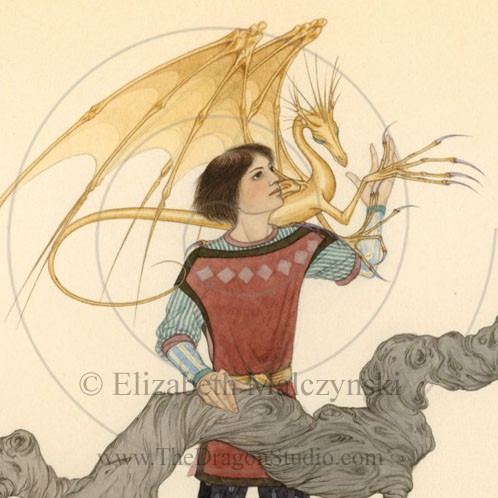
The first two books of this series, Dragonsong and Dragonsinger, tell the story of Menolly, a brilliant fourteen year old musician and songwriter escaping the confines of her brutal and ignorant family at Half Circle Sea Hold on the far eastern peninsula of the northern continent of Pern. Dragondrums, the third installment, is a distinct departure from the smooth relationship of the first two books, which occur right around the time that Brekke loses her queen dragon, Prideth, and her lover, F’nor, rider of brown dragon Canth, takes his dreadful trip to the Red Star.  They dovetail perfectly, with Dragonsinger beginning right where Dragonsong ends, but Dragondrums skips ahead three full turns, much in the same way that The White Dragon skips ahead several turns in the main trilogy.  And just as the main trilogy shifted focus from Lessa to Jaxom, this book changes the focus of character from Menolly to Piemur, the young rascal with the soprano voice who befriends her.

In the very beginning, Piemer’s voice breaks just as he is preparing to sing the role of Lessa in a new composition by Domick and Menolly, written especially for Lord Groghe’s Spring Festival. Without his voice, the boy’s world is turned upside down.  Fearing for his future he visits his voice master, Shonagar, only to find that he will be replaced as the man’s apprentice.  Shonagar sends him to the Masterharper of Pern, Robinton, for reassignment.  His depression over his change of circumstances changes to elation as he finds that he will become Robinton’s apprentice now, but there are, of course, complications.

Robinton plans to use Piemer as a kind of clandestine agent, so no one, except Menolly and Sebell will actually know that he’s working for the Masterharper. To cover his real role and to enlarge his education, he is reassigned to the Drum Master, Olodkey, to learn drum messages.  Only Olodkey will know that he is really working for the Masterharper.

His apprenticeship in Drum makes him the newest apprentice there, so he gets the worst jobs and is put upon by Dirzan, the senior journeyman under Olodkey. To make matters worse, he makes enemies of the other apprentices by learning too quickly.  Dirzan is quite familiar with Piemer’s reputation as a troublemaker, so he assumes that every little slip of information is Piemer’s fault.  In addition, Menolly frequently calls for Piemer’s assistance as a “messenger” in which he makes his clandestine trips.

The first leave of absence occurs when Menolly has him join her riding down to the seaside to meet Sebell, who has been journeying in the Southern Continent and for the first time he sees that Sebell has fallen in love with Menolly, although she appears to be oblivious. They treat his saddle sores and take care of him, but his absence only makes the other Drum apprentices meaner to him.  His second leave of absence is to make a trip to a Miner hold some distance away in the mountains.  While there, he witnesses T’ron, who had been banished to the Southern Continent, forcing the Miner to give him precious sapphires, reserved generally for new Harper Masters.  Hiding the jewels he was sent to pick up, he plays the ignorant stable boy and returns to the Harper Hall the next day with his treasure.  Every time he goes away, the other boys in the Drum heights become meaner to him and Dirzan keeps giving him more and more difficult measures to learn.

The third leave of absence is huge because he is taken by Menolly and Sebell to a Gather at Igen, on the southern shores of the Northern Continent with the assignment of gathering information by playing ignorant. Although he doesn’t learn much, Menolly and Sebell take him by dragon to Benden Weyr to witness a hatching.  There he meets Menolly’s friend, Mirrim, who appeared in the first of this trilogy.  She is fostered to Brekke and made friends with Menolly when she was picked up in Dragonsong trying to outrun thread.  Piemer is put off by her haughty attitude, but Menolly cautions him that he shouldn’t judge her too harshly because of everything she had been through with Brekke and F’nor.  Trying to keep an open mind, he witnesses the hatching with a great deal of envy.  Three years earlier, Menolly had promised him that when her queen fire lizard, Beauty, clutched, he could have a fire lizard of his own.  Apparently, fire lizards mature slowly because three turns have passed and Beauty still has not risen to mate.  The main feature of the hatching is that Felesson, the only child of Weyrleaders, F’lar and Lessa, impresses a bronze dragon, Golanth.  Things go a bit off plan, though, when a newly hatched green dragon rejects all of the remaining candidates and flounders toward the viewing tiers, seeking Mirrim.  Although the girl protests that she wasn’t supposed to have a dragon, F’lar and Lessa encourage her to go ahead an impress Path.  She is the first female green dragon rider in known history.

When Piemer returns to the Drum heights, he finds that all of his clothes have been soiled by the jealous apprentices, led by a big dummy named Clell. And even though he has kept his mouth shut about drum messages, several are leaked and Piemer is suspected as the cause, being well known as a rascal and scamp.  He doesn’t even tell Menolly about the abuse from the other apprentices, but that all comes to a head when Lord Meron of Nabol gets seriously ill and sends for Masterhealer Oldive.  Piemer is given the message to deliver and Oldive gives him a reply with instructions to have a dragon waiting for him to fly to Nabol.  On the way back to the drum heights, Piemer slips on the stairs and bashes in his head.  As he passes out, he is certain that the steps and railing were greased.  It turns out that they were.  Annoyed, Silvina, the headwoman, nurses him back to life, then he joins Sebell on a trip to a Nabol Gather, pretending to be a stupid herder boy.  As Meron is close to death, Piemer manages to steal a queen fire lizard egg from his hearth and escapes by hiding in a supply room, then he’s secreted to the Southern Continent in a bag of merchandise illegally traded by Meron to the Southern Oldtimers.

Escaping, he lives in the wild, waiting for his queen fire lizard, Farli, to hatch.

There are two considerable plot advances in Dragondrums.  First, there is the maturation and freedom of Piemer with his escape from the Harper Hall and acquisition of Farli, and second, when Menolly and Sebell travel to the Southern Continent in search of him, Sebell’s queen fire lizard, Kimi, rises to mate and Menolly’s bronzes, Rocky and Diver, fly to mate with her.  Diver is the successful male to mate with her, but the mating leads to Menolly and Sebell consummating their own relationship.

As the entire saga of the Dragonriders of Pern develops, these two major plot advances figure prominently.  For one thing, Piemer is permanently relocated to the south, where he will be instrumental in later books in the discovery of the original settlements of the colonization of Pern (as written in the prequel Dragonsdawn) and will find his own mate, Jancis.  For another, Sebell and Menolly will themselves be elevated from Journeyman and Journeywoman into becoming Masters of their craft and eventually running the entire Harper Hall, all the while having and nurturing their own children.

Even though this story is pretty well divorced from the first two books of the trilogy, it is very well placed alongside them because it tells of the major players in the Harper Hall’s future. Piemer was already a very well developed character in the second of the three books, so it is natural, once Menolly has found her place in the saga, that Piemer’s story would take over.  I can never get enough of Menolly, as I think she is probably the best character in the entire saga, and even though she is a secondary character in Dragondrums, she does appear in abundance and it is great to see her relationship with Sebell grow and mature to consummation.

It is a very well written novel, fun and fast to read, and absolutely essential to the overall development of the Dragonriders of Pern.

French Kiss


Sometimes the charm of two charismatic actors with great chemistry, combined with a smart, talented director, can make even the most banal of screenplays work to perfection. Such is the case with Lawrence Kasdan’s 1995 romantic comedy, French Kiss.

Kate (Meg Ryan) is a history teacher whose fear of flying goes far beyond what most of us would think of as terror, but she has a serious problem that involves flight. An American history teacher, she is engaged to Canadian Charlie (Timothy Hutton), residing in Toronto on a Resident Visa and waiting until her Canadian citizenship comes through before they get married.  Charlie is a doctor who is about to fly to Paris for a medical convention and he begs her to come with him, even though she isn’t supposed to leave the country because of citizenship issues, but the point is moot because Kate just can’t board a plane.  When a great house becomes available, they go to look at it.  Charlie fears it will be too expensive for them, but Kate reveals that she has a considerable savings that she hadn’t told him about yet.

A few days later, Charlie calls her in a drunken stupor and reveals that he has fallen in love with a French girl, Juliette (Susan Anbeh) and won’t be coming home. In spite of her fears, Kate decides to board an Air Canada flight and go to Paris to get him back.  The guy sitting next to her, Luc Teyssier (Kevin Kline) is a French thief who is illegally smuggling a small American grape vine back into France in order to create a new hybrid wine.  However, tucked into the cheesecloth padding the root ball is a stolen diamond necklace.  Luc begins an argument with Kate to distract her from her fear of flying, plying her with little bottles of liquor he has stolen from the flight attendants’ cart.  He hides his vine in her travel bag so he can successfully smuggle it back into France.  At customs, he meets his old friend Inspector Jean-Paul Cardon (Jean Reno), whose life he once saved.  Returning from a vacation, Jean-Paul gives him a ride with his family so he can inspect Luc’s bags to make sure he isn’t smuggling anything.

Kate goes to Charlie’s hotel to find him, but a smarmy desk clerk won’t reveal his room number to her. Another petty thief, Bob (François Cluzet), tries to hustle her as she sits on a sofa in the lobby waiting for Charlie to come down.  When she sees him kissing Juliette, she passes out and Bob steals her bag.  Luc arrives, passing Bob at the door, to discover Kate passed out on the floor.  He revives her and when he realizes that Bob has her bag, he takes her, steals a car, and drives to Bob’s apartment where they find he has already disposed of everything but her bag and the vine.  Thinking he has now recovered the necklace, they leave, but have an argument on the street and separate.  Kate goes to the American Embassy to get a duplicate passport, but they stonewall her because she is a permanent Canadian resident.  At the Canadian Embassy, they won’t give her a duplicate Resident Visa because she was once arrested for possession of pot.  Alone, penniless on the street, she reluctantly returns to Charlie’s hotel.  In the interim, Luc has searched the root ball of his vine and finds the necklace is gone, so he goes back to Bob who proclaims that he didn’t take the necklace, that it must still be in Kate’s bag.

When Kate makes a scene at the hotel, the desk clerk tells her that Charlie and Juliette have gone to the south of France where they intend to get married, so she sets off for the train station. Bob arrives at the hotel to fleece more guests, but is arrested by Jean-Paul who is interrogating him trying to find a “big fish,” a more important criminal.  At that moment, Luc arrives and forces the clerk to tell him where Kate has gone.  Bob points out Luc to Jean-Paul and tells him that Luc has stolen a diamond necklace.  Jean-Paul now chases Luc to the train station where they lose him.

Aboard the train, Luc finds Kate and volunteers to help her get Charlie back, so he can buy time to inspect her bag. Over the next few days, both of their affections begin to turn toward each other as Luc tries to help her reunite with Charlie, even though he now loves her himself.  She reveals that she actually has the necklace and slowly gives in to her feelings for Luc.

Although the screenplay by Adam Brooks is certainly not a ground-breaking story, Kasdan does a marvelous job of telling it. The cinematography and editing are both terrific and they aid determined performances by Kevin Kline, who is almost always brilliant, and Meg Ryan, who, despite a few hammy scenes, is her usual charming self.  The two of them bring a lot of chemistry to the romance, which is essential in a romantic comedy and their performances take a simple story and make it memorable.  France has never looked so good on film, not just Paris, with both gaudiness and grit, but the countryside and vineyards of Luc’s birth really shine, not to mention the French Riviera.

It is a tight, fast moving film that engages the viewer constantly during the one hour and 51 minutes of length. Colorful, skillfully directed, with wonderful, engaging cast, this is one romantic comedy that should be on your shelf.  I highly recommend it!

The French Connection

French ConnectionIf you are looking for the meaning of life, this movie is not for you. Indeed, if you are looking for any meaning at all, this is not your movie.  Rather, it is a completely kinetic film.  Directed by William Friedkin, it echoes the French cinema of the 1950’s, which itself echoes the American gangster films of the 1930’s.  It is all movement and action, with practically no dialogue, moving in a steady arc of energy toward a violent ending.

In Marseille, a powerful French drug dealer, Alain Charnier (Fernando Rey) sets up a major deal in the United States by bringing in a famous French television star, Henri Devereaux (Frédéric de Pasquale), to be the front. An undercover policeman following him is assassinated by his heavy, Pierre Nicoli (Marcel Bozzuffi).  Meanwhile, in Brooklyn, two narcotics policemen, Jimmy “Popeye” Doyle (Gene Hackman) and Buddy “Cloudy” Russo (Roy Scheider) are sick of all their small busts and are looking for a big score.  Noticing that a local small-time hood, Salvatore “Sal” Boca (Tony Lo Bianco) and his young wife Angie (Arlene Farber) are courting the mafia, they begin to tail the couple and find that they are leading a double life, running a small neighborhood deli by day and carousing at night.  As they follow the Bocas around, they see Sal make a connection with Joel Weinstock (Harold Gary), a suspected big-time drug trafficker.  From their sources on the street, they find out that the city has been pretty dry, but a big connection is supposed to be arriving soon.  With this information, they convince their boss to wiretap the Bocas and find themselves saddled with Federal involvement, in the form of a man named Mulderig (Bill Hickman), who blames Popeye for the loss of a policeman on a different bust.

When the French arrive, they beef up their operation, putting permanent tails on both the Bocas and the French, but Charnier loses Doyle in the subway and flies to Washington to meet with Boca, who tries to stall him because Joel Weinstock is worried about the police. Charnier is determined that the deal will go through on his timetable.  Back in Brooklyn, Nicoli attempts to assassinate Doyle, but misses.  As he roars off on an El, Popeye follows him on the street using an appropriated automobile in a chase that comes off as one of the best ever done in film.  Nicoli loses control of the situation and shoots several operators on the train, then escapes when the train collides with the one in front of it, but Doyle is waiting below.  When Nicoli attempts to flee, Doyle shoots him in the back.

Henri Devereaux has brought his car, a Lincoln, to New York, so Doyle impounds it and they tear it apart looking for the junk, finally finding it in the rocker panels. Replacing it, they put the car back to together and return it to Devereaux, who loans it o Charnier as a part of their deal.  Charnier drives the car to Wards Island where the dope–several hundred pounds of world class heroin–is extracted from the rocker panels and replaced with the cash that Weinstock pays for it.  The dope is hidden in the old factory, but when Charnier attempts to drive back to New York, the bridge has been blocked off by Popeye, Cloudy, and the police.  Charnier returns to the Island, but a shootout follows in which Doyle follows him into an abandoned building and accidentally shoots the Federal agent.  Charnier escapes and most of the hoods get off, but the one innocent man, Devereaux, gets prison time.  Doyle and Russo get reassigned off of the narco squad.  As the French might say, “this is life.”

Any student of chase scenes or the building of tension in a movie can look to The French Connection almost as a textbook because it is done brilliantly.  The kinetic nature of the film won it a handful of Academy Awards, including Best Picture, Best Director, Best Actor (Hackman), Best Film Editing, and Best Adapted Screenplay (Ernest Tidyman).  It was nominated, but did not win, other awards, but neglected was the great score by Don Ellis.

For me, though, it just didn’t add up to anything. No real theme is explored, no light is shed on the dreary, meaningless lives of the cops or the dealers.  Hitchcock would have admired the extreme lack of dialogue and the way the tension built, but there is nothing to carry away with you except that life sucks.  I can recommend this movie to film students and to those whose only value in cinema is kinetic energy, but there is no depth.  It is a one hour and forty minute thrill ride, full of action, but with no meaning or real entertainment value whatsoever.

C

 Calendar-Girls-001Calendar Girls

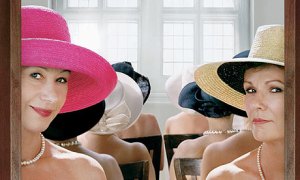
Even though the cinema is full of buddy movies and mindless stupid comedies, the joy of friendship, through good times and bad, isn’t celebrated enough in film, yet it is the heart and soul of this wonderful 2003 British comedy-drama.


 Philip-Seymour-Hoffman-CapoteCapote

Bennett Miller’s film Capote is a well-crafted, thoughtful look at the process by which Truman Capote sculpted his novel In Cold Blood.  The restrained control of color, minimal sets and costumes, and stark cinematography make this film so good that it should be studied in film schools as a masterful use of time and funding.


Cheyenne AutumnCheyenne Autumn

Cheyenne Autumn was the last western film in the great career of director John Ford.  Released in 1964, it was the first big Hollywood film to portray Native Americans as human beings, people who were not only more than primitive savages to be killed and driven off their lands by the white man, but people who were victims of the bigoted and corrupt government of the United States of America.


 Chocolat VienneChocolat

Most things that are good are not necessary bad.  In fact, most things in life that we enjoy are quite without sin, even if they do induce sensual pleasure, such as, let us say, chocolate, that most wonderful of confections.


 John WayneThe Cowboys

This 1972 coming of age western stars John Wayne as Montana rancher Wil Anderson.  When his hands abandon him to join in a gold rush, Anderson solicits the aid of local schoolboys to help him move his herd of cattle and horses 400 miles to market.


The Birds

Hitchcock The Birds 01I was thirteen years old in 1963 when I went to a movie theater to Alfred Hitchcock’s latest move, The Birds, and I can still remember the effect it had, the tension it engendered, the thrill of fright, and my jangled nerves when I left the theater and stepped out into the sunlight. Based on the novella of the same name by Daphne du Maurier, it is one Hitchcock’s best films. When I watched it again over fifty years later, I was surprised that it created exactly the same effect as when I saw it in a movie theater for the first time.

Melanie Daniels (Tippi Hedren) stops into a pet store in downtown San Francisco on a Friday afternoon to pick up a minah bird as a gift, but it hasn’t arrived at the shop yet, so she writes down her name and address for delivery. As she stands at the counter, Mitch Brenner (Rod Taylor), asks her if she can help him. He’s looking for a pair of lovebirds as a birthday present for his little sister. Pretending to be a clerk, she shows him around the store, making up stories about lovebirds, even though she hasn’t the slightest idea what they look like. When a bird accidentally escapes, he traps it under his hat and addresses her by her name. A lawyer, he had actually recognized her from the first, but wanted to show her what it was like to be the butt of a practical joke. Angered, she follows him to the street, gets the number of his license plate, and calls her father’s newspaper to get his address. She then purchases a pair of lovebirds and tries to deliver them to his apartment, but a neighbor informs her that he will be in Bodega Bay all weekend visiting his family. Undeterred, she decides to deliver them there and drives the sixty miles north the next morning, Saturday.

Finding out that the Brenner family home is directly across the bay, she decides to take rent a motorboat and make a surprise delivery by sneaking up on the house from the water, but she doesn’t know his sister’s name. A local store owner directs to her to home of the school teacher, Annie Hayworth (Suzanne Pleshette). When the two women meet, it is obvious that Annie is sizing her up as a rival for Mitch’s affections. The sister’s name is Cathy, so Melanie makes out a card, gets in her boat and sets out across the bay. Seeing Mitch go out to the barn, she sneaks inside, leaves the birds with a note and returns to her boat. She watches as Mitch goes back inside then comes outside, surprised and looking around for her. He spots her in the boat and as she goes back across the bay, he gets in his truck and drives around to meet her. As she nears the dock, a gull shoots out of the sky and scratches her head badly enough that she is bleeding. Mitch takes her into the Tides restaurant to clean and bandage the wound. His mother, Lydia (Jessica Tandy) meets Melanie rather coldly, but everyone is curious about the bird attack.

When Mitch smugly remarks that she drove all that way to see him, Melanie lies and says that she was actually coming up to see her old friend Annie. Mitch invites her to come to dinner that evening and she meets Cathy (Veronica Cartwright), who begs her to attend her birthday party the next day. Melanie likes Cathy immediately, but Lydia seems to be almost jealous of her budding relationship with Mitch. As they sit down to eat, masses of sparrows fly down the chimney and fill the house. Mitch opens the windows and doors and tries to shoo them out. After they have fought them off, Melanie returns to Annie’s house to spend the night. As they discuss Annie’s former relationship with Mitch, a gull crashes against the door and dies.

On Sunday morning, she attends the birthday party, intending to drive back to San Francisco immediately afterward, but the party is attacked by a flock of gulls, diving and purposely trying to injure the children. As the family recovers from the attack, Melanie is persuaded to spend the night there. The next morning, Monday, Lydia goes to a nearby farm to investigate a problem she is having with her chickens, but discovers that the farmer is dead, his eyes picked out and his home destroyed by birds. In a panic, she returns home and the sheriff is called in. Mitch leaves with him to investigate further, but Lydia is so worried about Cathy at school that she sends Melanie to pick her up and bring her home.

At the school, Melanie waits for the children to finish their lesson. As they sing a children’s song, she waits outside, smoking a cigarette in front of the jungle gym, which slowly fills up with crows. Alarmed, she goes inside and she and Annie organize the children to leave in a mock fire drill. As the move down the road, the crows take flight and attack them as they run toward the village. Inside the Tides, she calls her father to alert him to the danger in Bodega Bay and everyone becomes concerned about the situation. A local fisherman reports that one of his boats was just recently attacked by gulls. An ornithologist, Mrs. Bundy (Ethel Griffies) tries to tell them that it is impossible for birds to work together in such a way, but if they did, there was no way humans could fight against the millions of birds in the world. A mother, with two young children, is panicked by their discussion and tries to flee, but the birds attack again, knocking over a man filling his car with gas. As the gas runs down the street, another man, lighting a cigar, ignites it and cars and the filling station all explode in fire as the birds corner Melanie in a telephone booth. Mitch gets her back into the restaurant and the mother accuses her of bringing on the bird attacks, crying out that none of it started until her arrival.

Hitchcock The Birds 03The attacks of the birds steadily escalate into an unforgettable conclusion to the movie.

When Hitchcock hired Evan Hunter to write the screenplay, he told him that the only thing there were keeping from du Maurier’s story was the title and the menace of the birds. With that freedom, Hunter moved the location from England to Northern California, an area that Hitchcock loved. The two of them then worked together to create an original story. The decision was made early on that they would make no attempt to explain the strange behavior of the birds, but Hitchcock suggested the scene where the townspeople discuss the situation.

The Birds follows Psycho in Hitchcock’s chronology of films and he had strongly considered not using a score for the previous film, but eventually worked with his musical collaborator, Bernard Herrmann in making his shocking fright film. For The Birds, he called in Hermann as a consultant, but actually used electronic sounds (by Sala and Remi Gassmann) and silence to create the terror in the film. All of the sounds of the birds are semi-artificial. They are natural bird sounds that have been input a mellotron-like keyboard system and played directly into a sound recorder. This was highly experimental for the time and a stark departure from the heavily scored films of the day.

The story is developed in pure Hitchcock style. It begins very lightly, with a comedic feel to it, an almost like the screwball comedies of the 1940’s, with a flighty society woman and a straight-laced lawyer, but it gradually becomes serious as small incidents with birds escalate into the terrorizing attacks that build steadily in intensity until the very end.

With the exception of a few uncertain moments from the young Veronica Cartwright early in the movie, all of the performances are very natural and believable, even Tippi Hedren who was acting in her first movie. Rod Taylor’s character wasn’t written with any depth, so he stands out as a man who reacts to the situation around him, which makes him a typical Hitchcock hero. Jessica Tandy and Suzanne Pleshette both bring incredible nuance and detail to their characters and so does Tippi Hedren. The women are created with the deepest detail, not only in this film, but in most of Hitchcock’s movies.

The technical detail and difficulty makes this a very unusual film for the master of suspense. Although he normally used the “blue screen” effect so that he could shoot most of his films in a studio, under controlled lighting, almost all of the effects using birds, both real and mechanical, were “sodium yellow screen” effects used in the film’s print, created by Ub Iwerks of Walt Disney Studios. In addition, he used many matte paintings that were printed into the final cut. For instance, in the scene where Hedren takes the boat across the bay, the entire village of Bodega Bay in the background is a painting. The same technique was used in the famous shot of the burning village from high above, with birds in the foreground. Part of the screen is live action on a limited stage, part is filled in with matte painting, and then the birds were actually painted onto the negative. All of these effects were quite radical for the day and today could all be done effortlessly using computer generated CGI effects.

The DVD contains a wonderful documentary called “All About the Birds” in which many of the principals, including Rod Taylor, Tippi Hedren, and Veronica Cartwright are interviewed. Evan Hunter provides great insight into how he developed the script with Hitchcock, technical wizards explain the special effects, and the original ending is discussed in some depth, using pages from Hunter’s original script. Hedren also discusses the psychological effect of how Hitchcock shot the scene in the upstairs bedroom using real birds that terrorized her and exhausted her to the point where she could no longer perform. That incident was featured in the derivative film, The Girl, which portrayed Hitchcock as a lustful man who inflicted that terror on Hedren for her refusal to have an affair with him.

The film will always have a place among the most frightening films ever made. Watching it at home on DVD, even on a big screen television, will never duplicate the effect it had in a theater full of people, all grasping their popcorn, gasping, sitting on the edge of their seats and even screaming, at times, together.

Nevertheless, it packs a huge punch and I highly recommend it!

A

 Across_the_Universe_3lgAcross the Universe

Conceived, produced and directed by the eclectic Julie Taymor, this film is a romantic musical that incorporates parts of 34 songs composed by John Lennon and Paul McCartney, George Harrison, and the three of them plus Ringo Starr (“Flying”).  Most of the songs are sung on-screen by the characters, though there are some instrumentals.  This places the film in the category of old-style musicals where people seem to burst into song as a part of the story.  To everyone’s credit, it actually seems to work very well indeed.


1-adjustment-bureau-copyThe Adjustment Bureau

The Adjustment Bureau, based on a Phillip K. Dick story, is a far-fetched, but very engaging film.  David Norris (Matt Damon) is a Brooklyn politician who meets a fascinating woman, Elise Sellas (Emily Blunt) on the night that he has just lost the Senate election.  When she runs away, he is motivated to give a galvanizing concession speech that will reenergize his career.


AdventurelandAdventureland

Adventureland is a funny and moving teen romance written and directed by Greg Mattola about a group of teens working at a summer carnival.  The main character, James Brennan, is a student who has just graduated from a small college and is saving up his money to go to the Columbia School of Journalism so he can begin a career in travel writing.  Played with both humor and angst by Jesse Eisenberg, James is trying to find romance, but his own geekiness stands in his way.


All is Lost RedfordAll is Lost

A man sleeps peacefully aboard his small yacht when it suddenly bangs into some sea debris, tearing a hole in the side.  This begins a great survival story where one problems piles upon another as he is tossed across the Indian sea toward shipping lanes and possible rescue.  But he must first face storms, sharks, and other menaces.  And even when he reaches the shipping lanes, will anyone see him?


???????
Amadeus

A terrible way to triumph over God.  These are the words of 18th Century Italian composer Antonio Salieri (F. Murray Abraham) referring to his murder of the brilliant, meteoric Wolfgang Amadeus Mozart ((Tom Hulce). He tells the story to Father Vogler (Richard Frank) who has come to hear his confession at the insane asylum to which Salieri has been confined following a suicide attempt.


 american-hustle-posters-sonyAmerican Hustle

Loosely based on the FBI ABSCAM sting operation, this 2013 film was written by David O. Russell and Eric Warren Singer and directed by Russell of The Fighter and  Silver Linings Playbook fame.  Bringing along Christian Bale and Amy Adams from The Fighter and Bradley Cooper and Jennifer Lawrence from Silver Linings Playbook, he has created a brilliant sting comedy that takes place at the height of disco mania, 1978.


Art of Getting By3The Art of Getting By

In The Art of Getting By (2011), George (Freddie Highmore), a high school senior living in New York City, falls into a fatalistic funk.  Although he is a gifted artist, he realizes that he’s going to die some day and asks himself: What is the point of trying?  Seeing no point, he gives up working on his school assignments, skips class and tests and just skates by as a loner.  Facing this failure, he is placed on academic probation.


Austenland PictureAustenland

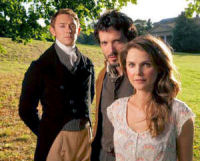
The heroine of the movie, Jane Hayes (Keri Russell) is a disheartened Jane Austen fan. Obsessed with the writer, she looks at her own life and sees failed relationships, a dead-end job and no future, so she decides to spend her life savings on a trip to England to resort called Austenland


The Best Years of Our Lives

teresa wright & dana andrews - the best years of our lives 1946The stark reality of surviving life after war is best faced with the aid of friends and loved ones and that is story that is told in this 1946 film which remains one of the best films ever made.

At the end of World War II, three men meet hopping a military plane back to their home, a fictitious mid-western metropolis called Boone City. The officer in the group, Fred Derry (Dana Andrews) is returning to Marie (Virginia Mayo), a wife he barely knows, since they were married less than 20 days before he shipped out.  Although he was just a soda jerk before the war, his heroism as a bombardier in the Air Force brought him up to the rank of Captain.  Fellow passenger Al Stephenson (Frederick March), is a former banker who served as a Sergeant First Class in the Army.  The oldest and by far the wealthiest of the three, he is returning to his wife, Milly (Myrna Loy) and children, Peggy (Theresa Wright), who is in her early twenties, and Rob (Michael Hall) who is a freshman in college.  The third member of their party is Homer Parrish (Harold Russell), a Navy man who lost both of his hands when his aircraft carrier went down in the Pacific.  A former quarterback, he now uses two hook prosthetics that he is quite deft with, but when he left for the service, he was engaged to his childhood friend, Wilma (Cathy O’Donnell) and now he worries how she will accept his apparent disability.

Although all three men are looking forward to their return home, there is also a deep feeling apprehension. They’ve all seen intense action, watched friends die, and suffered the many tortures of war.  How will their civilian loved ones receive them?  Will they ever be able to relate to anyone who hasn’t experienced battle?

Taking a cab together, they look around their old home town and Homer tells them about his uncle Butch (Hoagy Carmichael) who runs the best bar and café in town. Attempting to avoid the reunion with his family, he suggests that they get a drink first, but the others agree to meet at Butch’s some time for a drink.  As Homer expected, his family is hyper-sensitive to the loss of his hands and he feels estranged from Wilma, although she shows him that she still loves him.  He is haunted by the feeling that everyone is ether staring at his hooks or purposely looking away–he is different and he feels that difference intensely.

After checking in with his parents (Gladys George and Roman Bohnen), Fred goes looking for his wife, but she is not at her apartment, having already gone to work at her nightclub job, so he ends up at Butch’s.

Al has a difficult time adjusting to the fact that his children have grown up while he was away and he is nervous and edgy. When Milly finds that they are out of liquor, Al decides to go out on the town with her and Peggy.  During the course of the evening, Al gets progressively drunker, but they finally end of Butch’s and find Fred, who is already pretty well tanked himself.  After Homer spills a glass of lemonade in front of Wilma and the two families, he leaves in frustration and also ends up at the bar.  The three of them are like people out of time and out of place and getting drunk seems the only way to deal with having to face this return to civilian life.  Peggy takes a shine to Fred, even though he is pretty well gone.  They take him back to his wife’s apartment building, but there is no answer when he rings the bell and he passes out in the doorway, so Milly and Peggy load him into the back seat of the car with Al, who is passed out.

Back at Al and Milly’s apartment, Peggy puts Fred in her room, loosening his tie, taking off his shoes and tucking him in while Milly does the same with Al in their bedroom. Peggy sleeps on the couch, but during the night she hears Fred calling out in his sleep.  He’s having a nightmare, reliving the loss of a friend’s life.  Peggy wakes him and calms him, wiping the sweat from his face and he falls back into his drunken sleep.  In the morning, he can’t remember where he is or that Peggy is Al’s daughter.  She enlightens him over breakfast.  When Milly joins them, Peggy gives Al a ride back to his wife’s apartment and Milly busies herself with trying to salve a very hungover Al.

Marie is a gorgeous blond and obviously lives in a completely different world of nightlife, money, and men, but when Fred tells her to quit her job, she agrees and tries to support him, even though he can’t find a job. When the money runs out, however, she can’t stand the idea of being poor and their relationship begins to suffer.  Finally, he takes a job working in his old drug store, spending part of his day at the perfume counter and part of it as a soda jerk.

Meanwhile, Al receives a call from his former boss at the bank, Mr. Milton (Ray Collins). They not only want to take him back, but to promote him to Vice President in charge of handling GI loans.  Al is uncertain about going back to work at the bank, but the offer is too good for him to pass up.  Early on, he receives an application from a former Navy officer who wants to buy some land to begin farming.  Although he has no collateral, Al approves the loan and is then counseled by Mr. Milton that they simply can’t do business that way.  Al tells him that the man’s collateral is in his heart, in his guts, and in his patriotism, but they part ways each seeing the situation differently.

When Peggy runs into Fred at the drugstore, he takes her out for lunch and then kisses her in the parking lot. They are in love, but the situation of his marriage is a firm impediment.  That afternoon, Peggy calls Marie and invites her and Fred to join she and her date for a night out, hoping that if she sees Fred and Marie together, she’ll get over her infatuation with him.  It coincides with a bank banquet at which Al is the guest of honor.  Before they all leave for the evening, Peggy confesses to her parents how she feels about Fred and that she is going to use the evening to get over her feelings.

At the banquet, Al again drinks too much. Milly watches him with apprehension and when he is invited to speak, he tells the assembled that the only way America won the war was by taking risks, by stepping in even when there was no collateral and getting the job done.  At the same time, Peggy is sizing up Marie and finding out that Fred is in a loveless marriage to a woman who is not worthy of him.  When she gets home, she tells her parents that she is intent on breaking up Fred’s marriage and having him for herself.  While all of this is going on, Homer has isolated himself, convinced that he is no longer worthy of Wilma.

This film comes with a stunning pedigree of collaborators. Producer Samuel Goldwyn got the original idea from a Time Magazine article about the difficulties of servicemen returning home.  He spoke with novelist McKinlay Kantor about writing a screenplay and Kantor produced a novella in blank verse called Glory for Me, which was adapted into the screenplay for The Best Years of Our Lives by the brilliant playwright Robert E. Sherwood.

Director William Wyler, who flew in combat missions over Europe during World War II as a cinematographer, was signed to direct. Although he assembled a top notch cast of well-known Hollywood actors to play most of the parts, he wanted to part of Homer Parrish to seem as real as possible, changing the character from a man with a psychological disorder to a tangibly physical manifestation.  It was this director’s decision that led to the casting of  Harold Russell, a non-actor in the critical role. Russell lost both of his hands while handling explosives making a training film.

The film taps deeply into human emotions. Almost from the very beginning, the viewer is led into the emotional landscape of each of the three men and feels a deeply human bond with them.  Wyler brings forth the best that each actor has to give in crafting a deeply felt, realistic portrayal of human being struggling with recovery after traumatic experiences. 

One might think that this film is all about the men, but it is definitely about the women, too. Frederick March and Dana Andrews give deep, emotionally valid performances as Al and Fred, but Myrna Loy and Theresa Wright are both amazing as Al’s wife and daughter.  Throughout the early scenes after the men return home, you can feel the women’s love and empathy as the stabilizing factors.  For an amateur, which Russell must be considered, his performance is beautiful and deep.  Never for a one moment does the viewer feel a false step in his acting, but the role of his fiancé Wilma has its own difficulties.  To be so good and true is almost impossible to achieve without seeming false, but Cathy O’Donnell’s eyes show the heart of the little girl who loved Homer and child and still holds him dear.

The movie is full of amazing little performances. Roman Bohnen as Fred’s father is mesmerizing in his brief few minutes.  Virginia Mayo gives unexpected depths to Maria, a part that might have been played as a simple tramp with no heart.  All of these performances add up to a movie that is completely compelling.

In glorious black and white.

I still consider this movie one of the ten best films ever made. It was certainly amply rewarded at the Academy Awards, taking Best Picture, Best Director, Best Actor (Frederick March), Best Screenplay, Best Supporting Actor (Harold Russell), Best Music (Hugo Friedhofer), and Best Film Editing (Daniel Mandell).  At two hours and forty-eight minutes, it’s a miracle that it even held anyone’s attention, but it is so well acted and directed, so well put together that time is no object here and time is something I take very seriously indeed.  For any movie to keep me engaged for much over an hour and a half, it must be a truly special film and there is no doubt that The Best Years of Our Lives is a very, very special film.

The emotional engagement is a such a level that once begun, it is difficult to disengage until it is over. Emotional involvement is so important, so much a part of what makes a good movie that it is truly elevating.

This is a very special film and as important and vibrant today as it was in 1946. It should be a part of every serious film buff’s film library and it should be watched every few years, just so we never forget what a truly great film can be.

The Big Sleep

The-Big-Sleep Bogart BacallThis 1946 film adaptation of Raymond Chandler’s hard-boiled detective novel remains one of the best films ever made for a variety of reasons.

Start with Chandler’s novel, written in a unique voice and style, that delved into the underworld of big city vice, using dangerous and edgy behavior that were normally hidden from the public eye: pornography, promiscuity, and homosexuality. Phillip Marlowe stood out as a character.  He was mature, worldly, manly, direct in a way that even criminals found disarming.  Finally, you have a plot that wastes no time on deliberation or description.  It moves forward relentless, with a certainty that is not obvious until the reader finds himself breathless in wonder.

The film is directed by the brilliant Howard Hawks, who understood the story arc and knew he wanted to make a film that wasted no time. He hired the same writers who had fashioned his 1944 adaptation of Ernest Hemingway’s To Have and Have Not, the great novelist William Faulkner and science fiction/crime wizard Leigh Brackett (one of the first women to break through into either genre) and told them to waste no time.  Unlike other screen adaptations, he wanted this one to leap directly from the page to the screen.  Working separately on different parts of the book, they finished the first screenplay in eight days.

Private eye Phillip Marlowe (Humphrey Bogart) is called to the mansion of wealthy retired General Sternwood (Charles Waldron). With two wealthy, bored daughters who move in a racy crowd, the old man finds himself blackmailed with the gambling debts of his youngest girl, Carmen (Martha Vickers).  Sternwood’s former detective, Sean Regan, an old acquaintance of Marlowe’s, has disappeared.  Before leaving, Sternwood’s older daughter, Mrs. Vivian Rutledge (Lauren Bacall) asks him if he has been hired to find Sean Regan, who had been seriously interested in Carmen, but he won’t tell her anything, but the wisecracking and banter between them creates a sexual tension that is palpable.

Marlowe begins by investigating the man who holds the gambling debts, a rare bookstore owner named Geiger, but he discovers the man’s assistant, Agnes Lowzier (Sonia Darrin) knows nothing about rare books and she stonewalls him on her boss. Hiding out in a rival bookstore across the street, he spends a rainy afternoon with the sexy proprietress (Dorothy Malone) before following Geiger home.  Waiting in the car, he hears gunshots, sees a car roaring away, and then finds Carmen inside, high as a kite, with Geiger’s body on the floor before her.  He finds a camera hidden inside a statue, but the film is missing.  Looking around, he finds Geiger’s notebook, filled with names and unreadable ceiphers.  Taking the book, he returns Carmen to the Sternwoods and finds that Mrs. Rutledge has no answers.

An old friend, Police Detective Bernie Ohls (Regis Toomey) brings Marlowe along when they fish a car out of the ocean just off a local pier. It belongs to the Sternwoods and the driver turns out to be a former Sternwood chauffer who had also been in love with Carmen.  It has been made to look like a suicide, but the driver had been killed before the car was driven off the pier.

Mrs. Rutledge appears at Marlowe’s office the next morning with scandalous photos of Carmen and a new blackmail demand from a small time gambler named Joe Brody (Louis Jean Heydt). She can get the money through her friend, gangster Eddie Mars (John Ridgely).  Marlowe says he will wait for her call that night before the $5,000 in blackmail money will be paid.  During the day, he tails Brody to his apartment.  That night, Mrs. Rutledge puts him off, but on a hunch, he goes to Brody’s and finds not only Agnes, but Mrs. Rutledge as well.  Although held at gunpoint, he puts together the sequence of events as he understands them.  The chauffer had actually killed Geiger and taken the photos, but Brody stopped him and confiscated them to bribe the Sternwoods, which he had done before.  Marlowe suspects that Brody killed the chauffer, but Brody maintains his innocence and that killing remains unsolved.  Carmen shows up with a gun, demanding the photos.  Marlowe easily disarms all of them, but before he can get more information from Brody the man is shot through the door.

It is a complicated and twisting plot, but it moves forward relentlessly. The smart, sharp dialogue crisply moves the story along and renders it secondary really to the underplot: the growing relationship between Marlowe and Mrs. Rutledge.

When Hawks directed To Have and Have Not, he knew he’d found the ideal screen couple in Bogart and Bacall, so he was determined to reunite them for this movie.  By that time, their off-screen romance was big news in Hollywood and the pairing was natural.  With a great script and an excellent cast, Hawks shot the film in 1944, but it was kept on the shelf for two more years, partly because Warner Bros. was working feverishly to release all of their wartime films before World War II was over and partly because there were problems with Bacall.  After the huge hit with To Have and Have Not, she was considered a hot property, but her follow-up film, Confidential Agent, was a flop and she’d been widely panned in reviews.  Her agent, Charles K. Feldman, wrote a letter to Jack L. Warner, asking that several scenes in The Big Sleep be re-shot and the film re-edited to take advantage of Bogart and Bacall’s screen chemistry.  Warner agreed and the two actors were called in to film additional scenes, including the now famous scene in the restaurant that is full of sexual innuendo.

The Big Sleep Martha Vickersbig-sleep-dorothy-malone-humphrey-bogart-toastingbig sleep_cab-driver

One thing that becomes apparent right from the beginning of this movie is that beautiful young women are used in abundance to help create a strong feeling of free sexuality. It begins when Marlowe arrives at the Sternwood residence and the gorgeous Carmen walks in wearing a really short skirt and throws herself into his arms.  Then, you meet Mrs. Rutledge and Lauren Bacall shines as a young urbanite living life on the edge.  It continues with the girl at Acme Books, played by Dorothy Malone, who unpins her hair and closes the store to spend an afternoon drinking rye whiskey with Marlowe.  Then there is the female taxi driver that Marlowe rides with who gives him her card and tells him to call her at night when she’s not working.

In the pivotal scene between Bogart and Bacall that was re-shot, the two of them are talking about having a relationship in terms of horse racing. She wonders just how far he will go and he replies that it depends on her.  Is she willing “to go all the way?”  This tightly wrapped sensuality, contrasted against the violence, the mystery of not knowing exactly what is happening in a plot that moves forward darkly, relentlessly creates a movie that almost impossible to stop watching.  It moves that way right to the end, when we finally sense that Marlowe and Mrs. Rutledge will be able to consummate their smoldering desires.

Shot in beautiful black and white, the film has been restored to allow modern viewers to see it as released in 1946. The DVD also includes a documentary on the two versions of the movie, showing scenes that were cut and added, so viewers can see how much the film was improved by the re-shoot.

It is every bit as strong and engaging today as when it was first released and that is one reason it will always be considered a classic, perhaps the very finest example of film noir and one of the best movies ever made.

Waitress

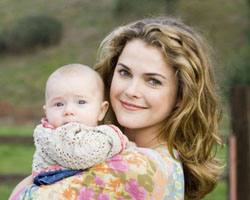
waitress keri russell with babyFunny, touching, tough: three words that truly describe this vastly underrated 2007 comedy-drama, written and directed by the late Adrienne Shelly.

Jenna (Keri Russell) is an amazing pie-maker in some unnamed southern town. She works at Joe’s Pie Diner with her friends, Becky (Cheryl Hines) and Dawn (Adrienne Shelly), under the management of Cal (Lew Temple) and the ownership of Joe (Andy Griffith).  She’s married to a domineering redneck man named Earl (Jeremy Sisto), who takes all of her tip money and bullies her relentlessly, but she’s been hiding away some of the money and she hopes to enter a pie contest where the prize is $25,000–with the intention of leaving him as soon as she can.  This plan gets derailed at the very beginning of the movie when she discovers she’s pregnant.

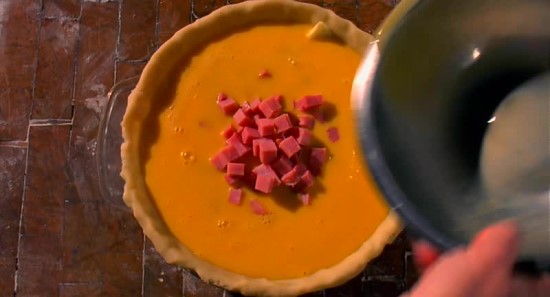
waitress I don't want earl's baby pieThis brings on the inspiration for her to make tomorrow’s featured pie, the “I Don’t Want Earl’s Baby Pie.” Dawn remarks that she shouldn’t probably write that on the menu board, so Jenna changes the name to the “Bad Baby Pie,” a quiche with Brie cheese and a smoked ham center.

waitress I hate my husband pieShe considers making an “I Hate My Husband Pie” made of bittersweet chocolate–unsweetened–made into a pudding and drowned in caramel. Deciding to keep the baby, she goes to see her doctor only to find that her gynecologist has gone into semi-retirement and most of her cases have been taken over by young, attractive Dr. Jim Pomatter (Nathan Fillion).  When he congratulates her, she tells him that she doesn’t really want the baby, but is having it anyway, so please don’t be all happy for her.  “It’s not a party.”

Her mother taught her to bake as a child, singing this little song (written by Adrienne Shelly):

Baby, don’t you cry, gonna make a pie
Gonna make a pie with a heart in the middle
Baby, don’t be blue, gonna make for you
Gonna make a pie with a heart in the middle
Gonna be a pie from heaven above
Gonna be filled with strawberry love
Baby, don’t you cry, gonna make a pie
Hold you forever in the middle of my heart.

waitress marshmallow-mermaid-pieEverything is about pie creation. She brings the doctor her “Marshmallow Mermaid Pie” that she created when she was nine years old.  She makes a “Falling In Love Pie” (chocolate mousse) for Dawn’s date, and she fantasizes about new pies night and day.  At one point, she considers making a “Baby Screaming Its Head Off in the Middle of the Night and Ruining My Life Pie” that would be a New York cheesecake brushed with brandy and topped with pecans and nutmeg.

waitress earl wants to kill me pie

“I Can’t Have An Affair Because It’s Wrong and I Don’t Want Earl to Kill Me Pie”

Finding Dr. Pomatter irresistible, she begins an affair with him and considers making an “Earl Murders Me ‘Cause I’m Having An Affair Pie” made with smashed blackberries and raspberries in a chocolate crust, but decides it would be better to make an “I Can’t Have An Affair Because It’s Wrong and I Don’t Want Earl to Kill Me Pie” with vanilla custard and banana–no–hold the banana. Among the other pies mentioned in the movie are the “Spanish Dancer Pie,” the “Naughty Pumpkin Pie,” the “Singing Tuna Casserole,” and “Jenna’s Special Strawberry Chocolate Oasis Pie.”

After she discovers that Becky is having an affair with Cal, she asks him, “Are you happy?” He answers, “I’m happy enough.  I don’t expect much, give much.  I don’t get much.  I generally enjoy whatever comes up.”  Dawn finds happiness with a little accountant named Ogie, but Earl continues to make Jenna’s life miserable, forcing her to have sex with him, slapping her around, and controlling her.  In fact, she conceives of the “Pregnant, Miserable Self-Pitying Loser Pie,” made of lumpy oatmeal with fruitcake mashed in and served flambé.

In spite of the comedy, the movie holds a very dark side. Earl, for example, though an ignorant bully, has unexpected depth.  He’s never really been loved and he depends on his control over Jenna to give meaning to his life.  Joe, the owner of the Pie Shop, is himself an old loser, but he advises Jenna to leave Earl and start all over.  “This life will kill you,” he says.  “Make the right choice.”

The script contains many unexpected depths and Shelly’s deft direction and control of the story arc keep the movie on point through its one hour and forty-eight minutes. Keri Russell is beautiful, with a big heart that makes you love and root for Jenna to find a way out of her mess.  Nathan Fillion is charming as the nervous, tender Dr. Pomatter.  Cheryl Hines and Adrienne Shelly are funny and poignant as her waitress friends and Andy Griffith is terrific as Joe–again providing unexpected depths.

But the pies are magnificent. Every pie in the movie looks absolutely beautiful and each one acts like a Greek chorus, providing commentary on the action.

waitress adrienne shellyUnfortunately, Adrienne Shelly did not live to see her movie appear at the Sundance Film Festival or to see its critical success. Three months before it was due to open, Shelly discovered a thief in her apartment.  The man panicked and killed her.  A foundation has since been established in her name to help young female filmmakers fulfill their dreams and you man contribute at The Adrienne Shelly Foundation.

Everyone should see this movie! It’s a film that can be seen over and over again with a kind of sensual culinary pleasure, with laughter and tears, and lots and lots of love.

Funny, touching, tough.