Jack Goes Boating

Jack Goes BoatingThis movie is about two relationships going in opposite directions. One of them, just beginning, is very sweet and the other is clearly at the end of its shelf life.

Jack (Phillip Seymour Hoffman) is a shy and sensitive New York limo driver who works for his uncle and lives in his uncle’s basement. He listens to raggae, tries to whirl his blond locks into dreads, and dreams about working for the MTA.  His best friend, Clyde (John Ortiz) also works for his uncle as a limo driver and is married to Lucy (Daphne Ruben-Vega) who works in the office of a mortician.

The couple sets Jack up with Lucy’s new co-worker, Connie (Amy Ryan), a shy, nervous girl who seems to be right for him. Their own shyness really works to their advantage as each one takes it nice and slow, careful to make sure of each other before taking any big steps at all.  As Jack walks Connie to a cab on their first date, she mentions that she’d like to go boating some time.  They are walking through the snow at the time and Jack remarks that it might be better to wait for summer.  But he takes it seriously and Clyde sets out to teach him how to swim at a Harlem pool.

Connie is approached by a strange man in the subway on her way to work and she violently resists, breaking her nose. Lucy calls 911 and she is taken to the hospital.  Jack buys a little stuffed koala bear for her and they talk about a second date, maybe for dinner.  She tells him that no one has ever cooked for her, so Jack decides to learn how to cook and make a splendid meal for her.  Clyde recommends a chef he knows from the Waldorf Astoria that he calls “the Cannoli.”  Without Jack prompting him, Clyde then volunteers that Lucy had an affair with the chef that lasted two years.  It’s obviously bothering him, but he tries to pretend that they’ve worked the problem out.

Applying himself to his swimming and cooking lessons, Jack gets good at both. After a few initial problems, he gets his application into the MTA and waits to hear whether he will be called for an interview.  As he and Connie become more intimate, he comes to understand that she has serious psychological issues about sex, but he is understanding and goes slow, much to her relief.

Without revealing how the movie ends, I will say that both situations come to a head when Jack finally cooks his big meal for Connie at Clyde and Lucy’s apartment.

Phillip Seymour Hoffman directed this moving film, based on the stage play he appeared in, adapted for the screen by the playwright, Robert Glaudini. The study in opposites is very funny at times, but a feeling of tension runs underneath the surface and it kept me on the edge of my seat wondering what would happen.  At an hour and twenty-four minutes in length, the pacing and timing are perfect.

Hoffman’s performance as Jack is just amazing. It is a pleasure to watch such a gifted actor creating such a layered character.  Amy Ryan gives a great performance as Connie and she works as a perfect foil for Jack.  You find yourself hoping that these two gentle, injured people will find a way to make their relationship work, even as it hurts to see what can happen to a relationship at the other end of the scale.  John Ortiz is excellent as Clyde and Daphne Ruben-Vega compliments him very well as the two cope with a relationship that doesn’t have the glue to hold it together.

I’m an innocent when it comes to betrayal. I’ll never understand how partners in a marriage can turn away and wound the other so deeply.  Jealousy remains one of the great emotional themes of art.

This is a very fine movie and it should be seen. When it was released, it kind of slid by me–and pretty much everyone else, I gather, but it is really good filmmaking.  It’s a story well-crafted and well-filmed and it deserves far more attention than it has gotten.  I highly recommend it for adult audiences.

Ordinary People

Ordinary Tim Hutton Elizabeteh McGovernFor those who remember what life was like in 1980, Ordinary People will be a real trip to the past.  For those who are too young to know, this movie will give you a brief tutorial in clothing, hair styles, cars, and so on.  For both types of people, this will be an extraordinary family drama, full of terrific performances, raw and deeply moving.  It won four Academy Awards including Best Picture and Best Director for Robert Redford.

Conrad Jarrett (Timothy Hutton) is a high school senior in Lake Forest, Illinois, a suburb of Chicago. Plagued with insomnia, he is a loner who shuns his friends and can barely communicate with his father Calvin (Donald Sutherland) and mother Beth (Mary Tyler Moore).  Recently released from a psychiatric hospital following a suicide attempt that was foiled by his father, Conrad has been home now for over a month, but still has not started therapy.  The false happiness and optimism of his parents grates against him as they all attempt to cope with the incident that started everything down this crazy road: the death of Buck, the older son in the family.  Calvin pretends that life can go on without regard to the death, while Beth seems to have retreated into a coldness that allows for no emotion whatsoever.

Finally, Conrad goes to see a therapist, Dr. Berger (Judd Hirsch), but all he can talk about is maintaining control over his life. Berger would like to see the boy experience some emotion, to face his own anger, terror, and remorse, but Conrad tries desperately to hold on.  Remembering how much he liked his time in the hospital, Conrad seeks out a girl that he had been friends with there, Karen (Dinah Manoff), but she seems reluctant to find a relationship with him.  She tells him that she is happy now and that he should be optimistic, too.  “Let’s have the best year of our lives,” she tells him.  At school, he continues on the swim team, which had been previously dominated by his brother, with all of the awards to prove it, but Calvin is, at best, a mediocre swimmer.  He finds it impossible to relate to his old friends, who were all friends of Buck’s, too.

The girl who stands in front of him in choir, Jeannine (Elizabeth McGovern) makes friends with him and a mutual attraction develops. For the first time since the accident that killed his brother, Conrad begins to have a sense of optimism.  But the tension within the family contains more than just Conrad’s angst.  Calvin has serious trouble dealing with Beth’s apparent lack of emotion and he goes to see Dr. Berger himself, discovering that he still has lingering grief over his son’s death and openly questions why his wife didn’t cry at the funeral.

As Christmas approaches, two dynamic incidents explode the plot wide open. Beth discovers that Conrad quit the swim team a month earlier and hadn’t told them, then Conrad finds out that his friend Karen has committed suicide.

Director Robert Redford handles this emotionally charged story very deftly. It could very easily have gone maudlin and mushy, but it always seems real and always completely honest.  There’s no fancy camera work or other tricks to divert us from the story, but Redford has a keen sense of pacing.  Two hours and four minutes of emotionally charged angst could have been way too much, but I never noticed the action dragging for one moment.  To be perfectly honest, I don’t really like dramas, but I couldn’t stop watching this one.  It is superbly crafted and Redford was deserving of the two Academy Awards.

The heartbeat of the story is provided by Timothy Hutton. His performance as Conrad is one of the best dramatic performances ever and he was given an Academy Award for it.  I’m not sure why they gave him Best Supporting Actor, when he is clearly the lead in this movie, but he would have deserved either one.  Donald Sutherland is terrific as Conrad’s father, giving a deep, heartfelt performance.  I felt a little bad for Mary Tyler Moore, because her character was so emotionally in control that she didn’t have the opportunity to really reveal her talents.  Nevertheless, she did an awful lot with very little to go on.  I kept wishing that they could have gotten Beth in to see the psychiatrist, because I felt that she was the one of all three that actually needed therapy more.  Hirsch is very good as the psychiatrist and both McGovern and Manoff are believable as the two girls.

The fourth Academy Award went to Alvin Sargent for his adaptation of the novel by Judith Guest. It is a really good screenplay, very tight, and beautifully crafted.

The title of the movie is enigmatic. On one hand, this really isn’t an ordinary family.  They are quite wealthy.  The parents golf, they are members of the country club, and their friends are all equally rich, if not more so.  But the title isn’t “ordinary family,” it’s Ordinary People and the title rings true on that level.  Stripped of their wealth, these people are just like everyone, struggling with their problems, trying to figure out how to live their lives in the face of adversity, trying to pretend that things are better than they really are so they won’t have to think about them.

One revealing scene occurs on Calvin’s first date with Jeannine. As they sit in McDonald’s eating burgers, she asks him what it was like to commit suicide.  He looks at her and remarks that she is the only person–outside of therapy–who has asked him about it.  That one stretch of dialogue speaks volumes about the level of disconnect that exists in this family, their utter refusal to face Conrad’s problems.

This is a great film and it is certainly one of the best domestic dramas of all time. Everyone should see it!

Bridget Jones’s Diary

renee zellweger bridge jonesBased ever so loosely on Jane Austen’s Pride and Prejudice, this 2001 British romantic comedy directed by Sharon Maguire is full of hits and misses.  The hits are all punches thrown between the two men who seek Bridget’s attention and the misses are all those single women who wish they had a choice between Colin Firth and Hugh Grant.

Adapted by Helen Fielding, Andrew Davies, and Richard Curtis from Fielding’s popular novel of the same name, the movie tells the story of Bridget Jones (Renée Zellweger), a single woman in her early thirties looking for love. She works at a publishing house in London, under the direction of Daniel Cleaver (Grant), a real hottie that she’d like to get her hands on.  Over Christmas, her mother tries to set her up with former childhood neighbor Mark Darcy (Colin Firth). Get it? Darcy. Firth. Nudge nudge wink wink. Of course, he very aloof and disdainful and she dislikes him immediately.

Right from the beginning, you know it isn’t going to be anything like Pride and Prejudice. Bridget is drunk half the time, smokes constantly, burbling, bumbling, and making a fool out of herself every five minutes. NOT Lizzy Bennet.

Setting her sights on her boss, she begins wearing short skirts and see-through blouses and exchanging flirtatious emails with him. He, of course, responds. When they see Darcy at a party, Daniel tells Bridget that Darcy once stole his fiancée from him. Wickham, eh? They go away for a weekend and there’s that darned Darcy again. On the verge of meeting Bridget’s parents, Daniel abandons her, explaining that he has important work at the office. Not so. He’s actually having an affair with a woman from the New York branch of the publishing company and Bridget finds the woman at his flat.

She dumps him and there is Darcy, immediately interested.

Parts of the movie are quite funny, but most of the humor depends on Bridget’s putting herself in embarrassing situations, which she does over and over. Personally, I don’t care for that kind of humor, just as I don’t care for novels that depend on the stupidity of their protagonists to make a plot. It was hugely popular for a variety of reasons, but mostly for the sophomoric humor and the beautiful people. It didn’t win any major awards, although Zellweger was nominated for the Best Actress Academy Award. (It’s funny that British actors routinely play American roles without getting props for how expertly they handle the accent, yet when a Texan plays a Brit everyone makes a big fuss about it. Frankly, I didn’t find it as believable as everyone else. Kind of like Dustin Hoffman in Tootsie, there was something that just didn’t completely ring true.)

The supporting cast is wonderful. I loved Gemma Jones and Jim Broadbent as Bridget’s parents. Embeth Davidtz, Shirley Henderson, James Callis, and Lisa Barbuscia are all excellent and add to the fun.

There is one other carry-over from the great BBC Pride and Prejudice besides Colin Firth: the screenwriter for that masterpiece, Andrew Davies, collaborated on the script for Bridget Jones’s Diary.

At 98 minutes, it’s a funny, entertaining evening, without having to exercise the brain at all.

The First Annual Amy Adams Film Festival

When I finished the fifth draft of my novel Walk Against Time, I was suffering a bit of post-partum depression and decided to fill the void with Amy Adams movies, so I decided to create the First Annual Amy Adams Film Festival. Okay, it was a low-key affair, just me and a bowl of popcorn, but it was great fun.

I must confess right from the beginning that I love Amy Adams unconditionally.

There, it’s out in the open. A friend recently asked me what I love about Amy and I’ve got to confess that it’s pretty much the whole package.  Red hair, green eyes, a cute little pixie nose.  What’s not to love?  She’s not emaciated, but not overweight, either (okay, maybe just a tiny hint of baby fat).  Inside that perfect shell, there is a personality that just radiates optimism.  Don’t blame her, she can’t help it.  It’s how she is.  She’s like the Tom Hanks of female actors.  There’s just something that will never, ever give up on humanity and our potential.  Finally, you crinkle in a moderate dash of vulnerability that brings tears to my eyes.  Please, Amy, DON’T CRY!  I admit it freely.  I am besotted.

The film list below contains links to my reviews for each of the movies.  Just click on the name or photo to read the full review.

The First Annual Amy Adams Film Festival

Day 1

Leap Year

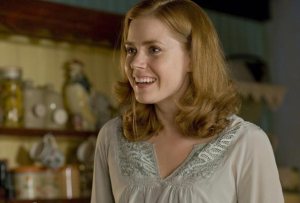
amy-adams-leap-yearAmy plays an Irish-American girl who travels to the auld country to propose to her sweetie on February 29th, when she believes he can’t refuse. Along the way, she meets an Irish pub owner that just might change her mind.  This is easily the worst of all the films in the festival.  It is a romantic comedy that is not entirely successful.  Read the review to find out why.  It’s a good film to begin the festival with because every movie will get better from now on.

Miss Pettigrew Lives for a Day

amy adams miss-pettigrewOne of Amy’s most adorable roles as nightclub singer Delysia Lafosse, a flibbertygibbet who is bouncing between three men. It takes a wonderful performance by Frances McDormand to help her realize her true love and find happiness.  A wonderful comedy!

American Hustle

amy_adams american hustleAmy does some real acting in this hilarious comedy about two con artists in the 1970’s who get into something over their heads. Christian Bale is unbelievably good in this movie and frankly he steals the show, but Amy is great, too.  In fact, everyone is good.


Enchanted

amy-adams encxhanted

This is an amazing Disney film containing both animation and live action with great music and some incredible songs. Yes, Amy sings again!  She is at her delightful best as Princess Giselle who is thrown out of her cartoon kingdom into downtown Manhattan by the evil queen Narissa, played by Susan Sarandon.  It’s joyful and funny and one of the best Amy Adams films ever.  A personal favorite.


Day 2

Sunshine Cleaning

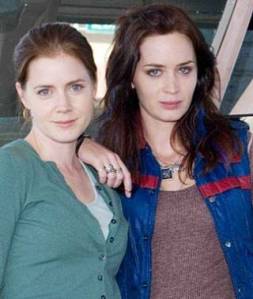
amy adams emily blunt sunshine cleaningThis is kind of a dark comedy about two down and out Albuquerque sisters, played by Amy and Emily Blunt, who start a business cleaning up crime scenes. It is both funny and touching and features a great performance by Blunt.  Alan Arkin appears as their father.

 The Fighter

amy_adams the fighter

A great film on so many levels! Again, Christian Bale is over the top good and won a Best Supporting Actor Academy Award for his role as Dicky Eckland, the older brother of Amy’s love interest, Micky Ward, played by Mark Wahberg. Amy plays a smart bartender who helps Micky to escape his family’s bungling of his boxing career. She’s really good in this movie and creates a real regular girl-type character (except that she’s like totally gorgeous, as usual). This is a must-see movie!


Trouble with the Curve

Amy-Adams-in-Trouble-with-the-Curve-What more could one possibly ask than to have Clint Eastwood as Amy’s crusty old baseball scout father? She’s at her most vulnerable here in a movie that combines some subtle comedy with a deep hurt that she suffered in her childhood.  She and Clint are dynamite together and when you add in Justin Timberlake as her love interest, you have a wonderful, feel-good movie that just can’t be resisted.  Wonderful!


Julie and Julia


amy adams julie and juliaThe festival ends, appropriately enough, with Julie and Julia.  The first time I actually remember seeing Amy Adams in anything, it was this and I fell for her really hard as Julie Powell, a talented wannabe writer in a post 9/11 world who decides to cook her way through Julia Child’s legendary cookbook, Mastering the Art of French Cooking.  Although they have no scenes together, Meryl Streep’s endearing performance as Julia Child is a perfect counterpoint to Amy’s vulnerable, lovable Julie.  This is a film that I can literally watch over and over and love more each time.  As a writer, two scenes touch me the most.  First, when Julia receives the first printed copy of her book, and second, when Julie gets a call that a publisher is interested in publishing her blog.  I’m still waiting for the magical moment in my own life, but these two women are wonderful in their own joy of publication.  LOVE—LOVE—LOVE this movie!


And so the festival ends. An empty bowl of popcorn.  A little wetness about my eyes.  And a hope that the Second Annual Amy Adams Film Festival will be just as enjoyable as the first.

I hope you all like my reviews, please feel free to subscribe to my web site to enjoy all of the reviews I write in the future.

Until then, as Julia Child would say, Bon Appetit

Miss Pettigrew Lives for a Day

Miss PettigrewLondon in 1939 was a hodgepodge of pre-war jitters. Depression era soup kitchens operated down the block from posh nightclubs for the rich and the middle class worked to scratch out a decent living.

Miss Guinevere Pettigrew (Frances McDormand), a middle-aged spinsterish daughter of a vicar gets fired from her job as a governess. Rushing up the street with her suitcase, she bumps into a man just getting out of prison, Michael Pardue (Lee Pace).  Frightened, she runs away, leaving her suitcase in the street.  Standing in a soup kitchen that night, she sees fashion mogul Edythe Dubarry (Shirley Henderson) kissing someone in an alley. When Edythe sees she’s being watched, she takes her lover and leaves.

The next morning, Miss Pettigrew goes to her employment agency, but they turn her away because she’s lost every job they sent her on. She steals the business card of American nightclub singer Delysia Lafosse (Amy Adams) from her agent’s desk, hoping she can arrive first and steal the job. Delysia is in a state.  It’s nearly ten o’clock in the morning and she must get a producer’s son, Phil Goldman (Tom Payne) from her bed before her sugar daddy, Nick Calderelli (Mark Strong) arrives. She hopes that bedding Phil will get her the lead role in his new West End musical.  She’s using him, just as she’s using nightclub owner Nick for her wardrobe and apartment.

Jumping into action as Delysia’s new social secretary, Miss Pettigrew manages to gently evict Phil and stall Nick because Delysia must attend a fashionable lingerie show. At the show, Delysia introduces her to Edythe, who doesn’t recognize her right away.  She also meets lingerie designer Joe Blomfield (Ciarán Hinds) who has been engaged to Edythe.  Delysia and Edythe give Miss Pettigrew a complete make-over.  Recognizing her at last, Edythe blackmails Miss Pettigrew into smoothing things over with Joe, even though she had been unfaithful to him, threatening to reveal that she knows Guinevere is actually penniless.

When they get back to the apartment, Michael is there. It turns out that he is the pianist that accompanies Delysia in her nightclub act.  They are in love, but Delysia persists in using the other men to further his career.  Michael gives her one last chance.  He has tickets on a boat to America and is leaving the next morning.  He begs her to join him and take their act to Manhattan.

This is just the beginning of a rip-roaring comedy filled with delightful performances. Directed by Bharat Nalluri, the film was adapted by David Magee and Simon Beaufoy from the 1938 novel by treasured British novelist Winifred Watson.  Scandalous when it was first released, the movie is quite tame by today’s standards, but still very amusing.  Nalluri shows a very deft touch in the directing, mixing tracking shots with steady cam to create a beautiful and tight movie.  In addition, the music is truly special, capturing the feeling of the time perfectly.  The art direction is fantastic, using upscale art deco side by side with the bleak depression era streets.

Frances McDormand, is, as usual, brilliant. She remains one of our finest actresses and infuses Miss Pettigrew with both restrained priggishness and down-to-earth humanity.  In spite of her upbringing, she is open to the friendship that Delysia gives to her.  Amy Adams is wonderful as the flibbertygibbet Delysia and she bonds with McDormand very well.  They make an amazing comedy team and yet both display great emotion with a restrained script.  The two of them make the movie, but all of the male co-stars are also terrific.

Miss Pettigrew Lives for a Day is a truly entertaining movie that fans of McDormand and Adams will be proud to own. It can be watched over and over with a deepening level of enjoyment.  I highly recommend the film!

To Kill A Mockingbird

To Kill a Mockingbird 01This review discusses the entire film, including all of the crucial moments and the ending, so if you are waiting to see the movie, I suggest you read this analysis afterwards.  My review of the novel is located at To Kill a Mockingbird, by Harper Lee.

The 50th Anniversary DVD set of this classic American movie is truly special.

Not only is the film restored to its beautifully filmed black and white texture, but the set contains two additional full-length films, Fearful Symmetry, a poetic tribute to the book and the making of the film, and A Conversation with Gregory Peck, a film made by Peck’s daughter about his final few years when he toured, sharing his stories and answering questions from fans.

To Kill a Mockingbird remains one of the greatest films ever made and the years have not diminished its greatness in any way. It is unusual to see a nearly perfect adaptation of a modern classic novel (Pulitzer Prize, 1960), but the combination of Harper Lee’s story, Horton Foote’s adaptation, Robert Mulligan’s direction, Henry Bumstead’s art direction, Russell Harlan’s cinematography, and Elmer Bernstein’s wonderful music make this film uniquely touching, a deeply penetrating portrait of small town rural life in the 1930’s, in the deep South.

The opening titles of the film immediately set it apart from everything that went before. As the camera works in extreme close-up on an old cigar box, the careless humming and babble of a little girl at play is the only sound.  Opening the cigar box, we see carved images of a boy and girl, an old pocket watch, a pipe, a pocket knife, marbles, and crayons among other little things.  She removes a crayon and begins to scrawl across a sheet of paper.  As she colors, the words “TO KILL A MOCKINGBIRD” appear in white behind the crayon.  A piano plays a few simple notes, further immersing us in the feeling of childhood before the music swells.

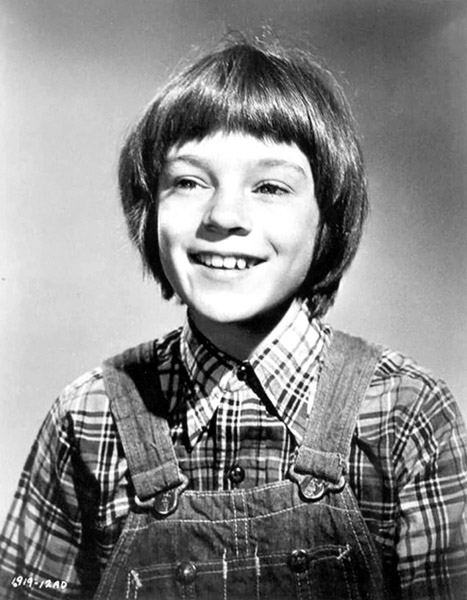
To Kill a Mockingbird 02This opening takes us into a world of innocence, a world that a little girl would find safe and comforting. The scene is Maycomb, Alabama in 1932, where attorney Atticus Finch (Gregory Peck) is raising two children, a boy of ten, Jem (Phillip Alford) and a girl of six, Scout (Mary Badham), with the help of a black housekeeper, Calpurnia (Estelle Evans). Their neighbor across the street, Maudie (Rosemary Murphy) is very kind to the children and seems to have more than a passing interest in Atticus.  Narration is provided by an adult (Kim Stanley), the voice of Scout as a woman looking back the events that shaped her life.

A country farmer, Walter Cunningham, Sr. (Crahan Denton) brings a sack of hickory nuts to the family and Scout gets Atticus to come out and accept them, which embarrasses the farmer. Atticus tells her that the man owes him for some legal work and that’s the only way he can pay and work off his entailment.

Into this peaceful summer idyll comes another boy, Charles Baker Harris (John Megna) who prefers to be called Dill. He’s from the big city (Mobile) and staying with his Aunt Stephanie (Alice Ghostley).  As they play, Jem tells Dill about the house two doors down, a rundown shack inhabited by a crabby old man, Mr. Radley (Richard Hale) and his legendary son, Arther (Robert Duvall), known locally as Boo.  No one has seen Boo for years and Jem speculates that he is kept chained to his bed, except at night when he roams the town looking in windows.  When still a boy, Boo stabbed his father in the leg with scissors and was for a time kept in the court house basement before he was taken home and secreted away.

Atticus is friends with the local sheriff, Heck Tate (Frank Overton). Judge Taylor (Paul Fix) stops by one evening to ask Atticus if he would defend a young black man, Tom Robinson (Brock Peters), who has been accused of beating and raping Mayella (Collin Wilcox) the daughter of a white trash redneck alcoholic, Robert E. Lee “Bob” Ewell (James K Anderson).  Atticus takes on the case in spite of the overwhelming odds.

Dill is facinated with the story of Boo Radley and he needles Jem into organizing a night trip into the Radley back yard. The three of them go and Jem actually goes up on the back porch and peeks in the window, but a menacing shadow scares him and the three of them run away.  Jem’s trousers get caught on the fence and he wriggles out of them and joins the others in just his underwear.  Knowing that he can’t go back inside the house without his pants, Jem goes back to get them and finds them folded on the fence.

This isn’t the only evidence of Boo, however, as Jem has been finding assorted items in a tree hollow for quite some time. He shows Scout his cigar box full of objects (the one she plays with in the opening credits).  They find the little carved images of themselves just before Mr. Radley cements over the tree hollow.
To Kill a Mockingbird 03Summer turns to fall and Dill returns home. Scout begins her first year of school by getting into a fight with Cunningham’s son.  To smooth things over, Jem invites the boy home to dinner.  During dinner, they talk about the Cunninghams having to hunt for their food.  Annoyed with Atticus’s refusal to let him have a gun, Jem brings up the subject of Atticus getting his first gun and Atticus relates the story that his father told him, that he was allowed to shoot birds, but never a mockingbird, because all they did was sing and it would be a shame to kill one.

Scout keeps getting into fights at school, mostly because the other kids accuse Atticus of being a “nigger lover.” He must sit her down and explain about racial hatred and his own duty to defend Robinson even though the whole community is against him.

One day, a mad dog appears on their street. Cal takes the children inside and calls Atticus, who arrives with Heck.  The sheriff asks Atticus to shoot the dog, but Scout protests that Atticus can’t shoot.  However, Hecks says that Atticus is the best shot in the county, so he takes the gun and kills the dog in one shot.  Jem watches with big, round eyes, astounded that their daddy can shoot so well.  It is a simple scene, but serves as a metaphor for the madness that is to follow.

Winter turns to summer again. Heck has been keeping Tom Robinson in a distant jail, but before the trial, he brings the man back to Maycomb to be held overnight.  Fearing a lynching, Atticus sits in front of the jailhouse door and waits.  The kids sneak up to see what Atticus is doing and they watch as several cars approach and men with guns get out to face the lawyer.  Scout runs to her dad and Jem and Dill follow as she pushes her way through the crowd.  Although Atticus orders them to leave, Jem stoutly refuses.  Seeing Mr. Cunningham in the crowd, Scout says hello to him and talks about how bad it is to have an entailment.  Shamed, Cunningham leaves and takes the lynch mob with him.

When the trial begins, the kids can’t into the courtoom on the main floor, reserved for whites only, so the black preacher takes them with him up to the balcony where the blacks sit and they watch the trial from there.

The case against Tom Robinson consists entirely of superficial evidence. There is Heck’s testimony of that Bob Ewell came to see him, claiming that his daughter had been beaten and raped and his description of her on the night he saw her.  In cross examination, Atticus asks why no doctors were called and there is no reasonable explanation, but he does elicit testimony that she was beaten on the right side of her face (ie. would have to have been made by a left handed person).  When Bob Ewell testifies, Atticus shows that he is left handed.  Tom doesn’t have use of his left hand, as it was injured in an accident.  Ewell testifies that he saw Tom leaving the property, but he didn’t see the beating and rape.

Finally, the victim herself, Mayella, takes the stand. Although she gets frequently confused and even contradicts herself on occasion, she dramatically declares that Tom beat and raped her.  Under cross, Atticus attempts to get her to admit that her father frequently beat her, but she does not break.  He tries to get her to describe the rape and she won’t, instead dramatically declaring that the whole bunch of “yellow cowards” would never get her to change her story, so Atticus gives up.  The prosecution rests.

The only witness for the defense is Tom Robinson himself. During his testimony, he admits that Mayella invited him onto their property more than once to do little errands for her and states that on the night in question, she invited him into her house, closed the door, and kissed him, asking that he kiss her back.  He resisted and ran from the property.  During the cross examination, the District Attorney, Mr. Gilmer (William Windom) gets Tom to admit that he felt sorry for Mayella and that seems to anchor the case against him.

During his closing statement, Atticus hammers home that there is no evidence against Tom and asks the jury not to hold it against him that “a black man felt sorry for a white woman.”

The trial scene presents the only serious weaknesses in the movie. While it is not hard to believe that a rural south town would rush the trial through in one day back in the 1930’s, it is not believable that Atticus, with a year to prepare, would miss such obvious advantages.  Heck testifies that Mayella had bruise marks all around her neck, as if someone had held her by the throat.  Since Tom cannot use his left hand, he could have only held her with his right.  Atticus should have pointed this out over and over and used it in his cross examination of Mayella.  He should have hammered the point over and over that Tom could not have left the black eye and bruises on the right side of her face since he couldn’t use his left hand.  You would think that he would have canvassed neighbors or townspeople to see if there was ever any evidence that Mayella had beaten by her father before or seen if the town doctor had ever treated her for it.  He certainly could have brought forward testimony that Ewell was drunk most of the time.  It seems like Atticus just didn’t prepare much of a defense.  Then, in his closing argument, he missed one opportunity after another to hammer home that Tom could not–physcially–have committed the rape.  It seemed over-simplified to me.

The second problem in the trial scene is that the director allowed–and probably encouraged–a certain amount of over-acting. It can be seen most dramatically in the testimony of Bob and Mayella Ewell, which almost made me laugh.  That should have been controlled.

Of course, the all male white jury finds Tom Robinson guilty. While in transit to a different jail, Tom attempts to run and is shot.  This hits Jem very hard.  It seems that there is no real justice in the world and it deeply bothers him.  Summer turns to fall again and Scout has to dress up in a ham outfit for a school play.  Afterwards, her dress is missing, so she has to walk home wearing her ham costume, escorted by Jem.  They are attacked in the woods by Bob Ewell, who breaks Jem’s arm and throws him down, knocking him out.  As he goes to attack Scout, Boo Radley steps in and, during the scuffle, sticks a knife into Ewell’s ribs, killing him.  He picks up Jem and carries him home, with Scout, now free of her costume, following along behind.

To bring justice full circle, Heck suggests that they say that Ewell fell on his own knife. Atticus at first seems more intent on placing the action in Jem’s hands, so that he could claim self-defense, but the sheriff reminds him that bringing Boo out into the limelight would be awful for him and that justice would be served by simply saying that Ewell fell on his knife.  Scout tells Atticus that bringing boo into the limelight would be like killing a mockingbird.

The film ends with little Scout walking Boo home, then snuggling into Atticus’s arms as he watches over Jem in bed.
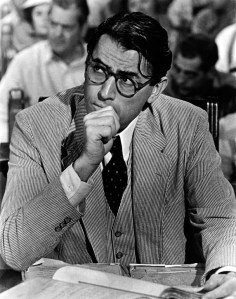
To Kill a Mockingbird 04Gregory Peck’s performance as Atticus is easily the best of his career and it earned him the Academy Award for Best Actor. It is understated and is mostly free of the theatrics that marked many of Peck’s performances during his career.  He creates for us a thoughtful, intelligent father, who does his duty not only his children and the town, but to justice itself.  The children are good, especially for kids with no acting experience.  Phillip Alford as Jem is the better of the two.  His performance is believable throughout the movie and can stand with Peck’s.  Mary Badham, as Scout, has a few moments when she seems to be acting, rather than living her part, but when she is good, which is most of the time, she is very good indeed.  The scene where Atticus puts her to bed and she asks about his pocket watch is as good as it gets.  She is so natural as a curious and lovable little girl that it really touches your heart.

All of the supporting actors are terrific, down to the smallest role, and it makes Maycomb seem to live as a real Alabama town in 1932. Brock Peters went on to have a great career as an actor and both Alice Ghostley and Robert Duvall, who made their acting debuts in this movie, went on to have stellar careers.  Duvall is now considered one of the best actors of the 20th century.

I am glad the film was shot in black and white because it seems just so appropriate for a time when our country seemed to be black and white. The cinematography by Russell Harlan takes advantage of the medium and seems to make the shades of black and whtie sing, creating a metaphor for the story itself.  Elmer Bernstein’s score is truly inspired, especially the little piano compositions that emphasize the innocence of childhood.

This is a film that everybody should see. In preparing for this review, I watched the film twice and got even more out of it the second time around.  Released in 1962, it was a socially concious film that brought racial justice into the public’s eyes at time of great social change.  Atticus himself seems to take on the soul of the liberal white world, making the point that it was time to stand up and see that racial equality was a significant issue in this country and that our country could not be whole again until the issue was settled.

But where the film is most successful is in showing the end of innocence. For the children, it is coming to understand a complicated and hateful world that needs changing, of growing up into people who do not fight, but who oppose injustice, even against seemingly insurmountable odds.

It is a shame to kill a mockingbird.

Little Women (1994)

Little Women 1994This Robin Swicord adaptation of Luisa May Alcott’s classic novel is very good, considering that the movie comes in under two hours. I will not detail the story itself as that is already covered in my review of Little Women in my book section.

Briefly, including spoilers, this is the story of the March sisters, ranging in age from 12 to 16 at the beginning of the novel, living with their mother in Cambridge, MA during and immediately after the Civil War. Their father is a pastor to Union soldiers during the conflict.  The central character, Jo, aspires to become an author and she befriends a wealthy boy, Laurie (Teddy), who lives nearby.  As they grow up, her older sister, Meg, marries Laurie’s tutor, father returns home, younger sister Beth dies of a heart problem carried over from scarlet fever, and Amy grows up.  When Laurie finishes college, he proposes to Jo, but she turns him down, so Laurie goes with his grandfather to Europe, where he dissipates, while Jo moves to New York to become a governess.  Amy goes to France with their Aunt March, where she meets Laurie.  As Jo falls in love with a new acquaintance, Professor Bhaer, Laurie fall in love with Amy and marries her.

This film features a superb young cast. Wynona Ryder stars as Jo and she carries off the girl’s naiveté and yearning with a youthful vigor that is completely believable.  Young Christian Bale is perfect as Laurie.  Amy is played by two actresses: Kirsten Dunst plays Amy as a girl and Samantha Mathis plays her as a young woman.  Although both of them are good, there are several problems with the arrangement.  First, they don’t look enough alike to be believable as the same person and second, by jumping four years into the future, the film does not let us see Amy grow and change, so the character differences between the two Amys is stark and does not feel natural.  The script completely leaves out how Amy replaced Jo as a companion for Aunt March, leading to changes.  It does not let us see how Jo offended Aunt March, which was what led to the Aunt taking Amy to France instead of Jo.

Trini Alvarado as Meg and Eric Stoltz as John Brooke, the man she marries, are both very good and Susan Sarandon is perfect as the mother of the girls, Marmee.

Clare Danes sometimes shines as Beth. The scene where Mr. Laurence presents her with the piano is excellent, although the film doesn’t take the time to show her practicing on the piano at the Laurences, which is part of what makes the gift so special.  However, during the scene where Beth dies, director Gillian Armstrong allows Danes to play the scene with a certain fear and regret of death, whereas in the book, Beth embraces her death.  Beth’s character is built around her being a homebody and so certain of Heaven that she dies with a kind of splendid peace.  Danes performance negates the character she has so carefully built.

One of the things the movie didn’t do as well as the book was the scene where Laurie proposes to Jo and she refuses him. It is probably the best scene in the novel and it seems to flounder a bit in the film, so that what should be a major crisis on which the story pivots just doesn’t bring the heat.

However, the movie clearly improves on the book with the character of Professor Bhaer. As played by Gabriel Byrne, he is more romantic and open-minded, certainly clean-shaven.  This redrawing of the character to make him more likable is connected to a new ending that makes the story work much better.  In the book, Bhaer goes into a fit over Jo writing sensational stories for yellow press and she gives up writing entirely, but in the movie, he merely feels that she should write from her own heart and do better.  Following Beth’s death, Jo, in the movie, proceeds to write a novel about her own family and that novel then becomes Little Women and gives us a real parallel with Luisa May Alcott, who wrote the book originally about her own family.  Bhaer then finds a publisher and delivers the galleys to Jo, which is how they get together.  This ending is so much more satisfactory than the novel.  It is unreal that Jo would give up writing for good and it feels entirely wrong that she would marry such a closed-minded old fool as Bhaer in the book.

One more improvement really gives the movie a lift over the novel. Throughout the book, Alcott preaches to her readers, giving many little examples of how girls can make their own family lives better if they only behave properly and completely trust in God.  The movie removes almost every single instance of preaching and tells the story without a moral hammer.

Overall, it is a very good film. This is the fifth adaptation of Little Women to the screen.  There were two silent versions, in 1917 and 1918, a film in 1933 directed by George Cukor with young Kathryn Hepburn as Jo, and one again in 1949 with June Allyson as the main character, but also featuring Janet Leigh, Elizabeth Taylor, and Margaret O’Brien.  The 1949 version is the only other one I’ve seen and it is also very good, but for modern viewers I would not hesitate to recommend this 1994 movie with Wynona Ryder.  It is a solid adaptation, well directed and–for the most part–very well acted.

Young Victoria

theyoungvictoria-2This review contains spoilers (as if history didn’t contain enough).

In 1836, when Princess Victoria of Kent (Emily Blunt), the heir apparent to the throne of England, first meets Prince Albert of Saxe-Coburg-Gotha (Rupert Friend), she is in a very delicate situation, both politically and personally.

Her mother, the Duchess of Kent (Miranda Richardson) is heavily under the influence of her brother, King Leopold I of Belgium (Thomas Kretschmann), who devoutly wishes an alliance with Britain to keep Belgium safe from France, and Sir John Conroy (Mark Strong), the comptroller of her household, who wants King William IV (Jim Broadbent) to die while Victoria is still a minor so that the Duchess will be appointed Regent and he can rule England from behind the scenes.

Victoria herself is in rebellion against both of these constraints, siding instead with King William. She resents the control that Conroy exerts over her mother and she resents the domestic restraints that they both hold on her.  While she is ill, Conroy even attempts to force her to sign an agreement for a Regency, but she bats the document away.  Conroy treats her quite brutally, once grabbing her physically and throwing her on a sofa.  When her mother stands by and allows this to happen, she warns her mother that she will never forget it.

King Leopold decides that the best way to keep England friendly is to have his nephew, Prince Albert, become very friendly with Victoria, perhaps even marry her, so he sends Albert to England for a visit. Trained to know all of her favorite music, reading, and opera, Albert tries to forge a friendship, but Victoria sees right away what he’s up to.  Changing tacks, he decides to be honest and disagree with her when their opinions differ.  Immediately, Victoria notices and decides to give him a little slack.  The more they talk, the fonder they grow, gradually falling in love, until, at last, Albert must return to Germany.

When King William dies, Victoria has come of age and she makes a few quick decisions. Although she allows her mother separate apartments at Buckingham Palace (built by William, Victoria was the first regal tenant), but she banishes Conroy.  Making friends with Lord Melbourne, she takes him as an advisor.  Although she desires to improve the living conditions of the poor, Melbourne steers her away from that and arranges her household as he wants it.  When Melbourne falls from power, Queen Victoria refuses to change her appointments to suit the new Prime Minister and the government falls.  There is a huge reaction in the public against her, there are riots outside the palace, and in one instance, a window is broken by a flying object.

Confused and needing help from a friend, she calls on Prince Albert to come to her, not just as an advisor, but as a husband and they are finally able to consummate their simmering love. Just when things would appear to be quite well, Albert makes the mistake of making a decision without consulting her and Victoria reacts strongly, feeling that, like Conroy, he was attempting to rule England behind her back and they have a vicious quarrel.  At a public appearance, a gunman appears and tries to assassinate Victoria, but Albert takes the bullet for her, thus proving his real love.

The two then form a true partnership and rule England successfully for another 20 years when typhoid takes Albert. Alone, Queen Victoria then ruled England alone until she was over 80 years old, supervising England’s management (not always successfully) of the Industrial Revolution and leaving a false impression of extreme prudishness.

This film is beautifully made. The art direction, photography, costumes, locations, acting, directing, music, and photography are all first rate.  Much credit must be given to director Jean-Marc Vallée for imposing strict control over the length of the film and the editing.  Some period dramas like this run amok by running two or three hours in length, but the timing of this film feels just right.  The script by Julian Fellowes maintains as much historical accuracy as possible, while still bending reality to make it a pretty good movie.  It is focussed, as it should be, on the love story, but the love story is underpinned everywhere by the politics and Fellowes did a fantastic job of merging the two worlds.  Much credit should also go to Sandy Powell for her Academy Award winning costumes.

Emily Blunt is simply stunning as Victoria. She shows such a range of acting that I found myself completely won over within the first few minutes of the film.  Rupert Friend was a wonderful casting decision as Albert because he brings both restraint and passion to the performance.  The chemistry between these two is really terrific and one completely believes not just the love, but the political realities of both of them.

You don’t need a PhD in History to understand this moving love story that involves two kingdoms, ministers, lords and ladies. It is passionate, well-made, well-timed and beautiful to watch.  I highly recommend the movie!

Adventureland

AdventurelandAdventureland is a funny and moving teen romance written and directed by Greg Mattola about a group of teens working at a summer carnival. The main character, James Brennan, is a student who has just graduated from a small college and is saving up his money to go to the Columbia School of Journalism so he can begin a career in travel writing. Played with both humor and angst by Jesse Eisenberg, James is trying to find romance, but his own geekiness stands in his way.

It doesn’t take long after meeting Em for him to start falling for her. Older and wiser, she is a student who lives and studies in New York (NYU) during the school year, but works as a carny in the summer. She’s also having an affair with Mike (Ryan Reynolds), a guitar player who also fills in there in the summer as a maintenance man. Married, his one claim to fame is that he is rumored to have jammed with Lou Reed, James’ hero.

The film is a period piece, set in the summer of 1987 and Mattola has gone to great lengths to make the film of its time. The park seems quite old by today’s standards and the costumes and hair styles all reflect the late 80’s very well. Although some of the humor is a bit juvenile, it generally works well. The supporting characters are sharply defined and quirky. Kristen Wiig as the park manager and Bill Hader as her husband and assistant are both quite funny and Martin Starr is quite good as James’ pal Joel.

Both Eisenberg and Stewart are very good and this is probably Stewart’s best performance. They are the only two characters in the movie who have serious scenes and they carry them off very well. It’s a fun movie and worth spending the time watching.