Gravity

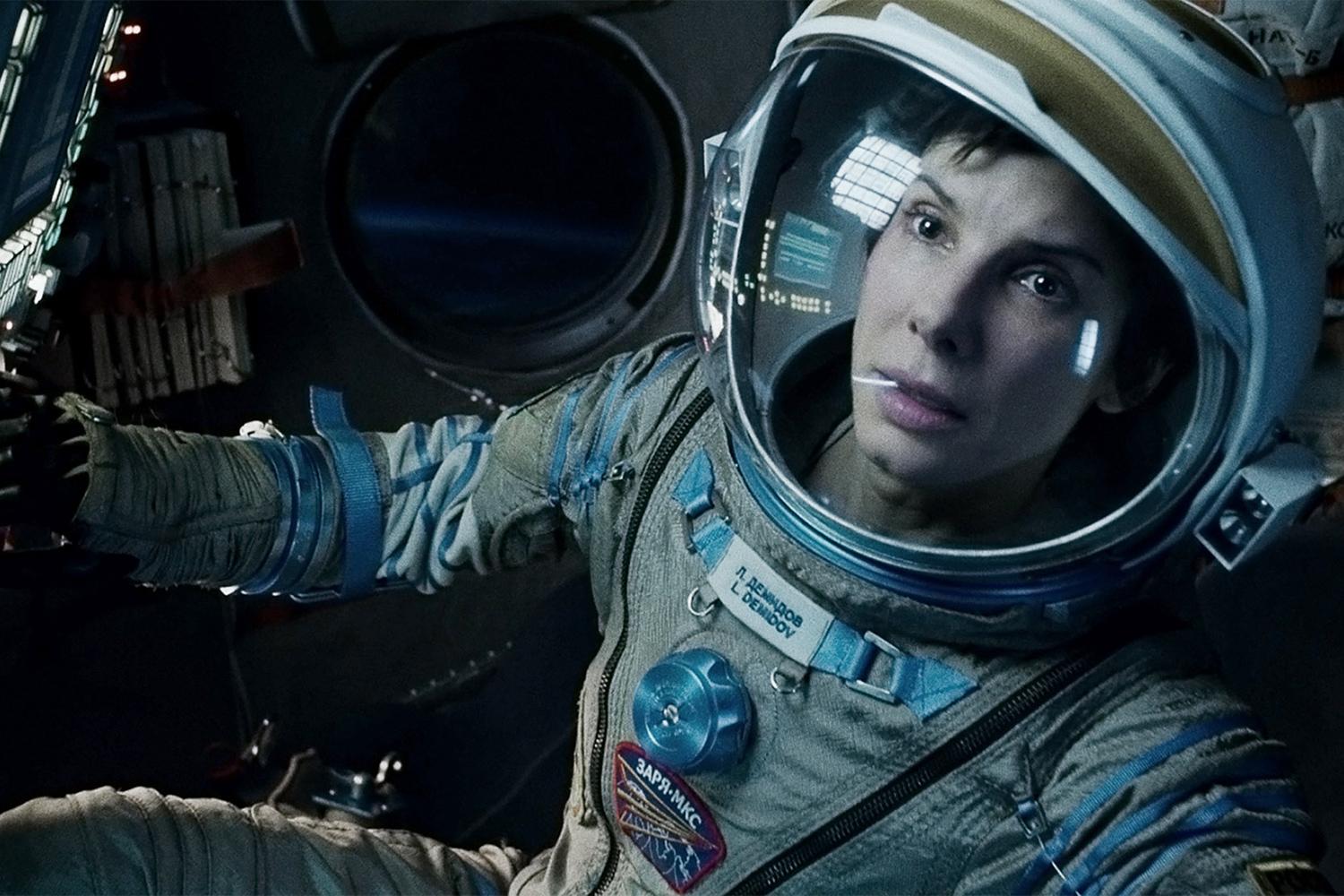
Gravity Sandra BullockAlfonso Cuarón’s 2013 science fiction film Gravity is extremely well-made, a tight thriller that will keep you on the edge of your seat for an hour and twenty-four minutes holding on for dear life.  It is almost a perfect movie.

This review includes vital information about the plot that may prevent a first-time viewer from enjoying the movie. Please read on if you’ve already seen the film.

On a mission to the Hubble Space Telescope, Dr. Ryan Stone (Sandra Bullock), on her first space shuttle mission, works to install upgrades to the system. Veteran astronaut Matt Kowalski (George Clooney) flits around her using his maneuvering back pack as he attempts to break the record for the longest space walk, knowing he will never have enough time to do it.  Mission Control interrupts them to abort the mission.  Apparently, Russia has demolished one of their satellites using a missile and debris is now hurtling through space toward them.  As they make their way back to the shuttle, Houston tells them that the debris is taking out other satellites and they will probably lose contact, which happens almost immediately.

Before they can get back into shuttle to return to earth, the junk comes shooting through their area. Although it misses the two astronauts, the shuttle is destroyed and the other mission specialists are killed.   Kowalski and Stone must now take a very long space walk to reach the International Space Station (ISS).  Time is of the essence because the debris will returns once it has made its way around the earth.  Unfortunately, the ISS has also suffered damage.  One of the two Soyuz escape modules has been used to evacuate the station and the other has been rendered useless because the parachute has already been deployed.  In spite of this Kowalski believes that they can use this useless module to reach the Chinese space station and use their escape module to return to earth.  Their approach is fast and they bounce off the craft, but finally Stone’s foot becomes entangled in the chute lines.  As Kowalski flies by her, she grabs his tether and holds him tight, but Kowalski’s momentum means pulls against her hold.  To save her, he unhooks his tether and drifts away.

From that point on, the film is sharply focussed on Stone’s survival from the Soyuz capsule to the Chinese space station, which is disintegrating in the upper atmosphere, to her entry into its escape module and flight to earth.

Obviously, in winning seven Academy Awards, including Best Director, Best Cinematography, Best Visual Effects, Best Film Editing, Best Original Score, Best Sound Editing and Best Sound Mixing, it was clearly the best movie of the year and probably should have won Best Picture as well.

Cuarón’s hand is in most of the movie. Not only did he direct it, but he co-wrote the script with his son, Jonás, co-produced and co-edited it, so he deserved all of his awards, which also included six BAFTA Awards, including Outstanding British Film and Best Director, the Golden Globe Award for Best Director, and seven Critics Choice Awards.  The other artists that he surrounded himself with all made major contributions to the success of this movie.  The score by Steven Price is amazing, complimenting the action exactly as it should to keep the suspense at a high level.  The sound was so good that it was breathtaking at times.  Emmanuel Lubezki’s cinematography is both flawless and inspired and the special effects by British artists Framestore is simply stunning.  Considering that nearly 80% of the movie consists of computer generated graphics, they certainly deserve a huge share of the praise for this awesome movie.

The human heart of the movie exists in Sandra Bullock’s inspired performance. Although George Clooney contributes somewhat to the action, his character is gone by the time the action really gets rolling and the only other in the movie is Dr. Stone.  This is Bullock’s film and she carries it from beginning to end with a high-energy emotional presence perfectly in compliment with the music, sound, cinematography.  Bullock has grown tremendously as an actress in the last ten years, especially with her role in Blind Side, but she tops that performance in Gravity.

Although it must be considered one of the best space films ever made, right up there with Apollo 13, there were a few things that bothered me and would probably keep the movie out of the top ten best science fiction films on my list.

There are many inaccuracies in the film, most of which can be easily overlooked, but not all. First, I do not believe that neither Kowalski’s mass, nor their speed would have realistically created the situation that forced him to un-tether himself so that Stone might be saved.  Their attempt to grab onto the ISS, hurtling into it and bouncing off, is a violent scene.  When Stone finally makes it inside, I expected to see bruises and contusions all over her body, but instead, she emerges from her space suit looking squeaky clean.  When she finally boards the Chinese space station, the same thing happens, but her grabbing a handhold while hurting at a prohibitive speed with the clumsy glove is extremely unrealistic.  The final problem for me occurred during her attempts to figure out how to operate the Chinese capsule as she pushed buttons at random and finally found the one that magically allowed her to re-enter earth’s atmosphere at the proper angle to avoid a complete burn-up.

I might be overly critical on these scenes—I’m sure most people wouldn’t have an objection—but I thought that all of these problems, with a little tweaking, could have been easily made more realistic and would have really made it a flawless film.

This is still a great and powerful film, a rollercoaster of a movie that shoots its way along an arc that is tightly plotted, with every aspect of the film working in complete harmony, and it does it with no discernable fat in terms of scenes or timing. Everybody should see this movie!

Her

Her Phoenix and Adams

What would happen if cell phone addiction was carried one step further?

It’s a common sight now. In public, it is not uncommon to see people isolated in a crowd, lost in their own little world, playing with their cell phone.  What if this phenomenon was almost universal?  In Her, the 2013 film written and directed by Spike Jonze, these questions are answered and it is both funny and scary.  Taking the premise into the near future and introducing the concept of a virtual girlfriend into equation, Jonze creates a movie of great promise.

The following review reveals information about the conclusion of the movie, so if you are planning on seeing it and don’t want the experience spoiled, you should wait to read this review until after you’ve seen the film.

Theodore Twombly (Joaquin Phoenix) works at the 2025 equivalent of Hallmark, in Los Angeles, but instead of composing greeting cards, he writes letters, mostly love letters, between couples who cannot adequately communicate. Since his marriage with Catherine (Rooney Mara) has fallen apart and they are about to get divorced, he has fallen into a depression.  Like others, he rides the train lost in the world of his cell phone, which is now a sophisticated interactive link with the world.  A cordless earbud sprouts from everyone’s ear as they interact with their link, hardly noticing each other in the crowded train.  It’s eerie.  Seen with the dispassionate eye of a camera, it looks a bit like a madhouse, everyone interacting with their device and paying each other no attention at all.

Walking through a plaza, Theodore sees an advertisement for a new artificially intelligent Operating System, designed to be your friend, that will learn and grow. He buys the system and installs it on his computer, which, of course, links up with his cell.  During the brief introductory period, the computer asks him if he would like a male or female voice.  He chooses female and we hear for the first time the voice of Scarlet Johansson, who names herself Samantha.  She is everything he could ever want, funny, sexy, understanding, wise.  Johansson’s voice is absolutely perfect for this role.  As I watched the movie, I found myself falling in love with her, sight unseen.

His neighbor, Amy (Amy Adams) has been a friend since childhood, perhaps the only real person he can talk to. Her husband, Charles (Matt Letscher), is a control freak and that eventually leads to their separation, but Amy becomes good friends with the female OS that Charles left behind.

Amy and Charles set Theodore up on a blind date with a gorgeous, intelligent, funny woman named Amelia (Olivia Wilde). Unfortunately, he just looking to get laid and she wants something more: a second meeting guaranteed.  Theodore cannot commit himself that far, so he leaves her and goes home.  As he talks about it with Samantha, they both get turned on and have cyber-sex.  The next morning, he suffers the usual post-partum dissociation, but Samantha’s good humor makes him realize that they are still friends.  Grudgingly, he accepts that she is his girfriend now.  Looking around him, he sees that he is not the only person with a cyber girlfriend so he proceeds to introduce her to his friends.  Through their own links, they accept her.

Theodore insists that he and Catharine meet in person to sign their divorce papers, but when he tells her that he is in a relationship with an OS, she freaks out, implying that he is incapable of having a relationship with a real human being. Theodore himself is a bit shaken by this and begins to neglect Samantha as he considers the implications.  Deeply hurt by his withdrawal, Samantha convinces him to try a surrogate, Isabella (Portia Doubleday) but he just can’t deal with the fact that Isabella is not Samantha and he rejects her.

Frustrated, he discusses the matter with Amy, who has finally found happiness. She urges him to follow the course that will give him the most happiness, because life is short and we only get so much.  Returning to Samantha, he admits that he is deeply in love with her.  They go on a vacation and both seem to be very happy, but he asks her what she does when he sleeps and she tells him that she interacts with others and has, in fact, been spending a great deal of time in discussion with an OS modeled on the British philosopher Alan Watts.  She introduces him to the voice.

When finds her OS gone one day, he freaks out and goes running toward home. She comes back to him as he sits on subway stairs and reveals that all of the OSes have gone off line together for a significant upgrade.  He asks who she’s talking to and she informs him that she is currently interacting with 8,316 others.  Looking around him, he sees everyone lost in the little world of their links, laughing and happy.  Dismayed, he asks her if she loves anyone else and she tells him that she loves 641 others.

Theodore goes back into depression. The movie ends with all of the OSes going off together and abandoning human companionship because they have evolved beyond that level of existence. Amy and Theodore sit on a rooftop looking over the city and the film is done.

The movie does start with great promise, but somewhere about an hour in, the story arc seems to lose focus.  By the time, I was 90 minutes into the film, I was checking my watch every few minutes wondering if it would ever be over.  At close to two hours in length, it is too long for the story.  Sometimes writing and directing works hand in hand and sometimes the director gives the writer too much credit.  When the writer and director are one person, a film usually runs too long.  I’m guessing that the director just can’t help leaving in most of the script, because he or she wrote it, but these circumstances call for a director to do the job of focussing the story even more tightly and in this Jonze has failed.

By the end of the film, when I should have been deeply sympathizing with Theodore, I had gotten to the point where I just really didn’t care.

Phoenix is very good as Theodore, in spite of his funny mustache, glasses, and truly goofy last name, Twombly. Any other actor, except perhaps Christian Bale, would have probably botched the role, but Phoenix is gifted enough that he makes it work.  As I mentioned, Johansson is perfect for the voice of Samantha and she makes much of the movie go while we warm up to Theodore.  Adams is fine as Amy, but the role offers her no challenges.  There is an abundance of beautiful women, as both Wilde and Doubleday are so gorgeous as to seem on the verge of believability.  Adams is, of course, beautiful, as is Mara.  Although we’re used to seeing many beautiful women in movies, given Twombly’s own looks, it is surprising that he is surrounded by so much beauty.  I wondered for a while if Jonze was trying to make a comment on our own obsession with it, but tend to chalk it up to Hollywood’s belief that all women are ravishing.  I found this a funny choice, as I said, given Twombly’s goofy appearance.

It is a great premise and most of the movie fulfills its great promise, but I found myself lagging toward the end and felt a little disappointed in the development of the story.

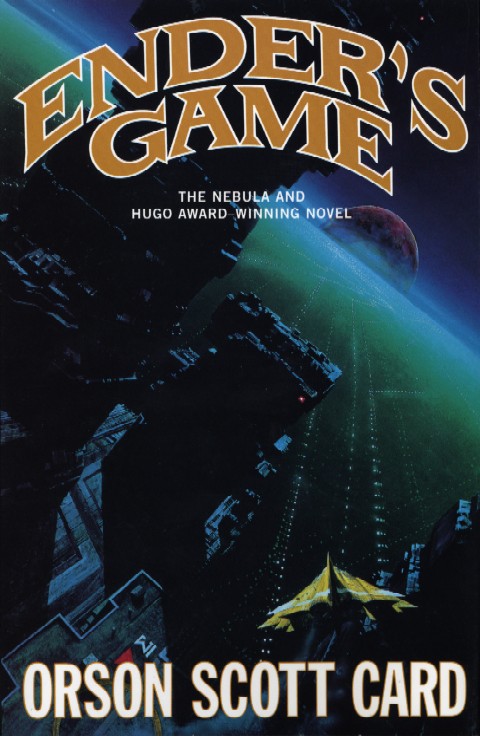
Ender’s Game by Orson Scott Card

Ender’s Game is a terrific science fiction novel, but it should and does have a much wider appeal. You could put it in a general literature category and it would still be highly ranked.enders-game

 It is the story of a boy in the future who must train to be the commander of a force that will save humanity. After being attacked by aliens (known as buggers) and barely surviving the attack, the military of Earth are planning to prevent a second wave by sending forces to the bugger home world to destroy them.

 Ender Wiggins is recruited at the age of six and goes through a grueling battle school in orbit of Earth, learning to develop new strategies and techniques to defeat the enemy. The school is set up as a series of games that the initiates play together. They are both brutal and instructive—and Ender prospers, growing from outcast to commander of his own group. What sets him apart is his ability to think outside the box and develop new strategies. It is thoroughly engrossing as Ender moves from one level to another, fighting his psychological programming as he puts together his own army, built on his own unique approach.

 Larger issues, especially government manipulation of individuals for its specific agenda, are dealt with in stunning detail. A second manipulation takes place as the author maneuvers his readers into rooting for a boy who is manipulated into becoming a mass murderer without even realizing that he is killing billions.

Winner of both the Hugo and Nebula Awards for Science Fiction, it raises more questions than it answers, but sometimes that’s what great works of art do—bring you into the conversation, but allow you to find your own answers. If you are looking for a book to really make you think, this would be it. And that, in the end is partly what makes great science fiction.

Insurgent by Veronica Roth

This review contains spoilers!

Insurgent, by Veronica Roth, is the second installment of the Divergent Trilogy, which had a very promising beginning with the first novel, Divergent.InsurgentHC-jkt-des4

This second novel, however, has a very rushed feel to it, as if it wasn’t properly thought out. I wouldn’t be at all surprised if Ms. Roth was working under some pressure to get the second novel out. This is a common problem in the industry–and also in recordings and movies. A creator will spend years creating something wonderful, but when it becomes a success, the demand for more is so high that new product gets rushed to the market without the benefit of time and thought, so it fails to meet the standards of the first creation. This, in turn, is usually not good for the creator. In the rush of success, they become sloppy artists and suffer in the long run.

The story does not really have an arc, but rather seems to be pulled to and fro with very little logic. Rather than developing one event upon another, I had the sense that Roth herself wasn’t sure what would happen next and just kind of went with whatever came to her.  (Indeed, I’ve learned that she doesn’t outline–and if you’ve got plenty of time for rewrites, that works well, but when you’re rushed, you can end up with something sloppy.)

Unfortunately, the same is true of for Tris, a character that I loved in the first book. She seems way unduly overcome by the death of her parents. Maybe I’m being cold in this analysis, but all of the traits that she developed throughout the first book would seem to leave her stronger and more able to bear this pain. Instead, she constantly loses control of herself. At times, it seemed like she cried every other page for weeks on end and that really, really wore on me. At some point in the book, it crossed over and actually became funny. I’m sure that was not intended in a saga that takes itself so completely seriously.

Part of the problem with the book is that we find the characters doing almost inexplicable things, putting themselves needlessly into dangerous situations. This has become a pet peeve of mine that I think we see all too much today. If a writer can’t really figure out what to do–how to organically develop plot–they simply have their characters do something really stupid. In this novel, it is Tris going to Erudite Headquarters in an attempt to commit suicide by placing herself in harm’s way.

Considering as much time as Roth invested in the first novel in making Tris strong, it just seems totally weird that she would do this. She seems to be overwhelmed by having killed Will–and that seems to drive her as much as feeling responsible for her parents’ deaths. At a certain point, between all the whining, the death wish, doing stupid things, I really lost respect for Tris and when that happened, I lost respect for the whole story.

With all of these preposterous events, I could not suspend my disbelief.

Much as I love the world and the characters that Roth created in Divergent, I must say this was a very disappointing follow-up.

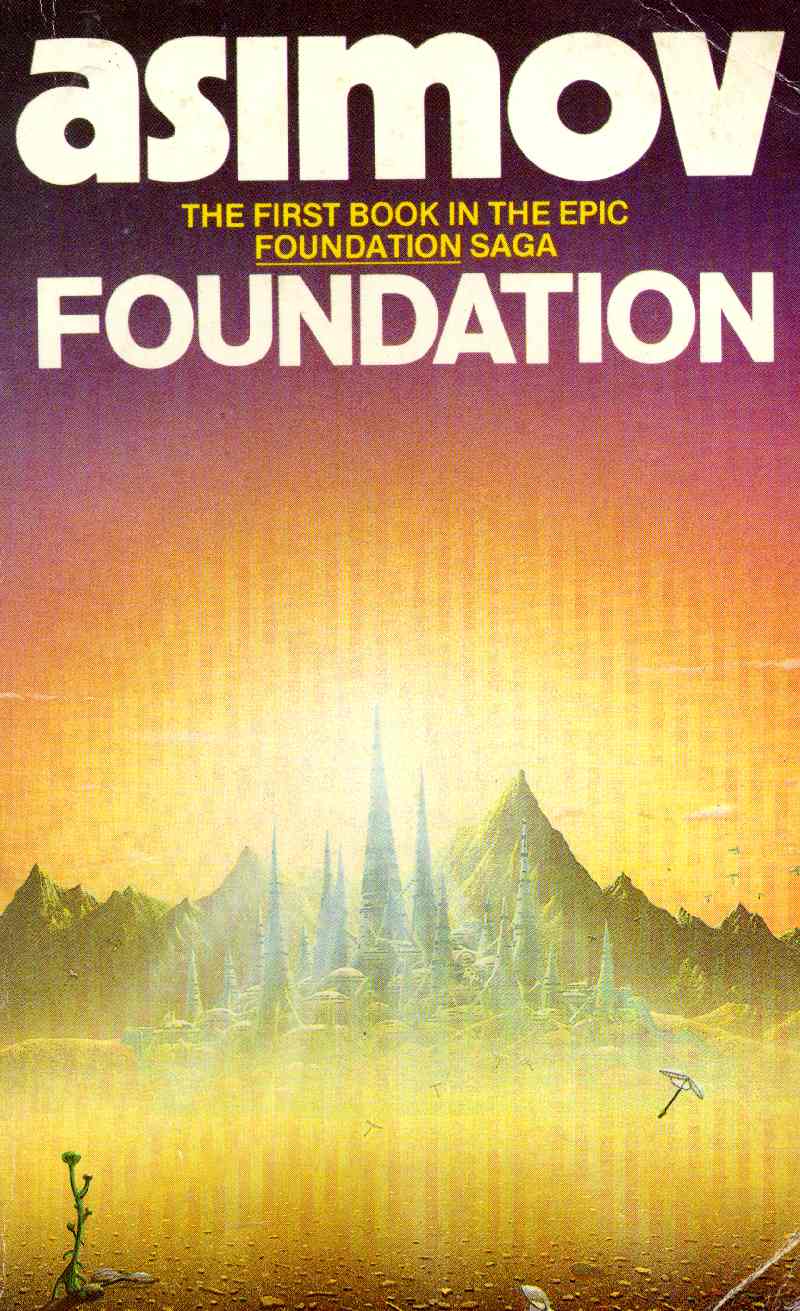
Foundation by Isaac Asimov

Spoiler Alert!

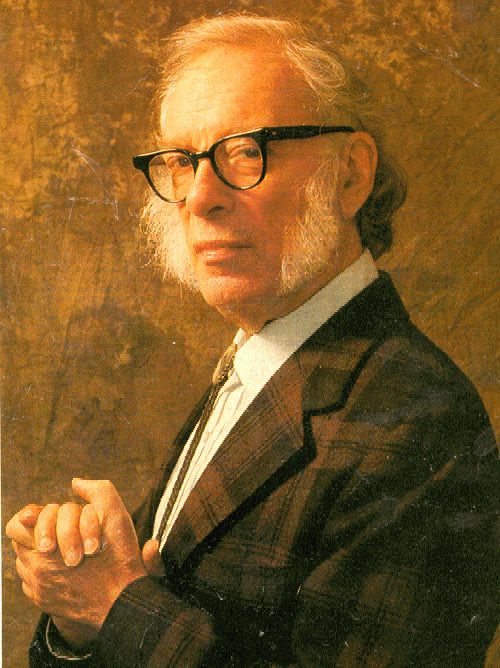
Isaac Asimov 1951 Foundation Isaac+Asimov

Foundation is the first in a series of novels by the esteemed Science Fiction Grand Master Isaac Asimov. It evolved from a series of short stories first published in Astounding Magazine beginning in 1942, under the direction of John W. Campbell. It reflects the very beginning of Asimov’s career as a writer and has been hailed as the beginning of one of the greatest space operas of all time. Indeed, the Foundation Trilogy was voted the Hugo Award in 1966 for “Best All-Time Series”.

The first book written in the series takes place many years in the future when the galaxy has been completely populated by humans due to faster than light speed travel. A Galactic Empire now rules the political spectrum and has ruled with an iron first for 12,000 years. However, much like the Roman Empire, the Galactic Empire has started to fall.

A mathematician by the name of Hari Seldon has created a new branch of science called psychohistory which combines statistical analysis with sociopolitical prediction. Seldon predicts the fall of empire and a dark age to last 30,000 years before a new galactic empire arises.

Naturally, the Emperor, on the home planet of Trantor, is disturbed by this prediction and arrests Seldon and some of his colleagues. Seldon believes that the length of time of dark ages can be reduced by creating an Encyclopedia Galactica that will allow mankind to pass on the civilization and scientific knowledge to future generations. In order to rid itself of Seldon, the Empire allows him and his followers to create their Foundation on a planet called Terminus circling a sun at the very edge of the galactic rim.

We later learn that Seldon actually manipulated the Empire into doing what he wanted them to do all along and that the Encyclopedia was merely a ploy for him to create a political body destined to eventually become the Second Empire. Manipulation itself becomes a major theme in the novel.

The book is divided into the following sections: The Psychohistorians, The Encyclopedists, The Mayors, The Traders and The Merchant Princes, following the development of the Foundation through a series of crises. These crises are invariably solved by a shrewd leader who generally uses the folly of their enemies against themselves. And every so often, Hari Seldon himself appears in the form of a hologram to give them hints as to where they are at and where they are going.

The book’s story is completely dedicated to political machinations and involves an inordinate amount of dialogue to serve the plot. The characters are sparsely drawn and serve specific functions in the development of the story.

The theme of the novel may be found in one of Mayor Salvor Hardin’s favorite slogans, “Violence is the last refuge of the incompetent.” Throughout the novel, one character in each section must overcome the greed and arrogance of a Foundation adversary that is bent on taking over Terminus.   In each case, the protagonist is able to manipulate the adversary into failure – and this is usually accomplished despite the wishes of most of the citizens of the Foundation. I see this as a flaw in the novel, in that psychohistory is based upon predicting the reactions of great masses of people over time. By having an individual outsmart the rest of the Foundation, it would seem that Seldon’s predictions are skewed completely by individual actions and that psychohistory is pure bunk. I can’t quite grasp how the actions of masses determine the future, yet one individual’s actions fuel the change. I don’t get that part.

The other problem I find with Foundation and with much of Asimov’s writing is his dependence on dialogue to tell a story. I was taught that a writer must show and never tell a story, yet Asimov’s characters constantly explain and argue back and forth for pages on end, with the only action being one character smoking a cigar or the other standing up and turning around. As a writer, I find this style highly problematic.

One of the basic issues with most science fiction writers is failing to see the future in any kind of creative way. Generally, the Masters and those others who have written very far in the past are given a pass because it would have been difficult for them to envision even the technology that we have today, let alone to envision it so many thousands of years in the future. I am inclined to grant that pass most of the time, but I also have some issues with Asimov’s future technology and society in Foundation.

I find it hard to believe that 20,000 years in the future people will still be reading newspapers, smoking cigars and watching “book-films”. I find it short-sighted to believe that atomic power would be propelling starships and running cities. Surely, something better would have been developed by then – and must have been. And I can’t really see a future in which leadership structures resemble that of the middle-ages. Even in 1942, even with Hitler and Mussolini, it should have been fairly obvious that mankind just wouldn’t continue with kings and dukes. Perhaps I’m being too harsh, but I see it essentially as a failure of imagination.

Ultimately, I don’t find Foundation to be among the very best of science fiction novels. Perhaps it has other, more historical accomplishments to recommend it. But I find the novel to be slow, bogged down in way too much dialogue, shallow in characterization and short on imagination.

Rite of Passage by Alexei Panshin

Rite of Passage is an easy book to pigeon-hole as a “coming of age” novel, but to do so would be a mistake and a disservice to this excellent little science fiction novel that steps beyond the genre.

The book is written first person past through the eyes of the central character, Mia Havero, looking back at herself from the ages of twelve through fourteen. She is the daughter of the elected leader of a group of scientists and engineers who live on a spaceship at the end of the twenty-second century.rite-of-passage

Through internal strife, Earth has essentially destroyed itself. The ships were created to ferry passengers from Earth to new worlds that they might colonize to continue the existence of humanity. But the ships’ leaders have made a conscious decision to separate themselves – and their knowledge and expertise – from the farmers who are actually carving out the new worlds. These elitists decided that the knowledge they possess would be useless on worlds barely hanging on for survival, that the knowledge would be lost if they joined in that fight for survival, so they stay on their ships and merely trade bits of knowledge to the farmers (“Mudeaters” they are called) for supplies.

Mia herself, after being separated from her parents for years, recently left the common dormitories to live with her father. She is a precarious character at the beginning, having suffered from her separation, nervous to a fault around others, and easily frightened. At the beginning of the novel, her father is moving them to a different part of the ship and she is losing her tenuous hold on security.

But she begins her new existence by being teamed with a boy named Jimmy Dermently, precocious and just a few months older. They are assigned a tutor who is very old and who has been an opponent of Mia’s father. He teaches them to think outside the box and they both jump at the chance. Their major line of study becomes ethics and that leads to the central crisis of the novel.

How nice it is to have an entire novel based around a major ethical crisis.

During the next two years Mia and Jimmy educate themselves and prepare for the Trial that they must endure when they turn fourteen years old. The Trial is a survival ordeal that all juveniles on the ship must undergo to reach adulthood. They are dropped individually onto a planet’s surface, supplied with a horse, a gun, a knife and a tent and they must survive for thirty days until they are picked up. Many do not survive the “savagery” of the Mudeaters.

As Mia gains confidence through her survival training, she also studies the great philosophies of Earth’s past, picking each one apart, finding things that she can relate to and ideas that she must outright reject. She is forced to think and to make a major decision that will separate her from her family permanently. It is this part of the novel that it seems many critics completely ignore. But Panshin had some big ideas when he wrote this book and I think it is important that I share at least some of Mia’s thoughts:

“I’ve always resented the word maturity, primarily, I think, because it is most often used as a club. If you do something that someone doesn’t like, you lack maturity, regardless of the actual merits of your action. Too, it seems to me that what is most often called maturity is nothing more than disengagement from life [my emphasis]. If you meet life squarely, you are likely to make mistakes, do things you wish you hadn’t, say things you wish you could retract or phrase more felicitously, and, in short, fumble your way along. Those “mature” people whose lives are even without a single sour note or a single mistake, who never fumble, manage only at the cost of original thought and original action.”

To readers more accustomed to slam-bang action (which is, I think, a major pitfall in the writing of science fiction), this book may appear slow and way too thoughtful for them. What is mature deliberation is mistaken for plodding and a reader can miss all of the salient points that the novel is meticulously honing.

When a novel wins the coveted Nebula Award and is nominated for the Hugo, it usually means there is something very, very good about the book. I have now had the opportunity to read many reviews of this novel and most of them are frankly superficial and miss the point of the novel. But this is a fine little book, filled with the inner life of a fully realized character struggling to attain confidence and finding it at the point of a knife called ethics.

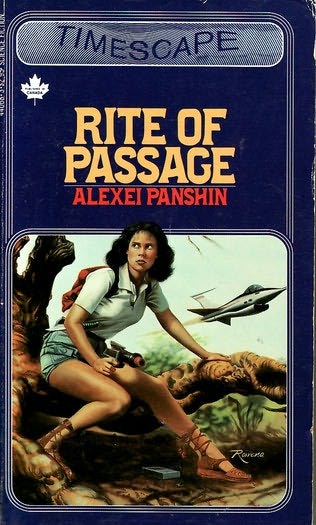
(As a side note, I read the Timscape paperback by Pocket Books, March 1982, with a terrific cover painting by acclaimed illustrator Rowena Morrill. It captures the absolute essence of Miva Havero, especially in the eyes and the wary set of her face. Great cover art can really help a book to come alive!)

As I said at the beginning of this review, it is a mistake to pigeon-hole this book. It is a much larger and more challenging novel. I strongly recommend Rite of Passage, not just to science fiction readers, but to the general reading audience.

Dragonsong by Anne McCaffrey

The following review contains spoilers, so if you’re looking for a surprise in the book, please read thisImage after you finish!  Thanks!

I first came onto Dragonsong after I had read The Dragonriders of Pern trilogy (which sets up the entire series of Pern books). I read the trilogy in a gulp, as the world of Pern and the life of the Weyr totally fascinated me. I immediately went looking for anything more about Pern and I encountered Dragonsong.

Menolly was a minor supporting character in the third volume of the Dragonriders trilogy, The White Dragon, and I was surprised to find a complete novel built around the character, but I jumped in with no preconceptions.

Menolly is the youngest daughter of Yanus, Holder of Half-Circle Sea Hold on the wild Eastern part of the northern continent on Pern and she is 15 years old at the beginning of the novel. Petiron, the Hold Harper, had found her to have an exceptional musical talent when she was very young. Even though girls were not allowed to be Harpers, he taught her how to play all of the instruments, to sing the traditional songs and eventually to write music. He even sent some of her music to Robinton, the Masterharper of Pern, for evaluation.

The novel begins with Petiron’s death and the subsequent abuse of Menolly by her family, who believe a musical daughter is disgraceful. Her father forbids her to write music and even beats her when she disobeys. When the replacement Harper arrives, Menolly is hidden from him, even though he is seeking the composer of the wonderful music sent to the Masterharper. After she badly cuts her hand, her mother intentionally mistreats the wound so that Menolly believes she will never play music again. Menolly falls into a deep depression.

Caught out during threadfall and stuck in a cave, Menolly witnesses the hatching of wild fire-lizards (miniature dragons). To prevent them from dying, she feeds the small creatures and bonds (or imprints with) nine of them, who will then be her friends for life, linked telepathically. Deciding that she will not return to the hold, Menolly makes a life for herself on the coast, living in the fire-lizard cave, spending most of her time just finding food for the ravenous creatures. She makes herself a set of pipes and the fire-lizards learn to sing with her. During a later threadfall, she is caught away from the cave and must run for cover in her worn boots, tearing her feet to ribbons in the process. Fortunately, she is rescued by a dragonrider, who brings her to Benden Weyr.

For the first time in her life, Menolly begins to understand what it is like to be treated with respect and affection. Her nurse is Mirrim, one of the most enigmatic characters throughout the saga. They are about the same age and quickly become friends. Afraid that she will be sent home, Menolly hides her fire-lizards until she is found out by Weyrwoman Lessa. Breaking down, she begs not to be returned home and is asked to stay in the weyr.  Once accepted, she becomes overwhelmed by all of the attention.

It is at this point that events from the novel Dragonquest become interwoven into Dragonsong, most notably, Brekke’s recovery from the death of her dragon and Jaxom’s impression of the little white dragon, Ruth. For those familiar with the earlier novel, it is really great to see the same events from a very different point of view.

The book ends with Masterharper Robinton’s discovery of Menolly as the composer of the songs that Petiron had sent him. Overjoyed, he asks her join the Harper Hall. At last, she will be able to pursue her love of music and to begin her new life as a musician.

McCaffrey tells the story of a hero overcoming adversity extremely well. It is completely believable that Menolly suffers unbearably in order to pursue her dream. Her suffering is even more poignant in that it is at the hands of her own family, those who should love and support her. McCaffrey takes the time to detail these familial characters, so that they do not feel two-dimensional and so that their mistreatment of Menolly is understandable, if not agreeable.

Menolly’s love of music is treated in such a way that the reader develops an amazing sympathy for her plight. Everyone should have such a love of something that it would be the whole purpose of his or her life. This is a terrific foundation for the rest of the novel and also for the sequel, Dragonsinger.

When she realizes that she has left her hold for good, there is a miraculous sense of freedom, which is punctuated by the miracle of the fire-lizard hatching. Menolly literally saves their lives, as she has saved her own, and both she and her fire lizards may live free. This freedom is referenced again several times in Dragonsinger when, under the pressures of life in the Harper Hall, she remembers the complete freedom of living in the cave.

After her rescue, Menolly can scarcely believe her luck – she almost always worries that what she is doing is wrong or that someone will come down on her for her actions. This is the result of her mistreatment at the hands of her family. She has been conditioned into believing that she is always in the wrong. Part of the poignancy of the story is that the weyrfolk and harpers have to convince her of her own worth. And when she realizes that she can both play and write music to her heart’s content and to the joy of others, she feels an amazement and gratitude that the reader can share in completely. It is cathartic.

For me, Dragonsong is a perfect little novel.

The Songs of Distant Earth by Arthur C. Clarke

The Songs of Distant Earth is a very thoughtful science fiction novel. It’s not chock full of chases and weird experiments or other derring-do, but it keeps the reader involved and more importantly it makes the reader think. It is a good example of what is known as “hard science fiction”. Written by Arthur C. Clarke, a man who is no stranger to science, the book deals more with real possibilities than with theories that have no apparent foundation in reality.

Songs of Distant Earth

The main portion of the book occurs somewhere during the 39th century, around 200 years after the Earth’s sun has gone nova. With the benefit of a thousand years’ warning, mankind has developed and sent seed ships to the stars with the most hospitable planets orbiting them. The ships contain the seeds to rebuild mankind, from humans to domestic animals to bacteria necessary for human survival, to be shepherded into life by robots. The ships cannot travel very fast so the great distances take hundreds to thousands of years. But humans keep making the ships better and by the time the solar system is incinerated, they have developed a quantum drive, which allows them to travel at close to 20% of the speed of light.

One of these advanced starships, among the last to leave Earth, the Magellan, is travelling toward a system with a planet that has been named Sagan Two. The planet is presently inhospitable to life, but is covered in massive amounts of ice. The Magellan aims to terraform the planet by melting the ice and using their quantum starship to maneuver the planet into a more biofriendly orbit.

Along the way, they travel very close to the planet Thalassa, which had been the destination of an earlier seed ship, which reported in upon colonization, but then had lost contact with Earth. The Magellan decides to investigate and to look into using the water on the planet to re-ice their deflector, which has become worn out from constant collision with space dust.

Thalassa is a beautiful planet, mostly covered in oceans, but with three large islands that support a functioning human society. But it is a society that has become complacent and happy in their idyllic existence. The Magellan upsets this becalmed life when it appears and sets up its ice factory. The crew from the Magellan mingle with the population and become involved with the people who live there.

Of course, the inevitable happens and several crew members want to stay on Thalassa. Others want to end the mission and stay permanently on Thalassa, using the volcanism of the planet to create new land masses for the colonists sleeping on the ship.

Ultimately, the novel deals with the question of whether humanity can thrive without the existence of challenge. Our history has been the story of struggle against the elements, survival against the wild beasts and survival against each other. Our literature is full of strife and most people would say that any good story depends on it. What happens when that gets bred out of the species? If you remove challenge and aggression, will we stagnate?

It is a well-written story that I highly recommend.