N

Nick and Norah PhotoNick & Norah’s Infinite Playlist

When a movie has as its basis such an incredible novel as Rachel Cohn and David Levithan’s Nick & Norah’s Infinite Playlist, there should be no way that it could fail, yet this insipid teen comedy manages to toss aside all of the best stuff from the novel, including, amazingly, some of the best comedy.  It changes the course of events and ends without a single note of the beauty that gave the book such raw power.


Norma Rae 04Norma Rae

Freedom can be understood in many ways, but anyone who ever worked a factory job before the advent of unions understands freedom as the right to be treated as a human being, rather than as a machine part that can be worked to death and then thrown away.  Martin Ritt’s 1979 movie, Norma Rae, shows the difficult road to obtain that freedom.


North by Northwest - Saint on RushmoreNorth by Northwest

Mistaken identity, an innocent man, bloodthirsty spies, a long train trip, a beautiful, sexy blond, and suspense building to a nail-biting conclusion—all these staples of legendary director Alfred Hitchcock drive his epic 1959 film, North by Northwest.


Notorious 03Notorious

The sexiest and most mature of all Alfred Hitchcock’s films, Notorious is also one of his most suspenseful movies.  It’s a torchy love story set among dangerous ex-Nazis in Rio de Janeiro, with Ingrid Bergman putting her life in danger to prove to the American agent she loves that she has become an honest woman.  Beautifully shot in black and white, all of Hitchcock’s mastery drives a story that is thrilling right up to the end.

Dead Like Me

Dead Like MeThe Afterlife for a Grim Reaper is a pretty bizarre place in this terrific little Showtime television series that lasted two seasons.  Laced with dry, dark humor and peppered with expletives, Dead Like Me is full of fascinating, sometimes hilarious characters going about the process of reaping souls.  Sometimes, along the way, there are serious moments and a few solid observations about life and death.

Georgia “George” Lass (Ellen Muth) is an 18 year old girl who has just dropped out of college.  She is bored with life and avoids unhappy situations by affecting an attitude of not caring what happens.  She is living at home with her mother, Joy (Cynthia Stevenson),  who is frustrated by her daughter’s apparent lack of love, father Clancy (Greg Kean), a professor at the University of Washington who is having an affair with a student and simply going through the motions at home, and her little sister Reggie (Britt McKillip), who worships her and is upset that George has cut her out of her life.

Upset with George’s lassitude, Joy sends her out to the Happy Time employment agency to get a job so she can get an apartment and move out.  At the Happy Time agency, she is a little freaked out by the receptionist, Crystal (Crystal Dahl) and the almost overbearingly happy Delores Herbig (Christine Willes), but she takes a part time job there and begins work as a file as a file clerk.  On her very first lunch break, unaware that the Mir Space Station’s deteriorating orbit is breaking it into pieces, she relaxes in a plaza when the Space Station’s toilet seat comes hurtling through the atmosphere and blows her into a hundred little pieces.  Although she wasn’t aware of it, a Grim Reaper (they look like normal people) shucks her soul from her body with a simple touch.  Standing around watching the fallout from her death, George is approached by Rube (Mandy Patinkin) who tells her that the man who just reaped her soul has filled his quota and she must take his place as a Grim Reaper.  She will also have a quota of souls to reap before she will be able to move on, but she won’t know what that quota is until she reaches the magic number.  Rube heads up a small group who work the External Influence Division, assigned to reap the souls of violent deaths, suicides, murders and so on.  She has a new body now that doesn’t look like her old one and, unfortunately, she must get a job and a place to live because there is no paycheck for reaping.

An English reaper, Mason (Callum Blue) takes her to a penthouse where an execution-style multiple murder has taken place and he tells her she can live there temporarily as he goes through pants pockets removing money.  The other reapers in her little band include Betty (Rebecca Gayheart), a carefree soul who takes pictures of the people whose soul she’s about to reap, and Roxy (Jasmine Guy), who works as a meter maid and has a no-nonsense approach to reaping souls.  There are also little creatures called Gravelings that scurry around arranging the accidents or situations that actually kill people.  In general, the reapers try to avoid these ugly little creatures as they cause a great deal of mayhem when their patience is tested.  This little group meets at various times at Der Waffle Haus restaurant, where Rube hands out their assignments on yellow Post-It notes, giving only initials, last name, place and ETD (Estimated Time of Death).  The waitress, Kiffany (Patricia Idlette), the cooks, the patrons, and even the food play a major role in the comedy.

George rebels against her new state of being at first, testing Rube’s patience as she tries to save a little girl who is about to die in a train crash.  However, Rube tells her that if the soul is not reaped, it will wither and die, leaving a hollow, unhappy person.  If the person does die without their soul being reaped, it continues to live on inside the dead body, which is a terrible thing to do to anyone.  Gradually, George begins to accept her state of being, but she can’t seem to let go of her family, repeatedly visiting them and watching as Joy grieves and Reggie acts out her sorrow by stealing toilet seats all over town.

The creator of the series, Bryan Fuller, brought a wicked sense of humor to the show and if you don’t like dark humor or if you take death too seriously, this is probably not the show for you.  I thought it was awfully funny and developed a serious addiction right from the beginning.

Ellen Muth Mandy PatinkinThe casting is excellent, beginning with Ellen Muth who was born to utter droll, witty, ironic comments, yet has the vulnerability to pull off the more serious moments, too.  Her character drives all of the action and she handles it deftly, leading us through the entire series.  George’s foil is Rube, played brilliantly by the multi-talented Mandy Pitinkin, making his character into a father figure for all of the reapers, a man who is much deeper than his surface appearance.  Blue, Gayheart, and Guy all offer sharp, well-rounded characters, although after the fifth episode, Gayheart’s character is replaced by Daisy Adair (Laura Harris), a former actress with a seriously sexy history, but who brings a deeper level of vulnerability than one might expect.

Cynthia Stevenson, who is always terrific, comes through again with a deep, well-layered performance as Joy and Brett McKillip is endearing as the angst-ridden Reggie.  Christine Willes is hilarious as Delores Herbig “as in, her big brown eyes” and so is Crystal Dahl as the spooky receptionist.

Clever, creative scripts keep the story moving along and even though each episode could be taken as a stand-alone episode, the story, especially during the first season does move forward from one episode to another.

Quirky, extremely funny, and very well written and directed, Dead Like Me is a terrific series full of dry, dark humor.  I highly recommend it for mature viewers.

All the Weyrs of Pern by Anne McCaffrey

All the Weyrs of PernIn what many thought might be the last of the Pern 9th Pass novels, the computer AIVAS (Artificial Intelligence Voice Address System) serves as a major character in the fight to end Thread forever.  At the end of the previous novel, The Renegades of Pern, AIVAS came to life in the old Landing Administration Building after Piemer, Jancis, Jaxom, and his white dragon, Ruth, had unearthed the solar panels that had been intermittently covered by ash and dust over the last 2,500 years since the explosion of the volcano that sent the original colonists scurrying north to take Hold there.

The following review is written with the understanding that readers are already familiar with the novel, so if you haven’t read it yet, beware of plot spoilers!

With technology long lost to the people of Pern, AIVAS recites the history of the founding of the colony as told in Dragonsdawn, complete with movies and stills showing Admiral Paul Benden, Governor Emily Boll, and all of the other colorful figures, including the exploits of Sallah Telgar in thwarting the evil intentions of Avril Bitra.  In a sonorous male voice, AIVAS explains that his last assignment was to find a way to permanently remove Thread from the skies of Pern.  Now–with the help of darned near the whole planet–he’s found a way to do it.  This delights F’lar no end and they set about reconstructing Landing, teaching Jaxom, Piemer, Jancis, and anyone else who is interested how to assemble and use a computer.  Teaching remedial math, physics, medicine, and so on, he gradually elevates the level of education to the point where they can understand sophisticated concepts and manage complicated machinery, bringing them back to the level they were at when the original colonial ships arrived in orbit some 2,500 Turns ago.

This effort is not without the pernicious attempts of villains to thwart it.  Chief among them are Master Norist, head of the Glass Smith Crafthall and Lords Sigomal of Bitra and Begamon of Nerat.  Norist gives AIVAS the nickname of “The Abomination” and blames it for destroying the traditions of Pern.  He refuses to have anything to do with AIVAS and thus one of his subordinates, Master Morilton takes over working with Landing, his work benefiting from a greater knowledge that Norist.  In addition, Toric’s brother, Hamian, who had been sent to receive his Mastery from Fandarel in the Smithcrafthall, decides to take up the production of plastic, leaving Toric to commit himself to Landing.

AIVAS takes on the education of Master Oldive, Sharra, Mirrim, and others to not only study medicine more deeply, but to take apart frozen Thread ovoids and find ways to change parasitical bacteria into predators.  As time passes, Sharra gradually becomes aware that AIVAS has selected Jaxom to lead the dangerous mission.  Gradually, the craftsmen and dragonriders take each step along the road to prepare them for AIVAS’s Master plan, which he will not actually discuss with them: there are trips between to the Yokahama to prepare the ship for human occupation (and to remove Sallah Telgar’s body from the bridge), repairs and maintenance on the old ship, and extra-vehicular activity to familiarize dragons and riders with space.  Hamian is trying to develop enough space suits for the dragonriders.  Eventually, Jaxom, F’lar and Lessa take a trip to the Red Star to familiarize themselves with the landmarks so they can have reference points for the other dragons.

In spite of the best efforts of D’ram, Lytol, Jaxom, and the others, the Abominators hire devious people to drug and kidnap Master Robinton with the notion that they can force the dragonriders to destroy AIVAS to get him back.  They take this action boldly at the Ruatha Gather with Lord Jaxom and Lady Sharra presiding.  Of course, the dragonriders, with the help of fire lizards, locate Robinton and round up all the villains, who are condemned to exile for all their days.

Using a massive number of bronze dragons, the engines of the three space ships that were used to bring the original colonists to Pern are shifted between to the Red Star, where HNO3 canisters administer leaks that will eat through the metal surrounding the antimatter engines and eventually cause an explosion that will move the Red Star enough out of orbit that it will no longer drop Thread on Pern.  In addition, a number of green riders seed the bacteria that will eventually kill all Thread where it exists in the Oort Cloud, thus eliminating the threat of Thread forever.  What the other dragonriders don’t know is that Jaxom and Ruth lead two of the three groups far back in time to create explosions that nudge the Red Star toward its eventual orbit change–thus the two periods of long Intervals.

The book ends with Master Robinton expiring in the AIVAS chamber as the computer himself, his job done, shuts down to leave the Pernese to solve their future problems themselves.  “To everything there is a season, and a time to every purpose under heaven” is his final message to everyone.

Dragonsdawn and All the Weyrs of Pern are the only genuinely science fiction novels in the Pern series.  Of course, the entire premise is based on a science fiction concept, but that is difficult to tell early in the series.  Indeed, just hearing the title “Dragonriders of Pern” makes most people automatically assume that the series is Fantasy.  Not so and these two books provide the groundwork.  And they are both very fun reads.

This book moves along quickly and it invests serious time in all of the major characters that readers have come to know and love: F’lar and Lessa, Jaxom and Sharra, Piemer and Jancis, Sebell and Menolly.  There is Robinton, D’ram, and Lytol, as well as the sympathetic Lord Holders, most notably Groghe, Larad, and Asgenar.  As the book takes place over four years–and the entire chronicle takes place over thirty Turns–we see the characters aging.  The Weyrleaders are over fifty years old now and we are seeing the decline and eventual surrender of Robinton, moved along by the actions of their enemies.

The villains are, as usual, shallow and one dimensional, while the major, positive characters are much more well-rounded.  And again, I can make the arguments that the villains are nearly unnecessary, given the difficulty of the overall problems to be overcome.  One thing that struck me in the last reading is the great depth of stupidity of McCaffrey’s bad people.  It is almost as if she’s making a point that there will always be shallow, stupid people.  On one level, that seems painfully obvious, but on another level, it seems to run counter to her ideal that most people are good and strive to improve themselves.  Humans are basically generous, fun-loving, inquisitive souls that strive to improve the world around them and also to enjoy the wonders of sexual fulfillment and of having and raising children.  These things are basic to Anne McCaffrey’s view of humanity, yet nearly every book contains a few people that are just stupid and shallow, with no inkling of what living is all about.  I guess the good thing here is that these characters are minor, as opposed Thella in The Renegades of Pern or Avril Bitra in Dragonsdawn.

Overall, this is one of the best books in the series.  If you are a fan of Pern and read the books in order, this is one of the most fun and quick to read.  If there is some sadness that the series is coming to an end, there is also much to delight in here: all of your favorites characters, plus the addition of AIVAS, the great, heroic deeds to be accomplished, the funeral of Sallah Telgar, which is something really special, and, of course, the moving of the Red Star.

It is truly a fun and well-written Dragonriders of Pern novel!

Jane Eyre 2011

Jane Eyre 2011This adaptation of Charlotte Brontë’s classic novel Jane Eyre was produced in 2011.  Directed by Cary Fukunaga from a script by Moira Buffini, this is clearly the best of the recent movie versions of the novel.  Ms. Buffini’s script is faithful to the novel, yet innovative in the way it tells the story, bringing a passion lacking in the other attempts.

For a detailed plot synopsis, please see my review of the novel at the link below.

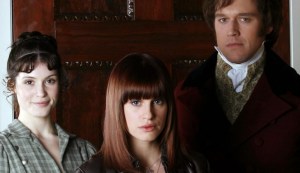
The movie begins between the second and third sections of the book, when Jane  (Mia Wasikowska) runs away from Thornfield Hall and becomes lost on the moors.  This is a dramatic departure from the other adaptations, which tell the story in a straightforward manner.  To bring the single most iconic scene to passionate life at the very beginning is both clever and stirring.  After she is found at the doorstep of St. John Rivers (Jamie Bell), the first two parts of the story are told in flashback as Jane regains herself and settles into life with St. John and his two sisters, Mary and Diana.  The other two adaptations give the final third of the novel short shrift, but this version, by making it the “present day” of the movie, allows us to experience Jane’s new life and the relationship with St. John to the fullest.

The second innovation is that the script makes the deepest cuts in the first section, Jane’s childhood.  There are good and bad repercussions of this, but in this movie they are mostly good.  The abuse within Mrs. Reed’s (Sally Hawkins) household by both her aunt and her cousins is shown much more dramatically.  The child actress playing Jane at ten, Amelia Clarkson, does a terrific job.  The cruelty of the school is brought out more boldly in this version, as we actually see Jane’s friend, Helen Burns (Freya Parks) being caned by the headmistress.  So, even though this section is shorter, it is much more powerful in setting up Jane’s character.

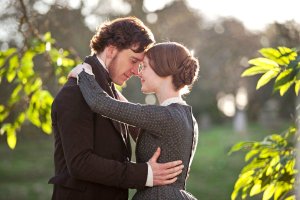
After leaving Lowood as a 17 year old girl, Jane takes her position at Thornfield Hall.  In this version, it seems much older, more rustic and authentic, dark and brooding, becoming more the character that Brontë created in the novel.  The housekeeper, Mrs. Fairfax (Judi Dench) guides her through narrow hallways, dimly lit by candles.  Her pupil, Adele (Romy Settbon Moore), speaks mostly French and is very charming.  Mr. Rochester (Michael Fassbender) is offensive, brooding and Gothic.  The entire creation of Thornfield Hall is much spookier than the other versions.  This film also shows the process of Jane and Rochester falling in love, which makes it much more believable.  The script actually brings over some of the dialogue from the book where Jane and Rochester speak during the evening.  The viewer can see Jane challenging him intellectually.

The acting is superb.  Mia Wasikowska gives an extraordinary performance as Jane Eyre, even if she is quite a bit more beautiful than the character in the book.  They try to make her look plain, but Wasikowska’s eyes alone give her away as a beautiful woman.  Likewise, Michael Fassbender is terrific as Rochester, but he’s just a little too handsome.  Nonetheless, these two actors have an extraordinary chemistry that brings a great deal of emotion to the story.  The supporting characters are also very well drawn, again bringing a felicity to the book that is rare in film adaptations.  Jamie Bell is especially good as St. Johns.

Cary Fukunaga’s expert direction brings this wonderful script to life, from creating the rustic Gothic texture of the environment to the beautiful use of light and shadows throughout Thornfield Hall.  The film is full of a kind of shimmering beauty that makes it a wonderful viewing experience.

From almost every point of view, this is a delightful adaptation of a great classic novel.


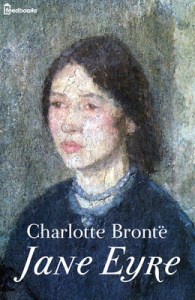
Jane EyreRead my review of the novel Jane Eyre, by Charlotte Bronte!

This 1847 classic novel both delights and confounds a modern reader.

Told mostly in first person past (with brief lapses into first person present) by the heroine, Jane Eyre, the book was originally subtitled An Autobiography.  It begins with Jane as a young girl of ten years as an orphan living with her Aunt Reed at Gateshead Hall.


Jane Eyre 1996Read my review of the 1996 Franco Zeffirelli movie of Jane Eyre.

Adapting a classic novel to the big screen is always a dicey proposition.  The screen writer and director have a limited amount of time, yet there is so much in a classic novel that readers depend on for a satisfying experience.  Indeed, there is so much that is germane to the internal logic of a novel of depth that the story itself is resistant to adaptation within a two hour format.


Samantha Morton2_Jane EyreRead my review of the 1997 ITV movie of Jane Eyre.

This film adaptation of the classic novel Jane Eyre by Charlotte Brontë was originally aired on Great Britain’s ITV in March of 1997 runs approximately one hour and 45 minutes.  Obviously, a great deal had to be cut from the story in order to fit it into that kind of time parameter, but Kay Mellor’s script concentrates rightly on the romance between Jane Eyre and Edward Rochester and the Gothic suspense of Thornfield.

Fargo

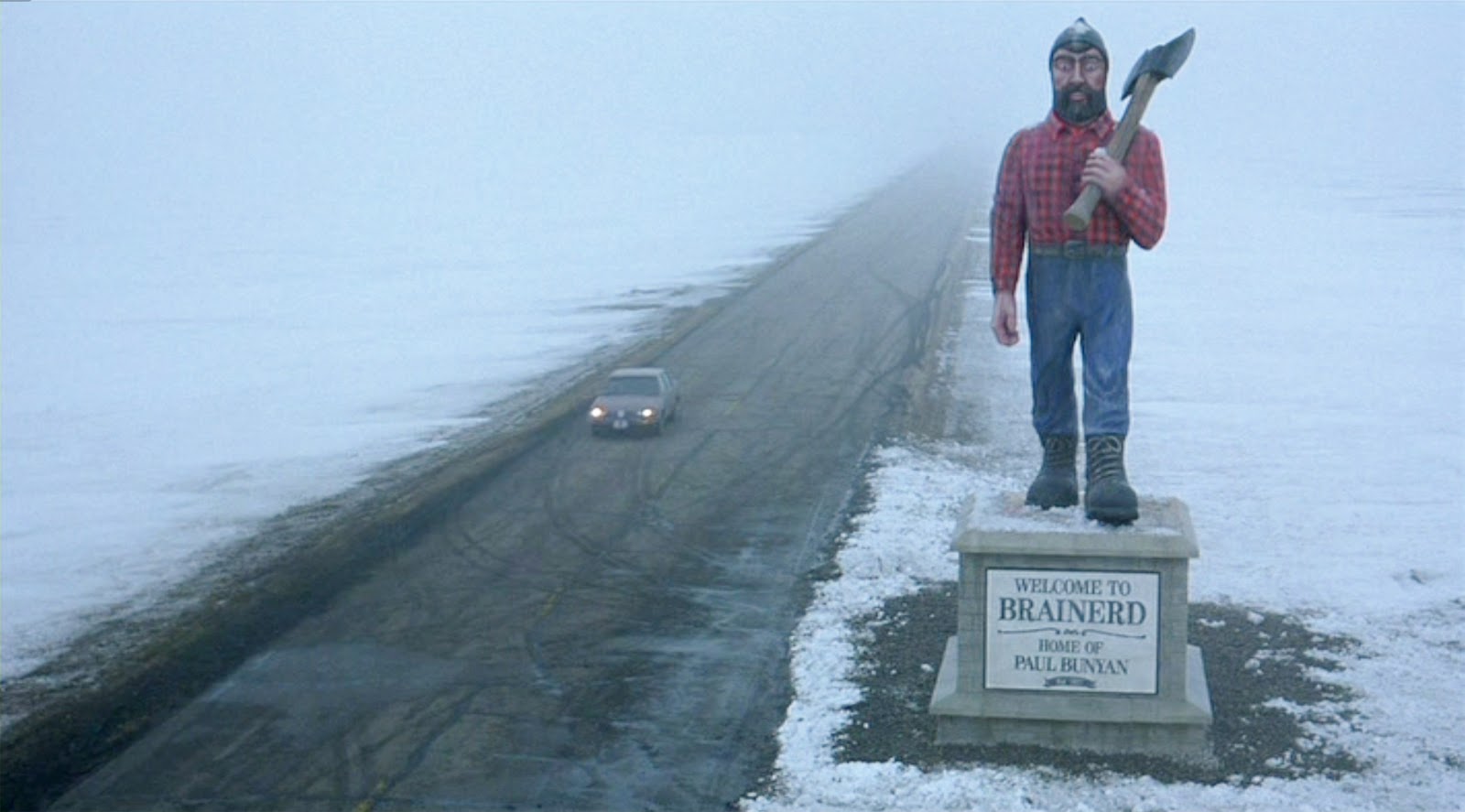
Fargo Paul BunyanAlfred Hitchcock would have liked this 1996 Joel Coen and Ethan Coen quirky thriller that contains so much comedy it transcends genres.  It borrows a number of techniques from the master of thriller movies, including a clever McGuffin, a villain with empathy, horrific incidents that are hilarious, and a tremendous environmental atmosphere.

The following review contains plot spoilers!

Minneapolis car salesman Jerry Lundegaard (William H. Macy) is caught in a deep financial bind during the winter of 1987 and hatches a scheme to hire two thugs, Carl (Steve Buscemi) and Gaear (Peter Stormare) to kidnap his wife, Jean (Kristin Rudrüd) so that her wealthy father, Wade Gustafson (Harve Presnell) will pay enough money to pay off the kidnappers and leave him high and dry financially.  At the same time, he has been working on a real estate deal that would leave him wealthy enough to quit the car business altogether.  He has been pitching this scheme to his father-in-law hoping that the man will loan him $750,000 to complete the deal.

Fargo William MacyHe drives to Fargo to give the prospective kidnappers a 1987 Oldsmobile Ciera to cement the deal, passing through the hamlet of Brainerd, Minnesota, home of Paul Bunyan.  Returning to Minneapolis, Jerry is shocked to find that Wade is actually interested in the real estate deal, so he hastily tries to contact the kidnappers to cancel the deal, but they are already on the road to the Twin Cities.  In a meeting with Wade and his financial officer, Stan Grossman (Larry Brandenburg), Jerry finds that they only want to pay him a finder’s fee and will not loan him the $750,000.  Although Jean puts of nominal resistance, Carl and Gaear wrap her up in a shower curtain (there are several reverential Psycho moments) and head back to Fargo.  When Jerry finds Jean missing, he tells Wade that the kidnappers want one million dollars for her return, thinking he can get the money for the real estate deal, but that the kidnappers will only deal with him.

Fargo Steve BuscemiOutside Brainerd, Carl and Gaear get stopped by a state patrolman because Carl has forgotten to put tags on the Ciera.  While he attempts to smooth things over with the officer, Jean moans under the shower curtain in the back seat and the trooper asks them to exit the vehicle.  On impulse, Gaear grabs the officer and shoots him in the head.  He tells Carl to move the body off the highway and while Carl is trying to drag the dead man out of the way, a car happens by and two people witness it.  Gaear puts the Ciera in gear, chases down the witnesses and shoots both of them after their car has flipped into a field.

Fargo Frances McDormandBrainerd Sheriff Marge Gunderson (Frances McDormand) is awakened in the early morning hours by her deputies who need her at the scene of the triple homicide.  Her husband, Norm (John Carroll Lynch), faithfully fixes his seven-month pregnant wife breakfast, jumps her patrol car, and sends her off.  Marge quickly figures out exactly what happens and launches an investigation that leads her to the Blue Ox Motel where the two men stayed on their way to Minneapolis.  She interviews the two girls who bedded the men and follows up on several phone calls made to Jerry’s mechanic, Shep Proudfoot (Steve Reevis) who had set the deal up for Jerry.  Following up this lead, she goes to Minneapolis only to find that Shep has disappeared.  She interviews an extremely nervous Jerry, ultimately growing suspicious of him.

Jerry’s plans are derailed when Wade takes the money and heads for a rooftop parking lot to meet Carl.  Jerry follows, but Carl gets annoyed by Wade and shoots him.  Wade gets in one shot that goes through Carl’s jaw.  Further annoyed, Carl empties his gun into Wade’s body and runs with the money, shooting the parking lot attendant on the way out.  Stopping on a lonely highway, he looks into the bag and discovers a million dollars.  He takes out enough to account for the original small ransom that Jerry had told him about and buries the bag in the snow along a fence, marking the spot with his ice scraper.

Thinking that Jerry may have lied to her, Marge goes back to the dealership, but Jerry storms out and disappears, so she puts him on the radar for the state police.  When Carl returns to their Moose Lake hideout, he finds that Gaear has killed Jean.  He gives the man his half of the money, but Gaear is upset that they were also supposed to divide the Ciera.  Carl yells at him, but on his way out, Gaear kills him, too.  A tip leads Marge to Moose Lake where she discovers Gaear feeding Carl’s body into a wood chipper.  She confronts him and when he tries to run, she wounds him and then arrests him.  On the way in, she adds up the deaths and remarks that the money wasn’t worth it.  Jerry is found at a motel and arrested.

Right from the very beginning of the movie, the atmosphere is stark and it sets up the cold northern winter that is the blanketing background of the movie.  A wash of white fills the camera and only fleetingly do we see Jerry’s car moving through the hazy bleak whiteness.  The cinematography is extraordinary and the use of color is truly dazzling.

The script and the editing are extremely tight, leading to a film that runs only one hour and thirty-eight minutes, yet tells a completely compelling story.  The dialogue is crisp and taut, full of the deep northern dialect that lends a comedic feel from the first time Jerry opens his mouth.  Each scene is so succinct and well written that the story moves inexorably to its conclusion.  There is only one plot element that slows it down: a subplot with an old acquaintance of Marge that makes her think Jerry might be lying.  It takes up more space than it probably warrants, but it is the only detraction from an intricate, well balanced script.

The acting is amazing, beginning with Frances McDormand and William H. Macy.  Although McDormand doesn’t even make an appearance until nearly 30 minutes into the movie, her presence takes it over.  Marge is a pretty simple character and she keeps everything in perspective, casually adding up the elements of the crime while dealing with her pregnancy.  Her Minnesota dialect is pitch perfect and it keeps the comedy always working for the good of the film.  Macy, a relatively unknown character actor before Fargo, is terrific as Jerry, a character that we instinctively don’t like, yet we feel his terror as the situation gets further and further out of hand.  It is a brilliant performance.

All of the supporting actors are great, from Buscemi and Stormare as the kidnappers to Lynch as Marge’s supportive wildlife artist husband, Norm.  Presnell is truly funny as Jean’s father.  Everyone works together to create a wonderful ensemble of acting that all goes back to support the script.

Fargo was amply rewarded with seven Academy Award nominations, with Oscars for Frances McDormand for Best Actress and Best Original Screenplay for the Coen brothers.  It was also up for Best Picture (Ethan Coen), Director (Joel Coen), Best Supporting Actor (William H. Macy), Best Cinematography (Roger Deakins), and Best Editing (Roderick Jaynes).

It remains the best of a deep and impressive body of work by the Coen brothers.  In spite of the violence, it is a film that can be enjoyed over and over.  It is a classic of American cinema that should have a place in every serious film buff’s collection.  The DVD special edition contains a “making of” featurette, as well as a Charlie Rose interview with the Coens and Frances McDormand.

As I said at the beginning, Hitchcock would have loved this one!

Jane Eyre 1996

Jane Eyre 1996Adapting a classic novel to the big screen is always a dicey proposition.  The screen writer and director have a limited amount of time, yet there is so much in a classic novel that readers depend on for a satisfying experience.  Indeed, there is so much that is germane to the internal logic of a novel of depth that the story itself is resistant to adaptation within a two hour format.  That was proven conclusively with the BBC film Pride and Prejudice, presented as a television mini-series five hours long.

Charlotte Brontë’s Jane Eyre presents particular problems because each of the three distinct elements of the story warrants telling, yet the third section is difficult to fit into a film.  Adapted for the screen by Hugh Whitemore and legendary director Franco Zeffirelli, this 1996 script, like others before it, concentrates on Jane’s childhood and her relationship with the master of Thornfield Hall, but compresses the third part of the book into a few hasty minutes.

For a full synopsis of the story, I refer readers to my review of the novel Jane Eyre.  In short, it is the story of a girl, Jane Eyre (Anna Paquin), in the middle years of 19th Century in England, orphaned and mistreated by her aunt, then sent to an impoverished school for girls.  She grows up to become a teacher (Charlotte Gainsbourg) and is employed at Thornfield Hall by the housekeeper, Mrs. Fairfax (Joan Plowright) as governess for a little French, ward of the master of the hall, Mr. Edward Rochester (William Hurt).  She falls in love with him, but he is married to a madwoman, so Jane runs away and is taken in by a clergyman, St. John (Samuel West) and his sisters.  The clergyman employs her as a school teacher, but asks her to become his wife and travel with him as a missionary.  She refuses and instead goes back to Thornfield Hall, only to find that it has been destroyed in a fire.  Discovering that Rochester’s mad wife died in the blaze, she reunites with the man she loves.

Director Franco Zeffirelli is a master at camera composition, use of landscape, and color and this film certainly reflects that.  It is beautiful in every respect and can be enjoyed simply for that aspect.  Both Anna Paquin and Charlotte Gainsbourg are wonderful as Jane Eyre at ten and seventeen.  They look so much alike that they are certainly believable as the same person.  That Gainsbourg is made to look plain is a step above most adaptations of the novel and it makes her extra believable in the role.  She also infuses the character with the simplicity and independence that make Jane Eyre such a memorable character.  The creation of Jane Eyre in this film is really terrific!  William Hurt is fine as Rochester, though he is plainly a little too good looking for the part.  There are also a few times when I didn’t believe him as an Englishman, although there is nothing glaring about the performance.  It is solid, but not overly impressive.  The supporting cast is really terrific, especially Joan Plowright as Mrs. Fairfax, Leanne Rowe as Helen Burns, John Wood as Mr. Brocklehurst, Fiona Shaw as Mrs. Reed, Geraldine Chaplin as Miss Scatcherd, Amanda Root as Miss Temple, Billie Whitelaw as Grace Poole, and Maria Schneider as Rochester’s mad wife Bertha.  Elle McPherson, the model, also makes a cameo as Blanche Ingram, the society woman set on marrying Rochester for his money.

Zeffirelli spends adequate time on Jane’s childhood, especially in framing the friendship between her and Helen Burns.  The middle section that concentrates on the evolving relationship between Jane and Rochester is extremely well done.  The affection between them is difficult to achieve, partly because they are such different people, but Gainsbourg and Hurt work very well together and Zeffirelli helps the viewers to see it happening without using words.  It is masterfully done.

Whitemore and Zeffirelli take a big chance, however, by introducing the characters of St. John and his sister Mary as go-betweens when Jane’s aunt Mrs. Reed becomes ill before dying.  Although it tightens up the plot in a creative way, it also puts in place the means of Jane ending up with them later on and leads the screenwriters to completely eliminate what might be the best scene in the entire work: Jane’s wandering the moors alone after she leaves Rochester.  In the novel and in other screen adaptations the scene is extremely powerful.  Jane, without caring for her own life, wanders aimlessly, sleeps in a ditch and is at death’s doorstep when she stumbles onto St. John’s home.  By cutting out that scene, the screen writers have her go directly to St. John based on his prior association with her and her illness is skirted over very quickly.  Likewise, Jane’s enormous confusion over St. John’s proposal is also missing.  In the novel, her thoughts on the proposal provide the entire basis for her return to seek out Rochester and that inner logic hurts the entire last part of the movie.

On the other hand, Zeffirelli brings the film in at slightly under two hours.  It is a beautiful movie, with many positive aspects to it, not the least of which is the most believable Jane I’ve yet seen.  Paquin and Gainsbourg are absolutely marvelous and that means a lot in a story that absolutely depends on the believability of the title character.  I find it a little annoying that William Hurt has top billing because his character is truly ancillary to Jane.

It is a good film and should be seen by all fans of Jane Eyre.


Jane EyreRead my review of the novel Jane Eyre, by Charlotte Bronte!

This 1847 classic novel both delights and confounds a modern reader.

Told mostly in first person past (with brief lapses into first person present) by the heroine, Jane Eyre, the book was originally subtitled An Autobiography.  It begins with Jane as a young girl of ten years as an orphan living with her Aunt Reed at Gateshead Hall.


Samantha Morton2_Jane EyreRead my review of the 1997 ITV movie of Jane Eyre.

This film adaptation of the classic novel Jane Eyre by Charlotte Brontë was originally aired on Great Britain’s ITV in March of 1997 runs approximately one hour and 45 minutes.  Obviously, a great deal had to be cut from the story in order to fit it into that kind of time parameter, but Kay Mellor’s script concentrates rightly on the romance between Jane Eyre and Edward Rochester and the Gothic suspense of Thornfield.


Jane Eyre 2011Read my review of the 2011 Cary Fukunaga movie of Jane Eyre.

This adaptation of Charlotte Brontë’s classic novel Jane Eyre was produced in 2011.  Directed by Cary Fukunaga from a script by Moira Buffini, this is clearly the best of the recent movie versions of the novel.  Ms. Buffini’s script is faithful to the novel, yet innovative in the way it tells the story, bringing a passion lacking in the other attempts.

Words and Pictures

Words and Pictures Clive-Owen Which is more important: words or pictures?

This is at the core of this powerful 2013 film about education and artistic expression.  The script by Gerald DiPego is extremely well written and the direction by Fred Schepisi is outstanding, but the real reason for this movie’s success is in the two great performances by Clive Owen and Juliette Binoche as the two teachers who inspire their students to understand and to achieve more than mere talent can produce.

Jack Marcus (Clive Owen) teaches writing at Croyden, a high end  preparatory school in Maine.  A professional writer himself, Jack is flirting with losing his job because of functional alcoholism and a lapse of productivity, having failed to publish in quite a few years.  In addition, the school literary magazine which he edits has gone downhill, producing flat, uninspired writing and nothing original from him.  His principal, Rashid (Navid Negahban), confers with head of the governing board, Elspeth (Amy Brenneman) about Jack’s conduct and they give him a warning that his status will be reviewed at the next meeting.

Words and Pictures Juliette BinocheThe new Honors Art teacher, well-known painter Dina Delsanto (Juliette Binoche), who suffers from severe rheumatoid arthritis and walks with the aid of a cane, challenges her students to go beyond themselves to create better art.  Using the old phrase “a picture is worth a thousands words” she tells her students that words are cheap and useless, thus fueling the “war” between the two arts at the school and inspiring the students to achieve more.

Drinking heavily and fighting to keep his job, Jack tries to write something new and inspiring, but all he can create is insipid, so he steals a poem that his son wrote and publishes it in the literary magazine as his own.  It is so good that Dina uses it to inspire her students to make drawings and painting based on it.  Three students figure prominently in this battle of the arts: Emily (Valerie Tian) an Asian painter, Cole (Josh Ssettuba) an African-American graphic artist, and Swint (Adam DiMarco), a writer and would-be cartoonist.  Swint, a show-off has a crush on shy Emily and he begins to harass her, eventually going so far as to distribute an obscene cartoon of her throughout the school.  Jack has defended Swint, but when he discovers the cartoon in Swint’s sketchbook, he turns the boy in and Swint is expelled.

When Dina gives terrific testimony of Jack’s behalf at the board meeting, his job is saved.  He brings her flowers and they consummate their simmering love, but Jack gets up in the night, finds a bottle of vodka in her refrigerator and proceeds to get drunk.  He tells her about plagiarizing the poem from his son and then, losing his balance, he falls into Dina’s most important painting, smearing it.  She throws him out and Jack must begin to confront his own problems for the first time, facing his alcoholism and trying to redeem his own spirit.

Obviously, in a movie like this, the writing is paramount and I give extremely high marks to Gerald DiPego for his literate and organic script.  Director Fred Schepisi thought his words were important enough that he was kept on the set during the filming in order to make changes himself, rather than bringing in any other writers.  But even though writing is important, this film also stands or falls based on its art and Juliette Binoche, doing her own painting, brought a sense of legitimacy by creating terrific paintings and drawings all her own.

Of course, there is no real battle between art and literature.  They are two completely different and equally valid arts.  On the surface, they would appear to be complete opposites, but, as with all creation, the goal should be the same: to touch the human heart.  This movie does that, in part, due to the organic nature of the writing and the painting that fills it.  When I say that a work of art is organic, I mean that it grows naturally out of its components.  The story in Words and Pictures has more to do with Jack’s own frailty and his dependence on alcohol.  It is that dependence that brings his life into complete disarray, despite his other endearing qualities, and it is his control of that weakness that allows him to become a complete person again.  The same is true of Delsanto’s art.  Like, Jack, she has floundered for many years, not because of a lack of inspiration, but because her own degenerating body has had her full attention.  She needed something to wake her up and Jack’s challenge is what brings her back to life creatively.  Her art grows beyond her own injured body to become something beyond what she had been capable of.

Writing an organic script that is completely natural is not an easy process, but DiPego has created a real beauty here.

Clive Owen drives the film with his performance.  The center of the film, he is realistic in every way as an American teacher.  His control of the language, his phrasing, and his maniacal love of good writing is infectious and he seems to be a terrific teacher.  Likewise, Juliette Binoche gives a wonderful performance as Delsanto, nuanced, layered, and impressive.

This film has a strange, emotional power that elevates in the same way that Stand and Deliver moves one to aspire.  Immensely satisfying! I highly recommend this movie!

L

The Lady Vanishes (1938)The Lady Vanishes

Set in the fictitious European country of Bandrika, this 1938 British comedy-mystery  remains one of Alfred Hitchcock’s best movies.  Based on the 1936 novel The Wheel Spins by Ethel Lina White, the script by Sidney Gilliat and Frank Launder is truly funny, even the suspenseful parts.  Enhanced by Hitchcock’s own wit, it emerges as a truly entertaining popular film that reaches well beyond his normal confines of mystery and suspense.


 LeapYearTitleLeap Year

Genre films are really hit and miss.  If you’re quite lucky, you’ll get a hit, but producers find out all the time that it’s really easy to think you’ve got a winner and then just miss.  This is especially true with romantic comedies, which are perhaps the most difficult genre to score a hit.  Usually, either the comedy fails, the situation isn’t quite creative enough, or–most frequently–the leads just don’t have chemistry, which comes back to the casting.


 Little Women 1994Little Women (1994)

This Robin Swicord adaptation of Luisa May Alcott’s classic novel is very good, considering that the movie comes in under two hours.  Overall, it is a very good film.  This is the fourth adaptation of Little Women to the screen, it stars Wynona Ryder, Susan Sarandon, Claire Danes, and Kirsten Dunst.


 Lost in Austen trioLost in Austen

The general fascination with Jane Austen is continued in this 2008 four-part British television film, originally aired by ITV and released in the United States as a three hour film.  Amanda Price is a modern Jane Austen stuck in an unromantic relationship with a boozy, uncouth guy, Michael (Daniel Percival) and living in a flat in Hammersmith with a girlfriend, Pirhana (Gugu Mbatha-Raw).  All she really wants is to be left alone so she can immerse herself in Austen’s Pride and Prejudice.


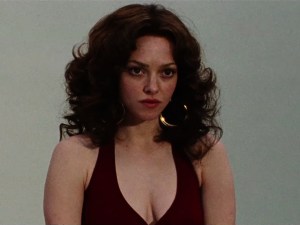
Amanda Seyfriend as Linda LovelaceLovelace

This film is a 2013 biographical picture about the life of Linda Boreman, beginning at the age of 20 and going through her marriage to Chuck Traynor and the release of her biography, .  Under the trade name of Linda Lovelace, she starred in the 1972 pornographic breakthrough movie Deep Throat and that is her lone claim to fame aside from her biography, Ordeal.

The Breakfast Club

Breakfast ClubYelling one minute, giggling the next, while cool music plays throughout.  Welcome to The Breakfast Club, John Hughes’ 1985 comedy-drama about five teenagers confined to a Saturday detention in the Shermer High School library in Shermer, Illinois, a suburb of Chicago.

Each one of the five kids represents a different kind of high school culture.  Although wrestler Andrew Clark (Emilio Estevez), teen beauty Claire Standish (Molly Ringwald), and brainy Brian Johnson (Anthony Michael Hall) come from wealthy families, they each represent a separate segment of high school society.  Likewise, rebellious John Bender (Judd Nelson) and spooky Allison Reynolds (Ally Sheedy) come from the wrong side of the tracks, but one is brash and outgoing while the other is quiet and shy.

The teacher who rides herd on the five of them is Richard “Dick” Vernon (Paul Gleason), an assistant principal who is rough and disillusioned with his profession.  The only other adult character of any consequence is the philosophical janitor, Carl Reed (John Kapelos) who enlightens both Dick and the kids.

John creates the drama as he pushes against the rich kids and makes fun of the dork, both strutting his anger at coming from a poor, ignorant family and concealing his own fear for his future.  He teases Claire about being a virgin, Andrew about being a dumb jock, and Brian about not fitting in.  As the day goes on, they gradually become friends, laughing, dancing, shouting, and opening up about their deepest truths and fears.

There isn’t much of a plot here, but that’s not important.  Most of the movie dedicates itself to the theme that in spite of outside differences, we’re all pretty much the same, a pretty good message in any time or place.  The generous ensemble script allows room for each character to bloom.

Most of the acting is excellent, although the emotional outbursts now seem a little over the top, as are the stock characters.  The movie is really excellent except when it tries to go deep.  Of the five teens, Ally Sheedy really stands out as the best and that is partly because her character doesn’t fit into a mold and partly because she infuses it with a great deal of originality.

The best part of the film is the comedy and when it’s good, it’s really laugh out loud good and it carries the movie beyond the simple teen angst that colors the drama.  A fun movie.  At an hour and a half, the timing is perfect and it is almost impossible to stop watching once you start, always a sign that a movie is doing its job.